The Definitive Guide
12 Essential Questions to Ask When Vetting an Accessible Remodeling Contractor
Transforming a home for accessibility is more than a construction project—it's a life-changing investment in safety, independence, and dignity. The right contractor is your most critical partner. This guide will arm you with the precise questions to ensure you hire a true specialist.
Embarking on an accessible remodel is a journey toward a more functional and empowering living space. Whether you're adapting a home for a loved one with mobility challenges, planning for your own future with an aging-in-place strategy, or embracing the principles of universal design, the contractor you choose will determine the project's success. Unlike a standard kitchen or bath update, accessible remodeling requires a deep, nuanced understanding of human factors, specific building codes, and specialized products.
A general contractor might be able to widen a doorway, but a true accessibility specialist understands the necessary turning radius for a wheelchair, the optimal height for a roll-under sink, and the structural requirements for installing a ceiling lift. This is why a rigorous vetting process is not just recommended—it's non-negotiable. The following 12 essential questions to ask when vetting an accessible remodeling contractor are designed to cut through the sales pitches and reveal a firm's true expertise, empathy, and professionalism.
1. What specific experience do you have with accessible, universal design, and aging-in-place projects?
This is the foundational question. You need to move beyond general remodeling experience and pinpoint their expertise in this highly specialized field. A contractor who has built dozens of decks may have zero experience creating a zero-threshold, curbless shower.
- Why It's Crucial: It separates generalists from specialists. Accessibility projects have unique structural, electrical, and plumbing considerations that can be easily overlooked by an inexperienced team.
- A Good Answer Looks Like: "We've completed over 30 accessibility-focused projects in the last five years, ranging from full-home universal design renovations to targeted bathroom modifications. We specialize in creating roll-in showers, installing grab bars with proper blocking, and designing accessible kitchens with multi-level countertops."
- Red Flags: Vague answers like "We can handle anything" or "We've done a few grab bars before." If they can't speak confidently and specifically about their past accessible projects, they are not the right fit.
2. Are you a Certified Aging-in-Place Specialist (CAPS) or do you hold similar credentials?
Certifications demonstrate a formal commitment to education and best practices in the field. The CAPS designation, offered by the National Association of Home Builders (NAHB), is the gold standard, indicating training in the unique needs of the older adult population.
- Why It's Crucial: A certification like CAPS shows the contractor has invested time and resources to understand the technical and functional aspects of aging-in-place design, rather than just learning on the job at your expense.
- A Good Answer Looks Like: "Yes, our lead project manager and I are both CAPS certified. We regularly attend continuing education courses to stay current on the latest technologies and design strategies for home accessibility."
- Red Flags: Dismissing the value of certifications or being unaware of them entirely. While lack of a certification isn't an automatic disqualifier if their experience is vast, ignorance of industry standards is a major concern.
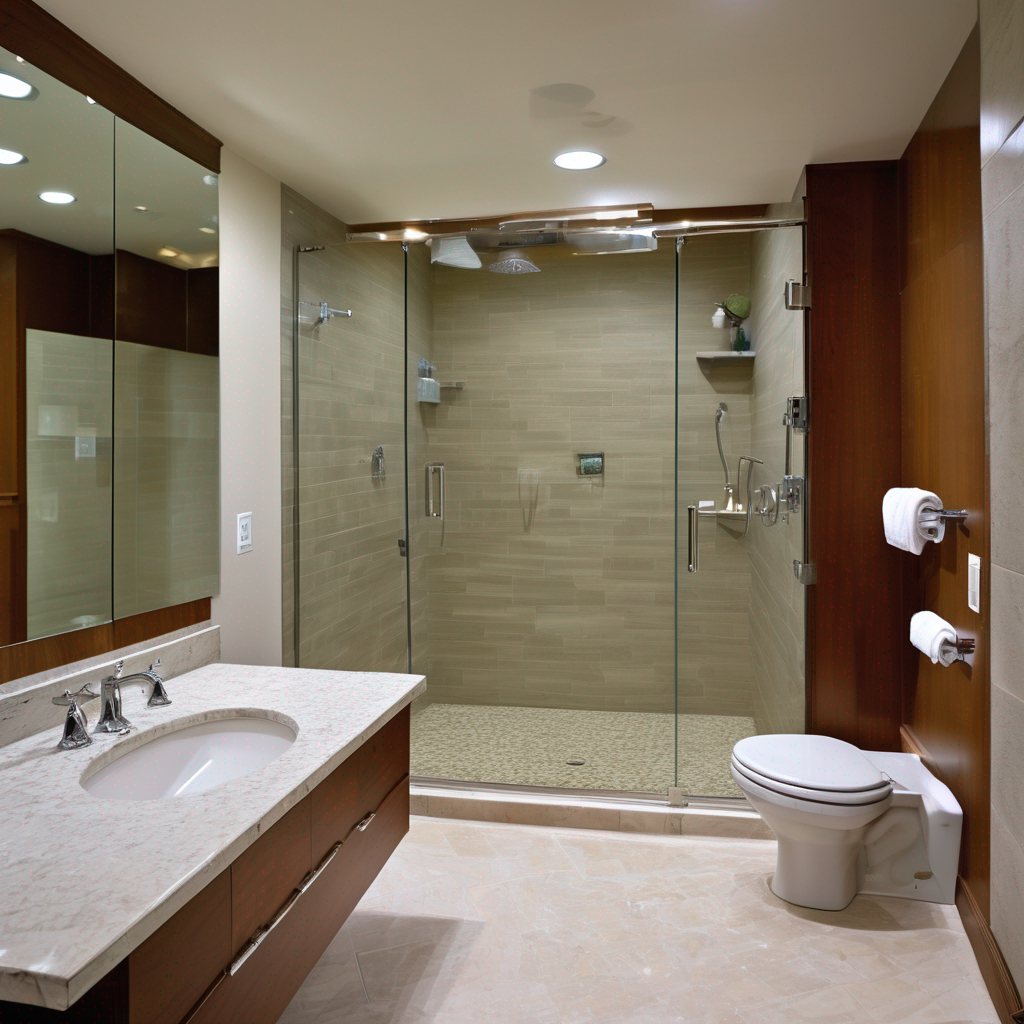
3. Can you provide a portfolio and references specifically from past accessibility projects?
Talk is cheap. Visual proof and social proof are everything. Any competent specialist will be proud to show off their work and connect you with satisfied clients. When reviewing their portfolio, look for more than just pretty pictures—analyze the functional details.
- Why It's Crucial: This verifies their claims of experience. Speaking to past clients allows you to ask about the process: Were they respectful? Did they keep the site clean? How did they handle challenges?
- A Good Answer Looks Like: "Absolutely. Here is a link to our online gallery of accessible projects. I can also provide you with the contact information for three clients whose projects were similar to yours, once you're ready to move forward."
- Red Flags: Hesitation to provide references, a portfolio with no clear accessibility features, or providing references from unrelated projects. This suggests a lack of relevant experience or unhappy former clients.
4. How do you stay current with ADA guidelines, Fair Housing Act (FHA) requirements, and local building codes for accessibility?
While residential homes are not always strictly bound by commercial Americans with Disabilities Act (ADA) standards, these guidelines provide an invaluable framework for best practices. A knowledgeable contractor will be fluent in these standards and know how to apply them appropriately in a residential context, alongside all local codes.
- Why It's Crucial: Incorrectly installed features can be useless or even dangerous. This question probes their technical knowledge and commitment to safety and compliance, which is a core component of how to choose a contractor for a wheelchair accessible home.
- A Good Answer Looks Like: "We use ADA guidelines as our baseline for all projects. We have the code books in our office, subscribe to industry publications, and our team receives training on any updates to local amendments. For example, we know the local requirement for grab bar reinforcement exceeds the standard ADA spec."
- Red Flags: A contractor who seems unfamiliar with the ADA, dismisses its relevance to residential projects, or can't speak to local code specifics. This indicates a lack of diligence.
5. Who will be my dedicated point of contact, and what is your communication process?
A major renovation can be disruptive. Clear, consistent communication is the key to a low-stress experience. You need to know who is in charge, how to reach them, and how often you can expect updates.
- Why It's Crucial: It establishes expectations for project management from the start. A well-defined communication plan prevents misunderstandings, reduces anxiety, and ensures you are always informed about the progress and any challenges.
- A Good Answer Looks Like: "You'll be assigned a dedicated Project Manager, John Smith. He will be on-site daily. We use a project management app where you can see daily logs and photos, and we schedule a weekly check-in call every Friday morning to discuss progress and next steps."
- Red Flags: No clear point person ("just call the office"), no structured communication plan, or a sense that you'll be chasing them for information.
6. Can you describe your design process and how you incorporate the specific needs of the user?
This is where empathy meets expertise. Accessible design is not one-size-fits-all. A great contractor will lead with a discovery process focused entirely on the person who will be using the space, often involving them and their family or occupational therapist directly.
- Why It's Crucial: The success of the project hinges on how well it's tailored to the individual's current and future needs. A contractor who imposes a generic solution without a deep needs-assessment is likely to miss critical details.
- A Good Answer Looks Like: "Our process begins with an in-depth interview with the primary user and their family. We measure things like wheelchair dimensions and seated reach height. We welcome collaboration with your occupational therapist to ensure our design meets all prescribed functional requirements. From there, we create 3D renderings so you can visualize the space before we build."
- Red Flags: A focus on products before people. A contractor who immediately starts suggesting fixtures without first asking detailed questions about the user's abilities, challenges, and daily routines.
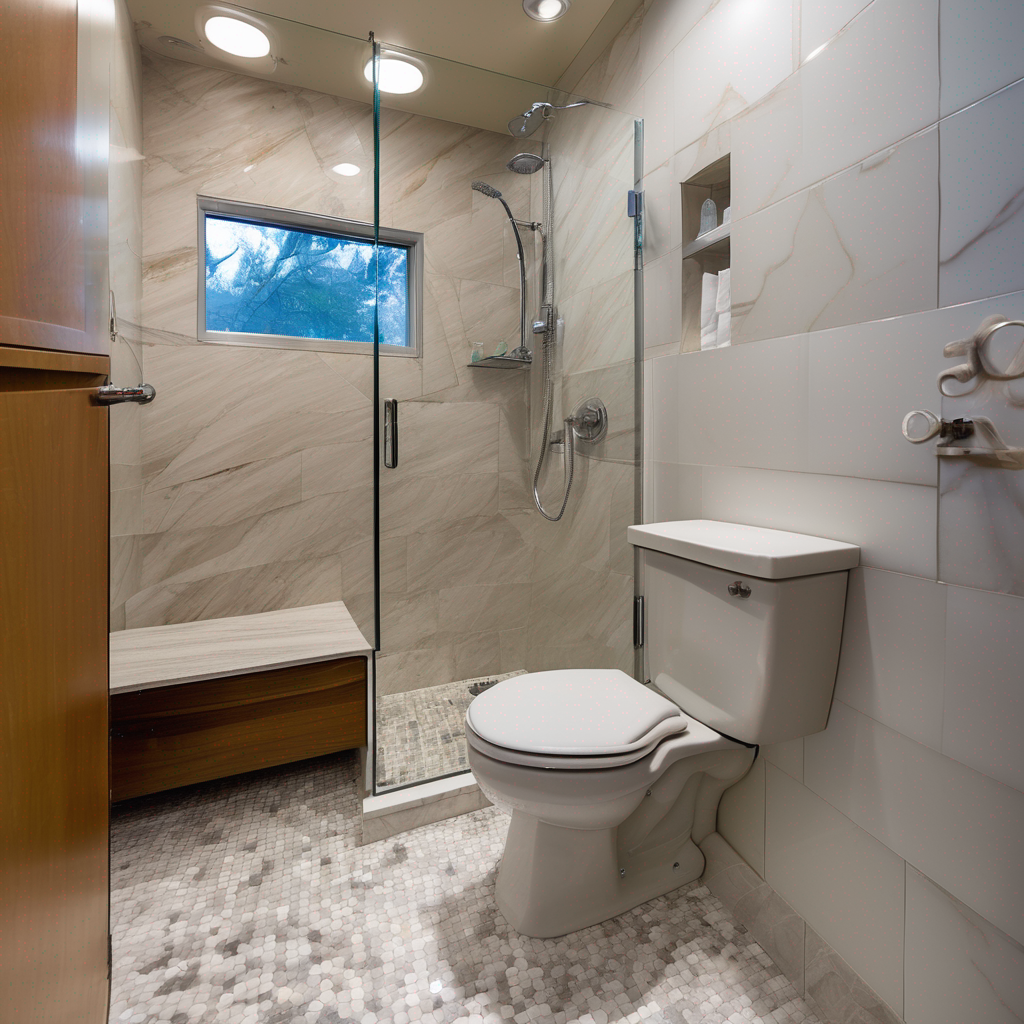
7. How do you source and recommend accessible products and fixtures? Do you have established relationships with suppliers?
The market for accessible products is vast and varied in quality. A seasoned contractor will have a curated list of trusted brands and suppliers for items like walk-in tubs, stairlifts, non-slip flooring, and accessible cabinetry, steering you toward durable and well-designed options.
- Why It's Crucial: Their product knowledge can save you from costly mistakes. It ensures you're getting fixtures that are not only compliant but also reliable and aesthetically pleasing. This is one of the most important questions for accessible bathroom remodelers.
- A Good Answer Looks Like: "We have great relationships with suppliers like BestBath and Moen Home Care. We prefer these brands for their quality and warranty support. We can also source products you've found yourself, but we'll always review the specs to ensure they meet our standards for your project."
- Red Flags: Limited product knowledge, pushing a single brand exclusively (they may be getting a kickback), or being unwilling to look at products beyond what's available at a big-box store.
8. Can you provide a detailed, itemized bid that clearly outlines all costs, including allowances and potential exclusions?
A single lump-sum price is a recipe for disaster. A professional bid will be a multi-page document breaking down costs for labor, materials, permits, and subcontractors. It should clearly define "allowances" (e.g., a budget for you to pick your own faucet) and state what is *not* included.
- Why It's Crucial: Transparency in pricing prevents surprise costs and disputes down the line. It allows you to make informed decisions and compare bids from different contractors on an apples-to-apples basis.
- A Good Answer Looks Like: "Of course. Our proposals are typically 8-10 pages long. We itemize every aspect of the job, from demolition to final paint. We'll walk you through it line by line so you understand exactly what you're paying for."
- Red Flags: A one-page quote with a single number, vague descriptions, or pressure to sign without a detailed scope of work. Be wary of bids that are significantly lower than others; they have likely omitted crucial items.
9. Can you provide proof of your license, general liability insurance, and worker's compensation insurance?
This is a non-negotiable checkpoint for any contractor, but it's especially critical for complex projects. You must protect yourself from liability for accidents on your property and from shoddy, unpermitted work.
- Why It's Crucial: It protects you financially and legally. If an uninsured worker is injured on your property, you could be held liable. If the contractor isn't properly licensed, you may have no recourse if the work is subpar.
- A Good Answer Looks Like: "Here are copies of our state license and our certificates of insurance. You can and should call our insurance agent to verify that the policies are active and the coverage amounts are sufficient for a project of your scale."
- Red Flags: Any hesitation, defensiveness, or inability to produce these documents immediately. Claims like "We don't need insurance for a job this small" are an immediate disqualification.
10. What is the projected timeline, and how do you manage the schedule and handle potential delays?
A clear timeline helps you plan your life around the disruption of a remodel. Equally important is understanding how the contractor communicates and manages the unforeseen issues that can arise in any construction project.
- Why It's Crucial: It sets realistic expectations. A professional will have a system (like a Gantt chart) for scheduling and will be upfront about how they'll communicate delays caused by supply chain issues or unexpected structural problems.
- A Good Answer Looks Like: "Based on the current scope, we project a 6-week timeline, which we'll map out for you. If we encounter an issue, like finding old plumbing that needs replacement, we'll stop, inform you immediately with a formal change order detailing the cost and time impact, and won't proceed without your written approval."
- Red Flags: An unrealistically short timeline, a vague "we'll be done when we're done" attitude, or no clear process for handling change orders.
11. What warranties or guarantees do you offer on your workmanship and the materials used?
A reputable contractor stands behind their work. You need to know what recourse you have if a grab bar comes loose or a tile cracks a few months after the job is finished.
- Why It's Crucial: It provides peace of mind and protection for your investment. The warranty reflects the contractor's confidence in their quality and materials.
- A Good Answer Looks Like: "We offer a comprehensive 2-year warranty on all our workmanship. All materials and fixtures are covered by their respective manufacturer's warranties, which we will provide to you in your project close-out package."
- Red Flags: No written warranty, a very short warranty period (e.g., 30 days), or being unable to explain the warranty process clearly.
12. How do you plan for future needs and adaptability in your designs?
This final question separates the good contractors from the great ones. A forward-thinking specialist doesn't just solve today's problem; they anticipate tomorrow's challenges. This is the essence of true universal design and a critical part of the vetting criteria for universal design builders.
- Why It's Crucial: A person's needs can change over time. A smart design incorporates adaptability, saving significant money and disruption in the future.
- A Good Answer Looks Like: "That's a great question. When we renovate a bathroom, even if you don't need grab bars today, we'll add solid wood blocking in the walls in all the standard locations. It costs very little now but makes it incredibly easy and cheap to add them securely later. We think about things like that throughout the home."
- Red Flags: A contractor who seems puzzled by the question or only focuses on the immediate, requested tasks without offering suggestions for future-proofing the design.
Frequently Asked Questions
Quick answers to common questions about hiring a contractor for aging-in-place and accessibility modifications.
What's the difference between "accessible design," "universal design," and "aging-in-place"?
While often used interchangeably, they have distinct meanings. Accessible Design typically refers to modifications that meet the needs of a specific person with a disability (e.g., following ADA guidelines). Aging-in-Place focuses on modifications that allow people to live safely and independently in their homes as they get older. Universal Design is the broadest concept; it's the design of environments to be usable by all people, to the greatest extent possible, without the need for adaptation or specialized design. A great contractor understands all three and can blend them to create a space that is functional, safe, and beautiful for everyone.
Do I need an occupational therapist (OT) involved in the remodeling process?
While not always required, involving an OT can be immensely valuable. An OT is a health professional trained to analyze a person's abilities and the home environment. They can perform a detailed home assessment and provide specific, clinical recommendations for modifications (e.g., the exact height for a grab bar based on a person's stature and mobility). The best contractors welcome and encourage collaboration with OTs to ensure the final result perfectly matches the user's functional needs.
Are there grants or financial assistance available for accessible home modifications?
Yes, several avenues for financial assistance may be available depending on your location, income, and circumstances. Look into programs offered by the Department of Veterans Affairs (VA grants like SAH, SHA, and HISA), state and local housing finance agencies, non-profits like Rebuilding Together, and Area Agencies on Aging. Some long-term care insurance policies may also cover certain modifications. A knowledgeable accessible remodeling contractor should be aware of these local and national programs and may be able to point you in the right direction.
Is it better to hire a general contractor or a specialist for this type of work?
For any project more complex than installing a single grab bar, it is highly recommended to hire a specialist. While a good general contractor has broad construction knowledge, an accessibility specialist possesses deep, specific expertise in the products, techniques, and design principles required for these projects. They understand the nuances of creating functional, safe, and code-compliant accessible spaces, which can prevent costly and dangerous mistakes. Using the 12 essential questions in this guide will help you determine if a contractor is a true specialist.
Ready to Find the Right Partner? Your accessible home awaits.
Have Questions About Your Bathroom or Remodeling Project?
Talk to our licensed Utah specialists about layout, ADA compliance, or custom renovations.