
Future-Proofing Guest Bathrooms: Hidden Blocking Without a Clinical Look
To future-proof a bathroom without clinical styling, install continuous 2x10 solid wood blocking between studs at 32 to 40 inches above the floor while walls are open, photograph exact measurements before tiling, and choose low-curb showers, comfort-height 17-to-19-inch toilets, and lever faucets. Urban Design & Remodel (Utah DOPL #10146123-5501, (801) 440-1952) adds full perimeter shower and toilet wood blocking for just $140 to $250 during rough framing.
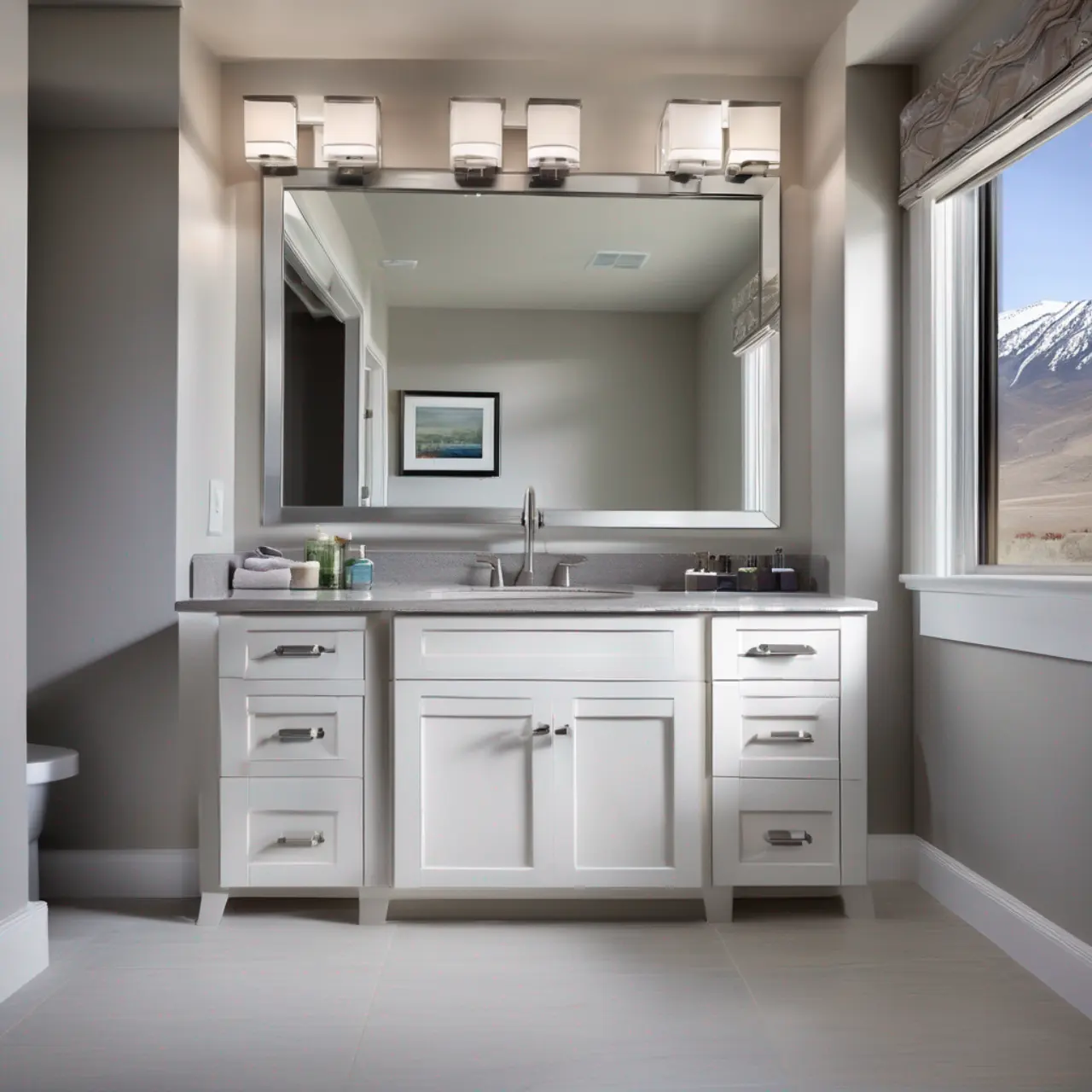
Whether you host visiting parents in a Millcreek bungalow, recover from a Wasatch ski knee surgery, or plan to stay in your Holladay home for the next twenty years, a guest bathroom should adapt effortlessly to changing mobility without resembling a commercial hospital ward. The smartest universal design upgrades are completely invisible once porcelain tile and brushed brass fixtures are installed. By investing less than two hundred dollars in structural lumber blocking, ergonomic valve heights, and slip-resistant floor textures while the studs are already exposed, homeowners lock in lifetime safety and resale appeal with zero aesthetic compromise.
Continuous 2x10 Solid Wood Blocking Behind Shower and Toilet Walls
Hollow drywall anchors and plastic tile toggles will rip straight out of cement board under a sudden slip-and-fall load. Under ADA Section 609.8 and IRC residential safety standards, a grab bar must withstand a minimum 250-pound concentrated vertical or horizontal shear force without deflection. While bathroom walls are stripped to bare framing during rough-in, our carpenters install continuous horizontal 2x10 or 2x12 kiln-dried Douglas fir blocking notched flush between wall studs from 32 inches to 41 inches above the finished floor around all three shower walls and adjacent to the water closet. Even if you mount zero grab bars today, structural solid wood sits ready behind your porcelain tile for decades.
- 2x10 lumber blocking spanning 32"–41" AFF supports 250+ lbs of shear load at any horizontal or angled point
- Adding full-perimeter wood blocking while walls are open costs only $140 to $250 in materials and framing labor
- Retrofitting blocking after porcelain tile is installed requires tearing out walls or settling for stud-only spacing
Photographic Framing Archives and Diamond Core-Drilling Later
Hidden blocking is only useful ten years from now if you know precisely where water pipes, electrical Romex cables, and lumber sit behind your finished porcelain tile. Before Urban Design & Remodel hangs waterproof foam backer board, we lay a bright yellow tape measure vertically and horizontally across every framed bathroom wall and capture high-resolution reference photos for your homeowner closeout binder. If a family member ever needs support bars installed years later, a technician simply checks that photo map, drills cleanly through porcelain using a water-cooled diamond core bit—confidently avoiding PEX supply lines—and drives 2.5-inch #10 stainless steel lag screws sealed with neutral-cure silicone straight into solid fir.
- Scaled rough-in photos document exact stud, 2x10 blocking, and PEX supply pipe locations to within 1/4 inch
- Water-cooled diamond hole saws drill chip-free openings through PEI-4 porcelain without cracking surrounding tiles
- Silicone-injected fastener threads preserve the integrity of the underlying sheet waterproof membrane
Dual-Purpose Designer Fixtures and Ergonomic Valve Placement
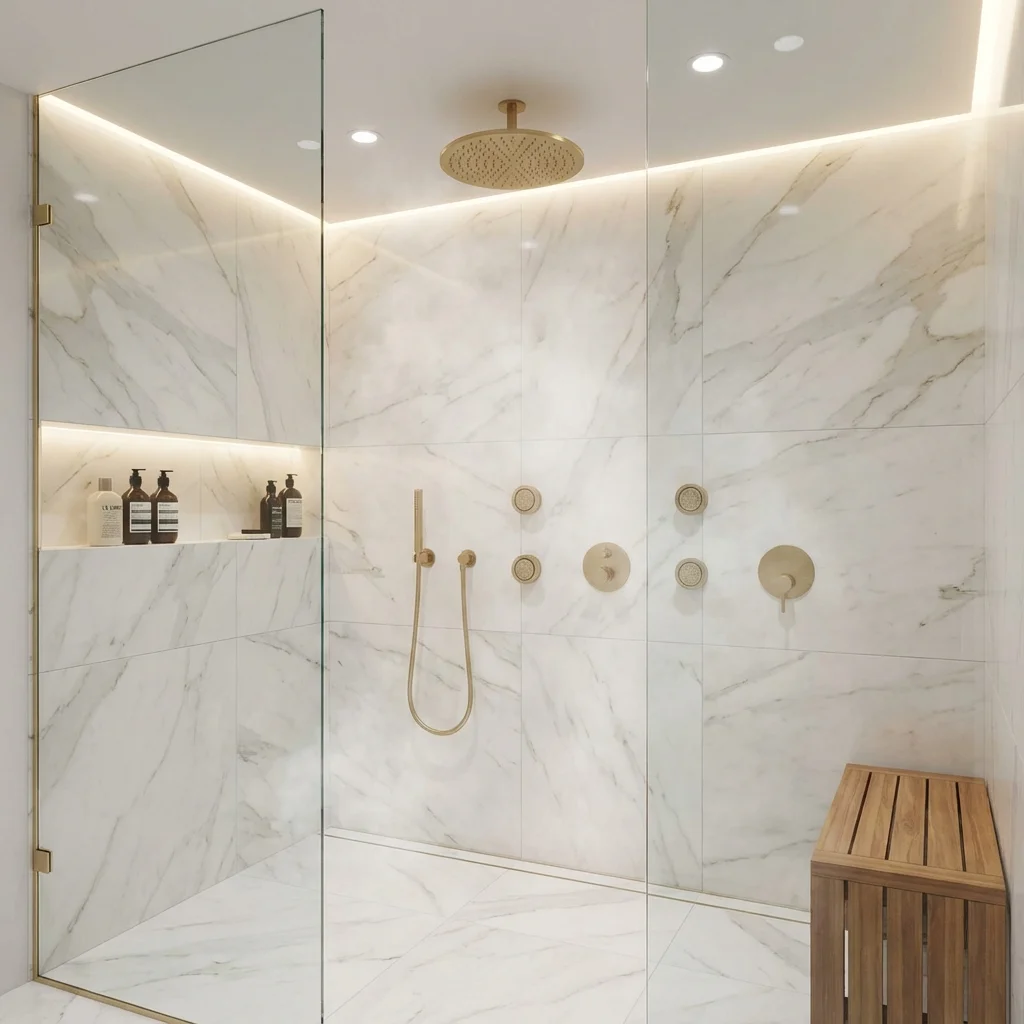
Modern luxury plumbing brands—including Brizo, Kohler, Newport Brass, and Delta—manufacture architectural accessories that double as ADA-rated 300-pound grab bars while matching matte black, champagne bronze, or polished nickel suites. Dual-purpose handheld shower slide bars, corner shampoo shelves with integrated grip rails, and sleek linear towel bars eliminate institutional chrome hospital tubing altogether. Equally important is shower mixing valve placement: positioning a thermostatic or pressure-balanced handle near the shower entrance rather than directly beneath the showerhead lets users turn water on and verify 105°F comfort from outside the glass enclosure without stepping onto wet tile or leaning through a blast of icy initial spray.
- Architectural ADA-rated handheld slide bars support 250–300 lbs while functioning as daily adjustable sprayers
- Offset shower control valves placed 38"–42" AFF near the entry allow dry-hand temperature testing from outside
- Single-hole lever vanity faucets and comfort-height 17"–19" elongated toilets ease wrist and knee strain for all ages
DCOF >= 0.42 Slip-Resistant Porcelain and Low-Threshold Entries
Polished marble and high-gloss glazed porcelain look striking on showroom boards, but become dangerously slick when coated in hair conditioner and Utah softened water—which leaves a noticeably silky sodium-ion feel underfoot across Salt Lake Valley bathrooms. When specifying guest bathroom and walk-in shower flooring, always verify the ANSI A326.3 Dynamic Coefficient of Friction (DCOF) wet rating is at least 0.42, or 0.50+ for zero-entry slopes. Pairing matte-finish textured porcelain planks or mosaic shower pans with either a recessed curbless linear drain pan or a slim 2.5-inch low-profile quartz curb creates a high-end boutique spa aesthetic that accommodates walkers, ski crutches, and bare feet safely.
- Specify ANSI A326.3 wet DCOF ratings of 0.42 minimum (0.50+ preferred) on all bathroom and shower floor tiles
- 2x2-inch mosaic shower pan tiles add grout-line traction underfoot compared to slick large-format polished slabs
- Widening guest bath doorways from 24" or 28" to a 32"–36" solid-core door adds effortless clearance
Invisible Universal Design Upgrades for Utah Guest Bathrooms
| Future-Proof Feature | Standard Builder Spec | Invisible Luxury Spec | Added Cost During Remodel |
|---|---|---|---|
| Wall Structural Support | 16" O.C. studs only (hollow cavities) | Continuous 2x10 fir blocking (32"–41" AFF) | $140–$250 (with photo archive) |
| Handheld Shower Rail | Hollow brass slide bar (non-weight bearing) | 250-lb ADA-rated architectural slide/grab bar | $180–$340 fixture upgrade |
| Floor Slip Resistance | Polished tile (DCOF < 0.30, slick when wet) | Matte textured porcelain (Wet DCOF >= 0.45) | $0 cost difference |
| Shower Entry & Controls | 6" high curb, valve under showerhead | Curbless or 2.5" curb, offset entry valve | $450–$1,400 pan/plumbing layout |
Grant Helmer's Utah Field Pro-Tip (DOPL #10146123-5501)
Every single bathroom we gut at Urban Design & Remodel (Utah DOPL #10146123-5501) gets 2x10 lumber blocking around the shower and beside the toilet—even for 30-year-old homeowners. It uses $60 of Douglas fir and 45 minutes of carpentry, and we hand you measured rough-in photos so your tile stays future-ready forever.
Frequently Asked Questions: Future Proof Bathroom Remodel Aging In Place Blocking
At what height should wood blocking be installed for future shower grab bars?
ADA guidelines center horizontal grab bars between 33 and 36 inches above the finished shower floor. Installing 2x10 or 2x12 lumber vertically centered from 32 to 41 inches AFF gives future installers a wide 9-inch solid wood target zone for both horizontal stability bars and angled assist rails.
Will drilling into shower tile years later cause water leaks behind the wall?
Not when backed by solid wood blocking and sealed properly. Installers bore cleanly through the porcelain face with a diamond bit, pump 100% neutral-cure silicone sealant directly into the pilot hole before driving stainless steel lag screws, and seal the mounting escutcheon flange against the tile surface.
Why does softened Utah water make bathroom tile floors feel extra slippery?
Most Salt Lake Valley homes run ion-exchange water softeners to combat 15+ GPG municipal hardness. Softened water prevents soap scum curds, allowing natural skin oils and liquid body wash to remain slick on smooth surfaces. Choosing matte porcelain rated DCOF 0.45+ restores positive wet foot traction.
What is the best toilet height for a multi-generational guest bathroom?
Comfort-height or chair-height toilets measuring 17 to 19 inches from the finished floor to the seat rim—compared to 15-inch standard builder bowls—significantly reduce hip and knee flexion for tall adults and visiting seniors while remaining completely natural for everyday family use.
Related Utah Roofing, Bathroom & Remodeling Resources
Schedule Your Salt Lake County & Wasatch Front, UT Inspection or Design Quote
Direct owner consultation with Grant Helmer (Utah DOPL #10146123-5501) — zero high-pressure sales.