
Quartz vs. Granite vs. Porcelain Slab Bathroom Vanity Countertops

Engineered 3cm quartz (Cambria, Caesarstone, MSI) is the top-performing bathroom vanity countertop in Salt Lake County ($75–$135/sq ft fabricated and installed), offering zero porosity (<0.05% absorption), zero sealing, and total immunity to makeup, hair dye, and toothpaste acids. Sintered porcelain slabs ($110–$165/sq ft) add 400°F+ curling-iron heat resistance, while natural granite ($65–$115/sq ft) requires periodic sealing. Call Urban Design & Remodel (DOPL #10146123-5501) at (801) 440-1952.
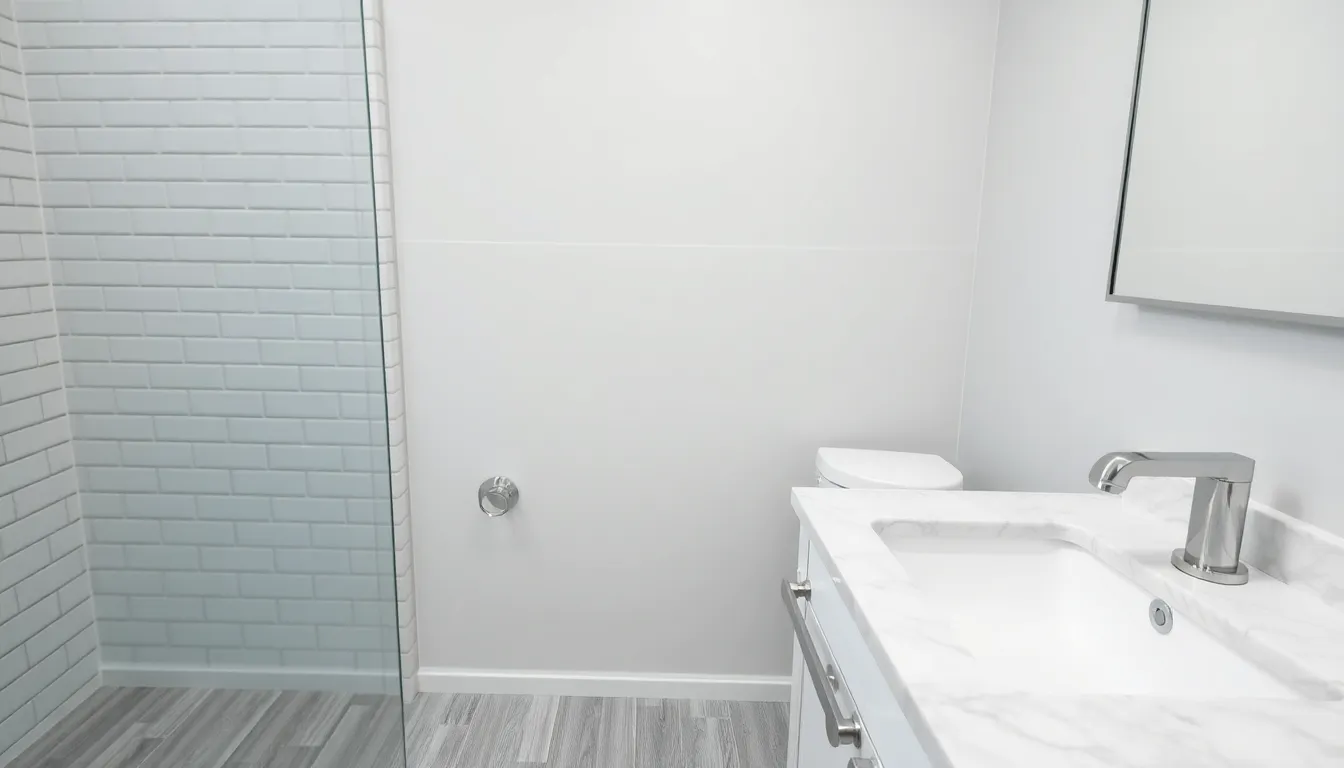
Bathroom vanity countertops endure a completely different chemical and thermal assault than kitchen islands. Instead of red wine and cast-iron skillets, a busy South Jordan or Cottonwood Heights bathroom vanity faces acetone nail polish remover, benzoyl peroxide acne creams, purple hair toners, acidic fluoride toothpaste, 410°F titanium flat irons laid directly on the stone, and pools of 18 GPG Utah hard water evaporating around chrome faucet bases. Selecting between non-porous engineered quartz, natural igneous granite, and ultra-compact sintered porcelain slabs—or hunting Salt Lake stone yards for half-slab remnants—can save you $1,200 while eliminating permanent staining.
Engineered 3cm Quartz: Stain Immunity & The Salt Lake Remnant Secret
Manufactured from roughly 90%–93% crushed natural quartz mineral bound with 7%–10% polymer resins under vacuum vibro-compression, 3cm engineered quartz (Cambria, Silestone, MSI Q, Vadara) ranks 7 on the Mohs hardness scale with virtually zero porosity (<0.05% absorption). Unlike porous natural marble or light-colored granite that sucks liquid foundation, beard oil, and hair dye deep below the surface, quartz wipes clean with mild dish soap and never needs penetrating sealers. Better yet, because standard 60x22-inch or 72x22-inch vanity tops only consume 10 to 15 square feet—less than a quarter of a 126x63-inch jumbo slab—local Salt Lake fabricator remnant yards let you buy luxury Calacatta-veined quartz cutoffs for $850 to $1,550 fabricated and installed.
- Non-porous resin-quartz matrix resists makeup oils, toothpaste acids, and hard-water rings
- Remnant slabs cut single/double 60"–72" vanity costs by 35%–50% vs buying full slabs
- Always place a silicone mat beneath 400°F+ curling irons; resins scorch above 300°F
Natural Granite & Quartzite: Heat Proofing vs. Hard-Water Scaling
Natural granite and true metamorphic quartzite (such as Taj Mahal or Sea Pearl) handle extreme heat effortlessly—meaning a teenager leaving a 425°F straightening iron face-down on the vanity won't leave a yellow resin burn mark. However, natural stones vary wildly in capillary porosity. Dense dark granites like Absolute Black or Steel Grey Leathered barely absorb moisture, whereas lighter crystalline granites (White Ice, Colonial White) wick liquid hand soap around faucet escutcheons, turning a permanent dark gray halo unless sealed every 12 to 24 months with fluoropolymer stone sealer. Around Utah sink faucets where hard water pools daily, granite's microscopic mineral fissures also grip stubborn calcium crusts harder than glass-smooth polished quartz.
- Withstands 450°F+ hot hair tools directly on stone without resin discoloration
- Light granites & quartzites require penetrating fluoropolymer sealing every 1–2 years
- Avoid Dolomitic 'soft quartzites' labeled falsely at stone yards—test with lemon juice!
Sintered Porcelain & Dekton Slabs: Mitered Waterfall Apron Mastery
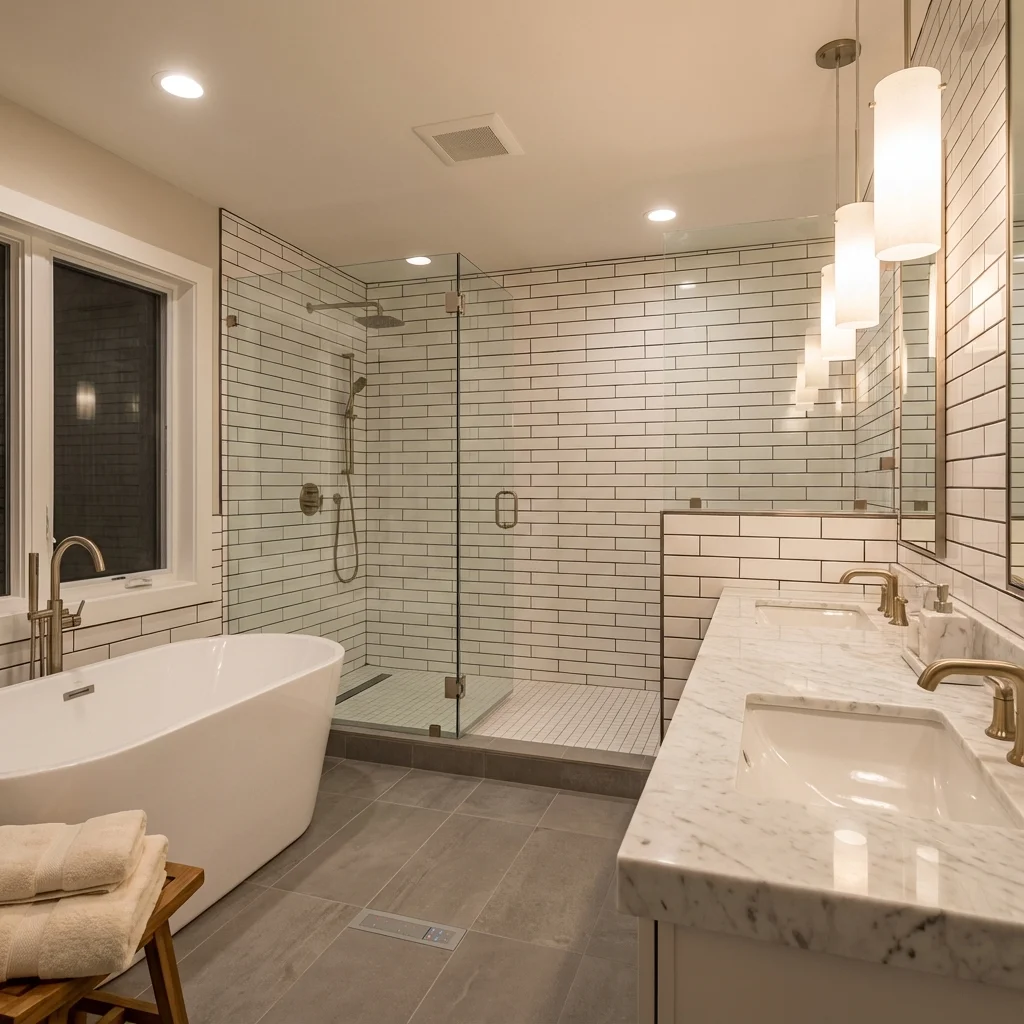
Ultra-compact sintered stone and 12mm (1/2-inch) porcelain slabs—such as Cosentino Dekton, Neolith, and SapienStone—fuse natural clays, feldspar, and mineral oxides at over 2,200°F without a single drop of plastic polymer resin. The result combines the best traits of quartz and granite: 100% UV stability, <0.05% porosity, immunity to bleach and acid descalers, and zero scorching from blazing-hot hair styling tools. Because 12mm porcelain is thinner than 3cm (1.25-inch) stone, fabricators CNC-miter a 2-inch to 4-inch built-up waterfall front apron bonded with color-matched structural epoxy, or fabricate seamless integrated sloped-basin porcelain ramp sinks matching your 24x48 shower walls.
- Zero polymer resins = immune to 450°F hair irons, acetone, and harsh scale removers
- Requires certified sintered-stone CNC fabrication with mitered 2"–3" front edge aprons
- Through-veining only exists on select luxury slabs; mitered edges beat exposed raw edges
Undermount Porcelain Bowls, Overhangs & Faucet Hole Spacing
Regardless of slab material, countertop fabrication details make or break daily vanity maintenance. Always specify rectangular or oval glazed vitreous-china undermount bowls (like the Kohler Caxton or Toto LT) mounted with mechanical steel sink clips *plus* structural silicone—never epoxy adhesives alone, which let sinks drop after years of hot-cold cycles. Order a crisp 1/8-inch negative or zero-reveal cutout overhang so gummy black mildew cannot hide on an exposed porcelain rim lip. Finally, drill faucet holes at 8-inch widespread centers (three holes) rather than 4-inch centerset; widespread brass valves allow clean fingertip wiping around each handle so Utah calcium deposits never fuse an escutcheon plate to your stone.
- Zero-reveal or slight negative-reveal undermount cutouts stop black rim mold rings
- 8-inch widespread three-hole or single-hole faucets clean 3x easier than 4" deck plates
- Include matching 4-inch slab backsplashes (and sidesplashes against drywall) to stop water damage
Bathroom Vanity Countertop Material Comparison (60"–72" Installed)
| Countertop Material | 60"–72" Installed Cost (UT) | 400°F Hair Iron Safe? | Sealing & Stain Resistance |
|---|---|---|---|
| 3cm Engineered Quartz (Remnant/Slab) | $1,150 – $2,250 (incl. bowls) | No (use silicone pad >300°F) | Zero sealing ever; 10/10 stain & acid immunity |
| 3cm Natural Granite / Taj Quartzite | $1,050 – $2,600 (incl. bowls) | Yes (igneous/metamorphic rock) | Seal every 12–24 mos; watch soap halos on light stone |
| 12mm Mitered Porcelain / Dekton | $1,750 – $3,100 (mitered edge) | Yes (kiln-fired at 2,200°F+) | Zero sealing; immune to acids, dye & acetone |
| Natural Carrara / Calacatta Marble | $1,500 – $2,900 (incl. bowls) | Yes (thermally stable) | Etches instantly from toothpaste, lemon & cleaners |
Grant Helmer's Utah Field Pro-Tip (DOPL #10146123-5501)
When shopping Salt Lake stone remnant yards in South Salt Lake or West Valley for a 60-inch or 72-inch vanity top (DOPL #10146123-5501), remember to measure for your 4-inch tall backsplash AND any wall-abutting sidesplash out of the exact same remnant piece! Buying an orphan cutoff that falls 4 inches short of yielding matching splashes forces an awkward tile transition or buying a $2,400 full slab.
Frequently Asked Questions: Quartz Vs Granite Bathroom Vanity Top
Will purple shampoo or hair dye permanently stain white engineered quartz?
Quality brand-name quartz (Cambria, Caesarstone, Silestone) is non-porous, so pigments sit on the surface rather than soaking in. Wiping spills promptly with mild soap or Soft Scrub Gel with Bleach removes dye; avoid abrasive scouring pads that dull the factory resin polish.
Why shouldn't I use cultured marble for a modern bathroom remodel?
Cast cultured marble (crushed limestone dust in polyester gelcoat) scratches easily, yellows over time around hot bowls, crazes with spiderweb cracks around drains from thermal shock, and instantly signals a builder-grade 1990s bathroom to Utah homebuyers.
Do I need sidesplashes on a bathroom vanity in an alcove?
Whenever a vanity countertop butts tightly against painted drywall on one or both ends, installing a matching 4-inch stone sidesplash prevents hand-washing splashes from wicking into the drywall paper and bubbling your bathroom paint.
What countertop overhang works best over frameless vs face-frame bathroom vanities?
Standard face-frame vanities use a 1.25" to 1.5" front overhang beyond the cabinet box (roughly 1/2" past door faces), while sleek European frameless full-overlay floating vanities look sharpest with a tighter 3/4" to 1" overhang.
Related Utah Roofing, Bathroom & Remodeling Resources
Schedule Your Salt Lake County & Wasatch Front, UT Inspection or Design Quote
Direct owner consultation with Grant Helmer (Utah DOPL #10146123-5501) — zero high-pressure sales.