
R-49 and R-60 Attic Insulation Upgrades Paired With a New Utah Roof

Under Utah's amended IECC/IRC Chapter 11 energy code, Climate Zone 5 counties (Salt Lake, Utah, Davis, Weber, Tooele) require R-49 ceiling attic insulation (~16.5–18 inches of blown fiberglass), while Climate Zone 6 high-country areas (Summit/Park City, Wasatch/Heber, Cache, Rich) require R-60 (~20–22 inches). Pairing blown fiberglass or cellulose ($1.85–$3.25/sq ft) with a reroof lets contractors install eave baffles cleanly and capture up to $1,000+ in Utah utility rebates via Urban Design & Remodel (DOPL #10146123-5501, (801) 440-1952).
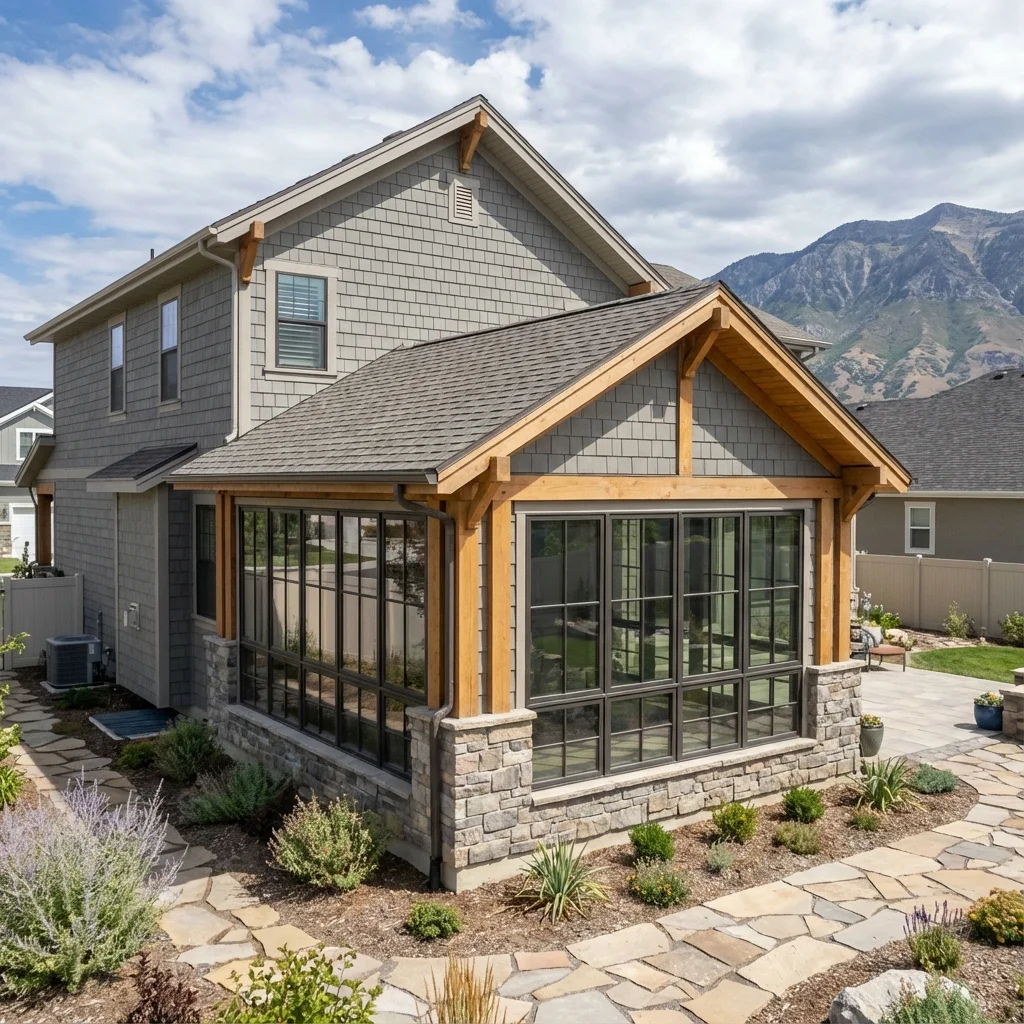
Over 65% of existing homes in West Jordan, Sandy, Murray, Taylorsville, and Ogden were constructed between 1955 and 1998 with just 4 to 7 inches of settled rockwool, cellulose, or fiberglass—delivering an effective thermal resistance of R-11 to R-19. In a climate that swings from 5°F January inversions to 102°F July afternoons, an under-insulated ceiling transfers conductive heat in both directions: spiking winter gas furnace bills while baking shingles from below and forcing central air conditioners to run nonstop until 10:00 PM. Synchronizing an R-49 or R-60 attic blow-in upgrade with your roof replacement solves eave-chute access bottlenecks, prevents ice dams, and unlocks generous Utah utility cash rebates.
Utah IECC Climate Zone 5 (R-49) vs. Zone 6 (R-60) Code Thresholds
Utah spans three distinct IECC thermal zones, with the vast majority of Wasatch Front homeowners living in Climate Zone 5B (Salt Lake, Davis, Weber, and Utah Counties) and mountain bench/resort communities sitting in Climate Zone 6B (Summit County/Park City, Wasatch County, Cache Valley). Under Utah's state-amended Residential Energy Provisions (IRC Section N1102 / Table R402.1.2), Zone 5 attics require R-49 (or R-38 only when full uncompressed height extends completely over exterior wall top plates via raised-heel energy trusses), while Zone 6 attics mandate R-49 to R-60 depending on municipal adoption. Achieving R-49 takes 16.5 to 18.5 inches of virgin loose-fill fiberglass or 13.5 inches of dense-blown borate cellulose; R-60 requires roughly 20 to 22 inches of fiberglass.
- Salt Lake, Davis, Weber & Utah Counties (Climate Zone 5B) specify R-49 attic ceiling insulation (~17.5" fiberglass)
- Summit & Wasatch Counties (Climate Zone 6B) specify up to R-60 (~21" fiberglass or ~16.5" cellulose) for heavy snow loads
- Posted attic depth rulers every 300 sq ft plus a signed insulation certificate on the electrical panel verify code compliance
Protecting Soffit Airflow With Rigid Eave Baffles & Raised Dams
The number-one mistake standalone insulation blowers make is shooting 18 inches of loose fiberglass straight out into the exterior eave corners, burying perforated aluminum soffit vents completely. Choking intake airflow instantly turns a well-insulated R-49 attic into a stagnant moisture trap that curls new shingles and voids manufacturer warranties! When Urban Design & Remodel coordinates reroofing with attic insulation, we staple rigid polystyrene or cardboard rafter vent chutes (baffles) into every truss bay along vented eaves, extending at least 4 inches above the final 18-to-21-inch insulation blanket height and installing vertical wind-washing dams above exterior wall top plates so canyon gusts cannot blow insulation backward off perimeter drywall corners.
- Every vented truss bay requires a 22"–48" rigid foam or poly baffle maintaining a 1.5"–2" clear airflow channel above insulation
- Wind-block dams at exterior top plates stop cold air from scouring fiberglass away from bedroom ceiling perimeters
- During tear-off, decayed bottom-course OSB sheets can be lifted to install baffles cleanly on low-slope 3/12–4/12 eaves
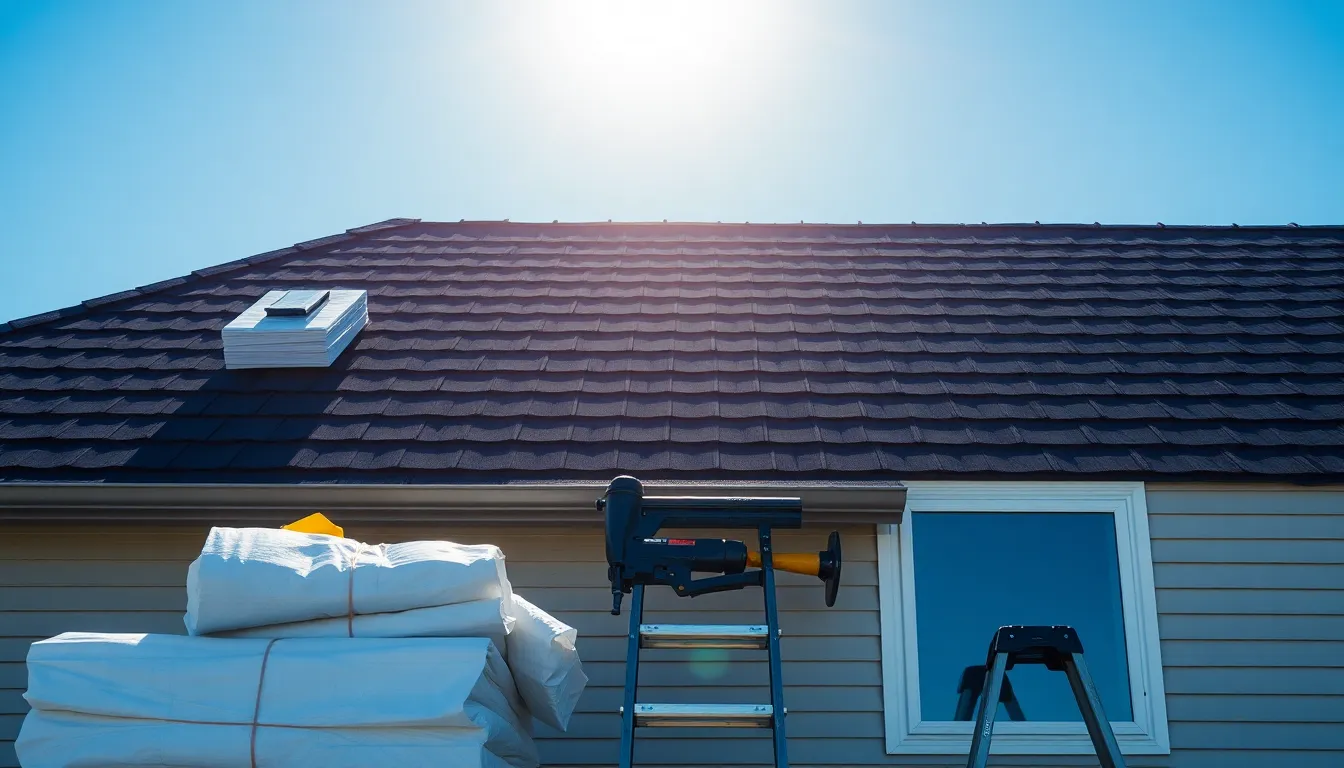
Blown Virgin Fiberglass vs. Borate Cellulose in Utah's Dry Climate
Homeowners upgrading from R-19 to R-49/R-60 typically choose between blown-in virgin fiberglass (such as Owens Corning ProPink or Johns Manville Climate Pro) and stabilized borate-treated cellulose. Blown fiberglass weighs just 0.5 to 0.7 pounds per square foot at R-49—safe for 1/2-inch drywall nailed or screwed 24 inches on center—never settles more than 1%–2%, is completely non-combustible, and does not absorb moisture if a plumbing vent ever drips. Stabilized cellulose delivers a slightly higher R-3.7 per inch (requiring ~3.5 fewer inches for R-49) and cuts convective air looping inside deep blankets during sub-zero nights, though its ~2.1 lb/sq ft weight requires checking older 1960s 3/8-inch gypsum ceilings for sag.
- Virgin blown fiberglass (R-2.7 to R-2.9/inch) adds <0.7 lbs/sq ft dead load and holds R-value without settling
- Borate cellulose (R-3.6 to R-3.8/inch) excels at damping internal convective looping and soundproofing near I-15 or Bangerter
- Never install faced kraft vapor-retarder batts on TOP of existing attic insulation—trapped middle vapor layers condense moisture
Stacking Enbridge/ThermWise & Rocky Mountain Power Wattsmart Rebates
Upgrading a 1,600-square-foot Salt Lake County attic from R-19 to R-49 (including air sealing, eave baffles, and insulated attic hatch dam) typically costs $2,800 to $4,600 standalone—or 12% to 18% less when bundled with mobilization during a roof replacement. Better yet, homes heated by natural gas and cooled by central AC qualify to stack dual Utah utility incentives: Enbridge Gas (formerly Dominion Energy) ThermWise Weatherization rebates pay per square foot when upgrading existing attics below R-19 up to R-49+, and Rocky Mountain Power Wattsmart Homes offers additional per-square-foot attic insulation rebates alongside federal IRC Section 25C Energy Efficient Home Improvement tax credits (30% up to $1,200/year).
- Dual-utility Utah homes can combine ThermWise gas rebates + Wattsmart electric cooling rebates ($0.35–$0.80+/sq ft combined)
- Federal 25C tax credit covers 30% of insulation and air-sealing material costs up to $1,200 annually
- Typical Salt Lake Valley HVAC energy savings run 15%–25% annually, yielding a net post-rebate payback of 3.5 to 6 years
Utah Attic R-Value Upgrade Specs, Depths & Installed Costs
| Upgrade Scope (1,600 Sq Ft Attic) | Added Depth Needed | Gross Installed Cost | Est. Net Cost After Rebates/25C |
|---|---|---|---|
| Top-Up R-19 to R-49 (Blown Fiberglass + Baffles) | +10.5 to 11.5 inches | $2,400–$3,400 | $1,250–$2,050 |
| Top-Up R-19 to R-60 (Zone 6 / Max Efficiency) | +14.5 to 15.5 inches | $3,000–$4,200 | $1,650–$2,650 |
| Full Air Seal + Baffles + R-49 Cellulose | +8.5 to 9.5 inches | $3,400–$4,800 | $1,900–$3,100 |
| Vacuum Old Rodent/Wet Batts + Sanitize + R-49 | Full 17.5 inches virgin | $5,200–$7,600 | $3,600–$5,700 |
Grant Helmer's Utah Field Pro-Tip (DOPL #10146123-5501)
Before scheduling an R-49 attic blow-in on your West Jordan, Sandy, or Draper home, verify your pre-existing insulation depth with a tape measure and photo first! Both Utah ThermWise and Wattsmart rebate programs require pre-upgrade R-value documentation (typically starting at R-19 or less) to approve your rebate check.
Frequently Asked Questions: Utah Attic Insulation Code R49 R60
Am I legally required to upgrade to R-49 attic insulation just to replace my shingles?
No. Under Utah IRC R908 reroofing rules, replacing shingles and underlayment on a pitched vented roof does not trigger mandatory ceiling attic insulation upgrades unless you open ceiling drywall or convert an unconditioned attic into habitable space. However, bundling R-49 cures ice dams and lowers summer attic heat.
Can new insulation be blown right on top of my old fiberglass or rockwool?
Yes, provided the existing insulation is completely dry, free of mold or rodent contamination, and any air bypasses around lights and top plates are sealed first. Loose-fill fiberglass or cellulose blows seamlessly over older batts as long as no vapor barrier sits sandwiched in the middle.
Will 18 inches of R-49 insulation crush my bedroom drywall ceilings?
Modern blown-in fiberglass weighs less than 0.7 pounds per square foot at R-49, which standard 1/2-inch drywall easily supports even on 24-inch-on-center trusses. Only older 1950s–1960s 3/8-inch drywall or water-weakened panels require caution before adding heavier dense-blown cellulose.
How do I keep blown insulation from falling down every time I open my attic hatch?
Contractors build an 18-to-22-inch-tall rigid OSB or plywood containment dam around the perimeter of your attic scuttle hole and adhere 4-inch-thick rigid polyiso foam board onto the back of the hatch lid with weatherstripping along the trim stop.
Related Utah Roofing, Bathroom & Remodeling Resources
Schedule Your Salt Lake County & Wasatch Front, UT Inspection or Design Quote
Direct owner consultation with Grant Helmer (Utah DOPL #10146123-5501) — zero high-pressure sales.