
Removing 1990s Ceramic Floor Tile in Utah: Dustless Demo & Thin-Set Grinding

Professional dustless ceramic or porcelain tile floor removal in Utah costs $4.50 to $7.75 per square foot, including HEPA-shrouded chipping, wire-mesh staple extraction or concrete thin-set diamond grinding, and heavy debris haul-away. Urban Design & Remodel (Utah DOPL #10146123-5501, (801) 440-1952) prepares Salt Lake County wood and concrete subfloors to within 3/16-inch flatness over 10 feet while keeping crystalline silica dust out of your HVAC ductwork.
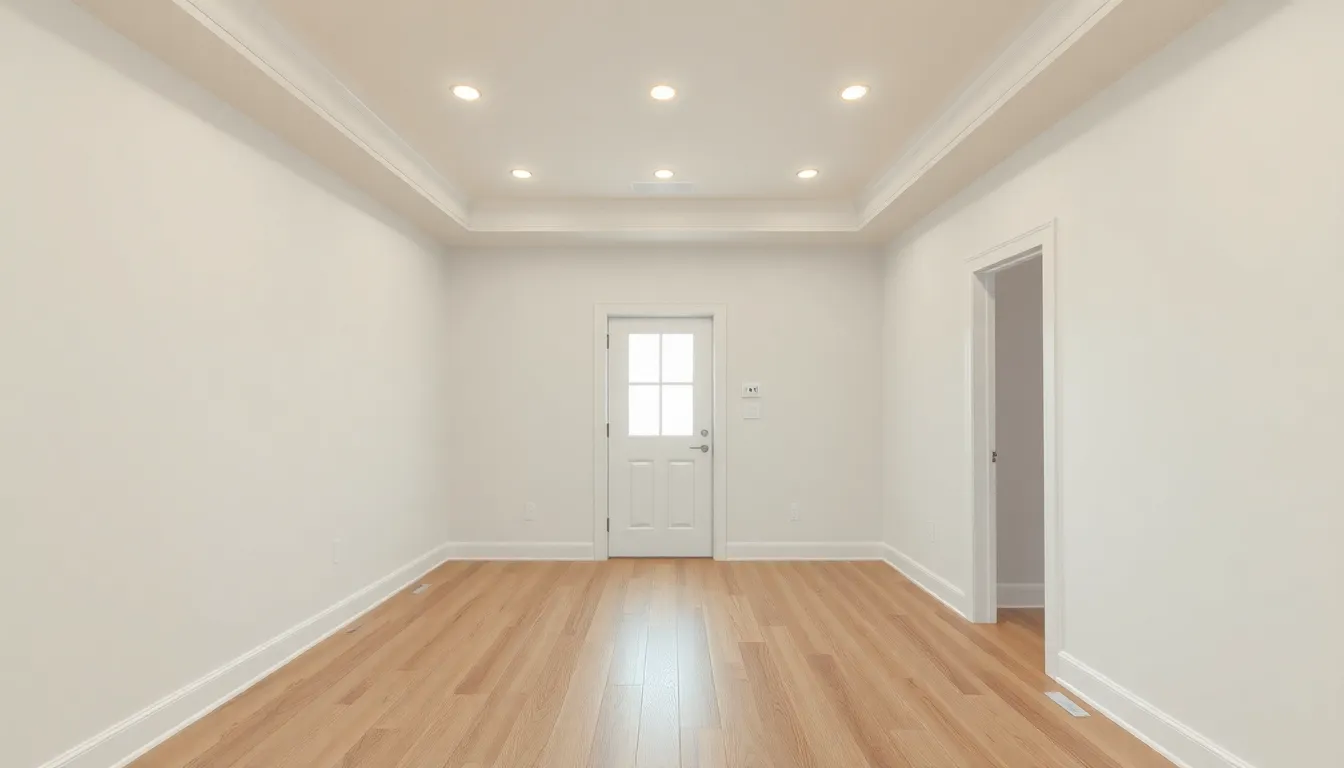
Across Sandy, South Jordan, Murray, and Draper, thousands of homes built between 1990 and 2008 feature sprawling 12x12 glazed beige ceramic tile with wide, stained 3/8-inch sanded grout lines spanning entries, kitchens, laundry rooms, and hallways. Homeowners eager for continuous wide-plank LVP or engineered hardwood often underestimate what hides beneath those tiles: either rock-hard polymer-modified thin-set bonded directly to concrete, or galvanized diamond wire lath held down by thousands of rusted pneumatic staples driven into OSB decking. Traditional sledgehammer demolition fills every closet, return duct, and furnace blower coil in the house with hazardous crystalline silica dust unless industrial HEPA extraction is deployed.
1990s Stapled Wire Mesh & Mortar Beds Over OSB Wood Subfloors
Before modern uncoupling membranes like Schluter-Ditra became standard along the Wasatch Front, Utah tile subcontractors routinely rolled 2.5-pound galvanized expanded metal lath directly over 23/32-inch OSB subfloors, firing 1-inch crown staples every 3 inches across the field before floating a heavy thin-set mortar bed. Prying this assembly up carelessly with crowbars rips giant structural wood splinters out of the OSB sheathing and weakens tongue-and-groove spans. Our demolition crew scores grout lines, uses wide pneumatic scaling blades angled flat at the OSB interface to shear mortar cleanly without gouging wood fibers, and runs rolling rare-earth magnetic sweepers plus pneumatic staple pullers across every square foot so zero protruding metal points remain.
- Flat-angle SDS-Max scaling blades shear mortar beds cleanly without tearing structural 23/32-inch OSB plies
- Up to 16 pneumatic crown staples per square foot must be pulled or driven flush after wire lath removal
- Damaged OSB patches around dishwashers or exterior sliders are replaced with tongue-and-groove subfloor panels
Planetary Diamond Grinding & H13 HEPA Silica Containment
Popping ceramic tiles off a basement slab or main-level concrete deck is only half the battle; petrified ridges of cured Portland cement thin-set remain stubbornly bonded inside concrete slab pores. Laying rigid-core LVP or gluing engineered hardwood over rippled mortar ridges causes click-lock joints to flex and snap within months. We run walk-behind 7-inch to 10-inch planetary diamond cup grinders fitted with flexible polyurethane brush vacuum shrouds connected directly via 2-inch antistatic hoses to auto-pulsing H13 HEPA cyclonic extractors rated above 250 CFM. Capturing 99.97% of airborne particles down to 0.3 microns right at the diamond segment satisfies OSHA 29 CFR 1926.1153 crystalline silica exposure rules and protects your home's indoor air quality.
- H13 HEPA cyclonic vacuums capture 99.97% of 0.3-micron respirable silica dust directly at the grinding head
- HVAC supply registers and main return-air grilles are masked with magnetic barriers before demolition starts
- ZipWall spring poles and negative-air scrubbers isolate occupied living spaces during multi-room tear-outs
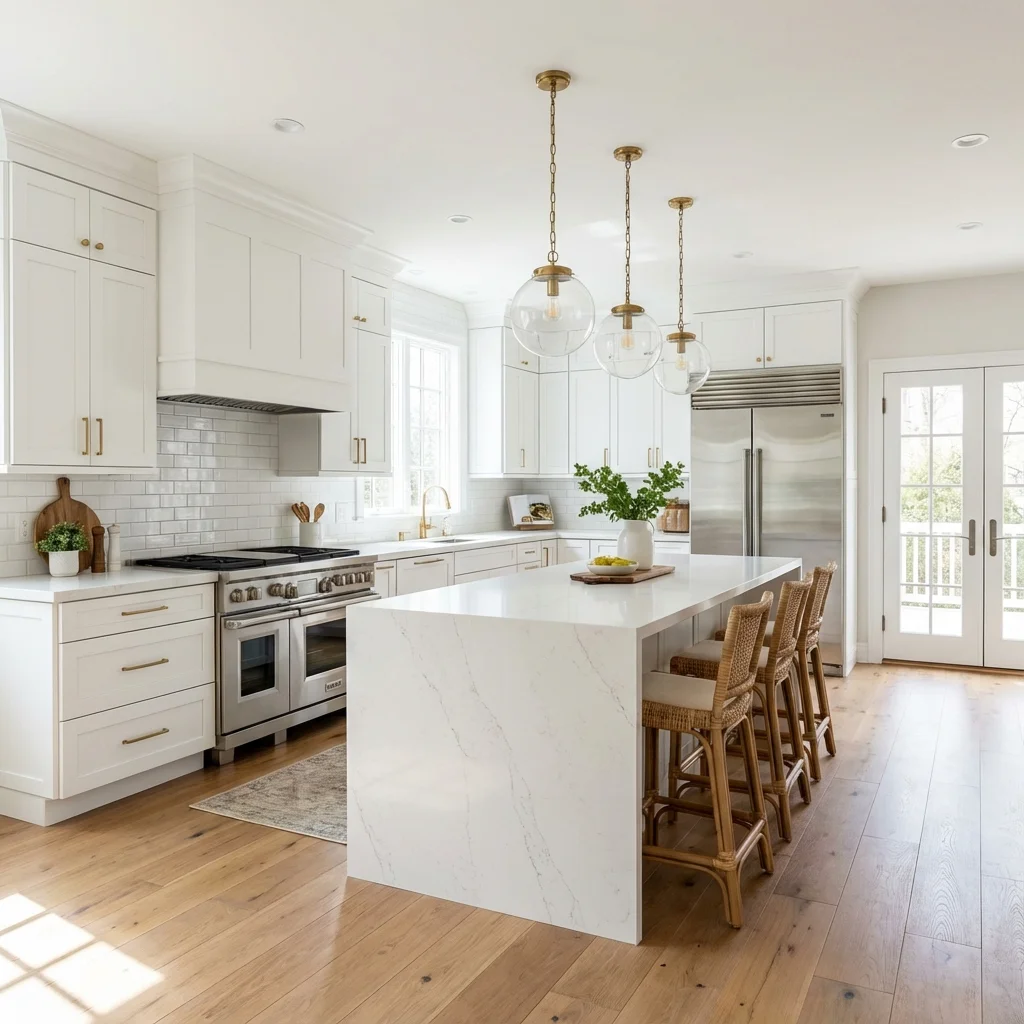
Achieving 3/16-Inch-in-10-Feet Flatness for New LVP or Hardwood
Every major LVP and engineered wood manufacturer enforces a strict subfloor flatness tolerance of 3/16 inch over a 10-foot radius (or 1/8 inch over 6 feet) prior to plank installation. Removing 5/8-inch-thick 1990s ceramic tile and mortar adjacent to formerly carpeted family rooms also frequently exposes a sudden 1/4-inch to 1/2-inch subfloor height drop or a humped floor-truss crown running straight down the kitchen island line. Immediately after dustless grinding and vacuuming, we map the entire main level with a 360-degree green rotary laser and a 10-foot machined aluminum straightedge, priming porous zones with acrylic bond primer before pouring fiber-reinforced Ardex or Schonox self-leveling underlayment across low valleys.
- 10-foot aluminum straightedge + rotary laser audit verifies strict <=3/16-inch subfloor flatness compliance
- Fiber-reinforced calcium aluminate self-levelers safely feather over wood OSB when paired with acrylic primer
- Eliminates abrupt step-downs where old thick kitchen tile met thinner carpeted living room subfloors
Cabinet Toe-Kicks, Island Edges, and Appliance Clearance Details
Many 1990s Utah builders tiled wall-to-wall before setting oak or maple kitchen cabinets directly on top of the ceramic tile, while remodelers sometimes butted tile tight against already-installed cabinet toe-kicks. When existing kitchen cabinetry and stone countertops are staying in place, chipping tile aggressively with wide hammers can crack stained cabinet end panels or trap built-in dishwashers beneath granite overhang lips. Before demolition begins, we shut off angle stops, disconnect and pull out the range, refrigerator, and dishwasher, then plunge-cut around fixed cabinet bases and island perimeters using diamond flush-cut oscillating saws and shrouded toe-kick grinders—leaving a clean flush edge ready for new perimeter expansion gaps and matching toe-kick skins.
- Shrouded flush-cut diamond saws slice tile cleanly flush with existing cabinet end panels and island bases
- Dishwasher alcove floor height is recalibrated so leveling legs maintain service clearance under countertops
- 3-ton roll-off dumpsters or trailer haul-away handle roughly 5 to 7 pounds of tile and mortar per square foot
Utah Dustless Tile Floor Demolition & Subfloor Prep Pricing Breakdown
| Existing Tile Substrate | Demolition & Grinding Method | Cost Per Sq Ft (Utah) | Daily Production Rate |
|---|---|---|---|
| Ceramic on Concrete Slab | SDS-Max chipping + HEPA diamond thin-set grinding | $4.50 – $6.25 / sq ft | 450 – 700 sq ft per day |
| Ceramic + Stapled Lath on OSB | Pneumatic flat-blade shear + staple extraction + sanding | $5.25 – $7.50 / sq ft | 350 – 550 sq ft per day |
| Thick Saltillo / Natural Stone | Heavy walk-behind stripper + double-pass diamond grind | $6.75 – $9.25 / sq ft | 250 – 400 sq ft per day |
| Post-Demo Subfloor Flattening | Acrylic primer + fiber-reinforced self-leveling compound | $2.75 – $4.85 / sq ft | Cures walkable in 3–4 hours |
Grant Helmer's Utah Field Pro-Tip (DOPL #10146123-5501)
When bidding tile removal as a licensed Utah contractor (DOPL #10146123-5501), I always pull one floor heat register first to inspect the cross-section. Knowing instantly whether your 1990s ceramic sits on stapled wire lath, cement backerboard, or a 1-inch mud bed prevents surprise change orders and lets us stage the exact HEPA grinders required.
Frequently Asked Questions: Dustless Tile Floor Removal Cost Per Sq Ft Utah
Is dustless tile removal truly 100% free of dust inside an occupied home?
No honest contractor claims zero particles, because snapping glazed ceramic chips releases tiny fragments, but industrial H13 HEPA shroud extraction paired with ZipWall containment and negative-air scrubbers captures roughly 98% to 99% of fine airborne silica dust—preventing the white chalky haze that ruins electronics and HVAC ducts.
Can you install floating LVP directly over old 1990s ceramic tile instead of removing it?
While technically possible on flat floors if wide grout joints are skim-coated, tiling over or floating LVP atop 1990s ceramic raises floor height by 5/8 inch, creating awkward trip transitions against adjacent carpet, pinching exterior entry doors, and locking dishwashers beneath countertops. Full removal delivers a cleaner, permanent result.
Will pneumatic tile hammers crack my OSB subfloor or basement ceiling drywall?
Used at steep angles by inexperienced crews, heavy demolition hammers will puncture OSB and pop drywall screws in a finished basement ceiling below. Our technicians use wide flat-chisel scaling attachments at shallow 15-degree shear angles that cleave the mortar bond horizontally without pounding vertically into joists.
How long does it take to remove 800 square feet of kitchen and entry tile?
With a trained two-to-three-person crew running HEPA-tethered chipping hammers and planetary diamond grinders, 800 square feet of 1990s ceramic tile, wire mesh, and thin-set typically strips completely clean and gets laser-leveled within 1.5 to 2.5 workdays, allowing new LVP or hardwood installation to begin right away.
Related Utah Roofing, Bathroom & Remodeling Resources
Schedule Your Salt Lake County & Wasatch Front, UT Inspection or Design Quote
Direct owner consultation with Grant Helmer (Utah DOPL #10146123-5501) — zero high-pressure sales.