
Tankless vs. 75-Gallon Water Heaters for Utah Soaking Tubs & Rain Showers

To fill a 65-to-80-gallon freestanding soaking tub or run a 5.0-GPM dual-head shower in Utah without lukewarm water, a standard 40- or 50-gallon tank will fall short because Wasatch winter incoming groundwater drops to 40°F–45°F. Urban Design & Remodel (Utah DOPL #10146123-5501, (801) 440-1952) specifies either a 199,000-BTU condensing natural gas tankless unit (delivering 5.2–5.8 GPM at a 70°F rise) or a 75-gallon high-recovery atmospheric/power-vent tank.
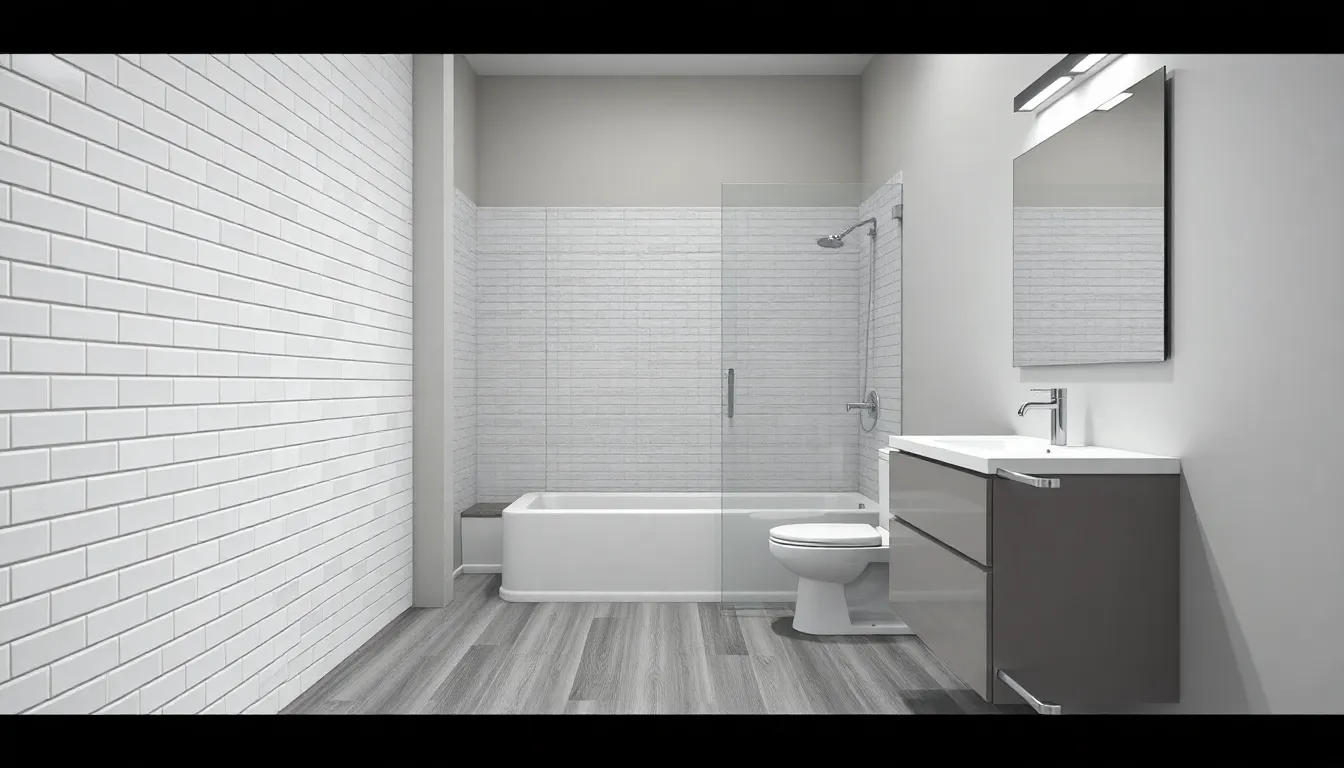
Nothing ruins a $45,000 primary suite remodel faster than stepping into a brand-new 68-inch freestanding acrylic soaking tub in January—only to have the tap turn icy cold when the tub is barely two-thirds full. Homeowners across Sandy, Draper, South Jordan, and Olympus Cove routinely overlook how Utah's high-altitude snowmelt water supply impacts domestic hot water physics. While Southern states enjoy 68°F incoming municipal water year-round, Jordan Valley and Salt Lake City culinary mains plunge to 40°F–44°F between December and March. Bridging that 75°F temperature delta up to 115°F–120°F while feeding high-flow Roman tub spouts or multi-head thermostatic showers demands exact BTU and First-Hour Rating (FHR) math.
Why Standard 50-Gallon Tanks Fail the 70-Gallon Soaking Tub Math
A conventional 50-gallon natural gas tank water heater never actually yields 50 gallons of hot bathwater. Due to cold-water dip-tube dilution at the bottom of the tank as fresh 42°F Utah culinary water rushes in, usable hot water equals roughly 70% of nominal tank capacity—just 35 gallons before outlet temperatures drop below 102°F. Meanwhile, a 67-inch freestanding soaking tub holds 65 to 80 gallons to the overflow slot, and even after factoring in body displacement, requires 48 to 55 gallons of 108°F blended water. Furthermore, radiant heat loss into acrylic or cast-iron tub walls during a slow fill steals another 4°F, forcing you to upgrade storage volume or burner recovery before setting the tub.
- Standard 50-gal tanks deliver only ~35 usable gallons before 42°F winter dilution drops bath temps
- Thermostatic mixing valves boosted to 135°F–140°F storage (stepped down to 120°F) stretch 50-gal yield to ~46 gal
- 75-gallon 76,000-BTU power-vent tanks provide a 125+ gallon First-Hour Rating ideal for rapid 8-GPM tub spouts
Sizing Condensing Gas Tankless Units for Utah's 70°F–75°F Winter Delta-T
Manufacturer brochures boldly advertise gas tankless water heaters as '11.0 GPM' units—a marketing figure tested at a mild 35°F temperature rise typical of Miami. Along the Wasatch Front, lifting 42°F winter canyon water up to 115°F requires a grueling 73°F temperature rise (Delta-T), plus a 4% per 1,000-foot high-altitude BTU derating factor at Salt Lake's 4,500-to-5,200-foot elevation unless compensated by forced-draft blowers. Under real Utah winter conditions, a top-tier 199,000-BTU condensing unit (Navien NPE-240A2 or Rinnai RXP199i) delivers 5.1 to 5.6 continuous gallons per minute. That supplies endless hot water for a dual-head shower (two 2.0-GPM heads + body sprays pulsed sequentially) or fills any size soaking tub continuously without ever running empty.
- 199,000-BTU condensing gas tankless units yield ~5.3 GPM continuous hot water at a 73°F Utah winter rise
- Built-in recirculation pumps eliminate the 60-second cold-water wait on distant 2nd-floor master baths
- Requires 3/4-inch gas line verification (2-psi Enbridge/Dominion systems simplify runs) and 2-inch PVC intake/exhaust
Multi-Head Thermostatic Showers: Calculating Concurrent GPM Flow Rates
When designing a custom primary spa shower featuring an overhead 10-inch rain canopy, wall showerhead, handheld rinse wand, and three horizontal body jets, total concurrent GPM dictates both supply piping diameter and water heater architecture. Standard 1/2-inch pressure-balance valves cap output near 4.5 GPM, whereas a 3/4-inch thermostatic rough-in valve (such as Kohler Anthem or Brizo Sensori) can flow 11 to 14 GPM with multiple outlets open simultaneously. Running 9 GPM continuously will drain even a 75-gallon tank in seven minutes and overwhelm a single tankless unit—requiring either cascading dual 199,000-BTU tankless heaters wired in parallel or pairing high-efficiency 1.75–2.0 GPM Katalyst air-induction heads that feel drenching while staying under 5.5 total GPM.
- Two standard 2.5-GPM showerheads running together consume 50 gallons of blended water in 10 minutes
- Cascaded dual 199k-BTU Navien tankless units deliver 10.6+ winter GPM for extreme spa body-spray setups
- Dedicated 3/4-inch Uponor PEX-A hot trunk lines prevent pressure drop when laundry or dishwashers cycle
Why Utah's 15–20 GPG Hard Water Demands Softening Before Tankless Upgrades
Installing a $4,800 high-efficiency condensing tankless water heater onto unsoftened Salt Lake County municipal culinary water is a guaranteed recipe for scaled stainless heat exchangers and voided manufacturer warranties. Dissolved calcium carbonate precipitates out of water exponentially faster above 120°F; inside the narrow stainless steel heat-exchanger coils of a condensing tankless unit, 16-GPG Jordan Valley hard water bakes rock-hard limescale within 14 to 18 months, triggering Error Code E016 overheating lockouts and flow restrictions. We mandate pairing every Utah tankless bath upgrade with a metered whole-home ion-exchange water softener—plus brass Webstone isolation service valves for quick 30-minute annual food-grade citric acid flushing—preserving 0.95 UEF thermal efficiency for two decades.
- Navien and Rinnai warranties exclude heat-exchanger failures caused by water hardness exceeding 7–10.5 GPG
- Brass Webstone isolation service kits allow effortless annual descaling right in the mechanical room
- Electric whole-home tankless units (27kW–36kW) are strongly discouraged in Utah due to 150-amp panel draw & low winter GPM
Utah Winter Hot Water Performance Comparison (42°F Inlet -> 115°F Outlet)
| Water Heater Configuration | Usable Winter Dump / GPM | Max Bath Fixture Capability | Installed Utah Upgrade Cost |
|---|---|---|---|
| Standard 50-Gal Gas Tank (40k BTU) | ~35 Gal Usable / 45-Min Recovery | Single 2.5-GPM shower or standard 60x32 alcove tub | $1,850 – $2,600 |
| 50-Gal Tank + ASSE 1017 Booster Valve | ~47 Gal Equivalent Dump | Mid-size 60-gal soaking tub or brief dual-head shower | $2,350 – $3,100 |
| 75-Gal High-Recovery Power-Vent (76k BTU) | ~62 Gal Dump / 125-Gal 1st Hr | High-flow 8-GPM Roman tub filler + simultaneous shower | $3,600 – $4,900 |
| 199,000-BTU Condensing Gas Tankless | Unlimited @ 5.2–5.6 Winter GPM | Any size soaking tub + endless 5.0-GPM dual-head shower | $4,400 – $6,200 |
Grant Helmer's Utah Field Pro-Tip (DOPL #10146123-5501)
Here is a trade secret from 15+ years building Utah baths (DOPL #10146123-5501): tankless water heaters throttle flow internally to maintain 120°F in January, capping Roman tub spouts around 5.3 GPM (a 10-minute fill). If you crave an instant 5-minute waterfall fill from an 11-GPM floor tub filler, a 75-gallon high-recovery tank actually fills deep tubs twice as fast as a single tankless!
Frequently Asked Questions: Water Heater Size For Soaking Tub Multi Head Shower
Can I use an electric tankless water heater for a master bath remodel in Utah?
We strongly advise against whole-home electric tankless water heaters along the cold Wasatch Front. Achieving 5 GPM across a 73°F January temperature rise demands 32kW to 36kW—consuming 135 to 150 amps of dedicated 240V panel capacity and forcing a costly 400-amp Rocky Mountain Power service upgrade.
Does upgrading from a tank to a gas tankless water heater require new exhaust venting?
Yes. Older 40,000-BTU atmospheric gas tanks vent hot flue gases naturally up vertical metal B-vent roof chimneys, whereas 96%-efficient condensing gas tankless heaters utilize sealed combustion with cool-exhaust 2-inch or 3-inch Schedule 40 PVC twin pipes routed directly through your basement rim joist.
What is a hot water tank booster mixing valve and when does it make sense?
An ASSE 1017 thermostatic tank booster threads directly atop a newer, healthy 50-gallon gas water heater, allowing you to safely store tank water at 140°F while blending cold culinary water into outgoing pipes down to an anti-scald 120°F—stretching bath yield by ~30% for $475 installed.
How do you eliminate the 90-second wait for hot water in an upstairs Utah master bath?
While bathroom studs or basement drop ceilings are accessible during your remodel, our plumbers install a dedicated 1/2-inch insulated Uponor PEX-A hot-water return loop tied into an intelligent recirculation pump (Navien NaviCirc or Grundfos Comfort), delivering 115°F shower water within 4 seconds of turning the handle.
Related Utah Roofing, Bathroom & Remodeling Resources
Schedule Your Salt Lake County & Wasatch Front, UT Inspection or Design Quote
Direct owner consultation with Grant Helmer (Utah DOPL #10146123-5501) — zero high-pressure sales.