
Wood-Look Porcelain Plank Tile vs. Floating LVP in Full Bathrooms With Tubs

While luxury vinyl plank (LVP) planks themselves are waterproof PVC/SPC plastic, a floating click-lock LVP floor is NOT a waterproof containment membrane—standing tub-splash puddles seep beneath perimeter baseboards and toilet flanges to trap subfloor mold. For full family baths in Utah, Urban Design & Remodel (Utah DOPL #10146123-5501, (801) 440-1952) strongly recommends mortared wood-look porcelain plank tile over Schluter-Ditra uncoupling membranes for permanent watertight longevity.
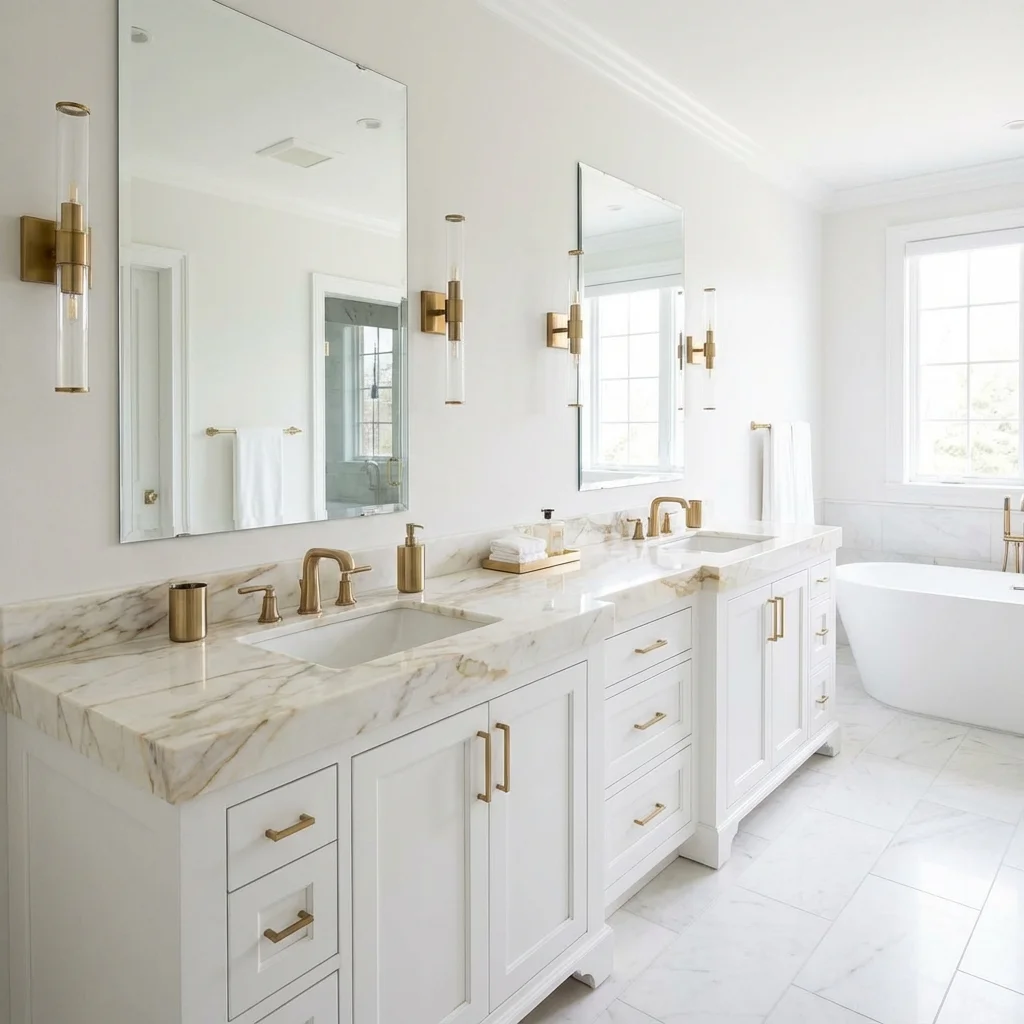
Big-box flooring commercials showing golden retrievers knocking water bowls across '100% Waterproof Luxury Vinyl Plank' have convinced thousands of Wasatch Front homeowners to run floating click-lock LVP straight out of hallways and into kids' tub-and-shower bathrooms. Six months after bath time cannonballs in Herriman, Daybreak, or Sandy, homeowners call us wondering why a sour mildew odor wafts from the tub caulk line or why end joints near the toilet flange are curling upward. Understanding the critical engineering difference between a waterproof plank material and a sealed, mortared bathroom floor assembly saves you from tearing out buckled vinyl and rotted OSB subfloors.
The Floating Floor Trap: How Tub Puddles Bypass 'Waterproof' Click-Lock LVP
Every floating SPC (stone plastic composite) or WPC luxury vinyl plank floor relies on a mandatory 1/4-inch perimeter expansion gap around every tub apron, vanity toe-kick, doorway, and 4-inch toilet closet flange so the floor can expand and contract thermally without tenting. Even if a meticulous installer fills that perimeter gap with compressible foam backer rod and 100% silicone, floating vinyl deflects downward 1/16 inch under adult footsteps right at the tub edge—shearing perimeter caulk beads within a year. Once kids splash two cups of bathwater onto the floor, capillary action sucks water beneath the attached IXPE foam pad, where zero evaporation can occur over OSB subfloors, breeding hidden black Aspergillus and Stachybotrys mold.
- Manufacturer LVP warranties cover water on TOP of planks—explicitly excluding subfloor moisture trapped underneath
- Bolting a heavy vanity cabinet or clamping a toilet tight onto floating LVP pins the floor and snaps delicate locking tongues
- Slow wax-ring toilet seeps stay completely invisible under floating LVP until OSB subfloor framing rots soft
Why Mortared Wood-Look Porcelain + Ditra Creates a True Watertight Basin
Modern Italian and domestic wood-look porcelain planks (6x36, 8x48, or 9x60 inches) replicate wire-brushed white oak, walnut, and reclaimed barnwood grain textures with realistic matte embossing—while firing to an impervious <0.5% water absorption rating. More importantly, porcelain is bonded monolithically with polymer-modified thinset mortar over a Schluter-Ditra polyethylene uncoupling membrane, with Schluter-Kerdi waterproof band sealed directly up the drywall behind baseboards and tight against the tub apron. Because zero air space exists beneath mortared porcelain and stain-proof grout seals every 3/32-inch joint, splashed bathwater stays strictly on top of the floor until wiped up or evaporated into Utah's dry air.
- Ditra + Kerdi-Band perimeter sealing turns the entire bathroom floor into a secondary waterproof pan
- Porcelain withstands curling irons dropped at 400°F, pet claws, and harsh toilet cleaners without melting or denting
- Expected residential bathroom lifespan: 40–50+ years for porcelain plank vs. 7–12 years for click-lock LVP
Radiant Heated Floors & Winter Comfort: Solving the 'Cold Tile' Objection
The number-one reason Utah homeowners hesitate over porcelain tile in basement or second-floor bathrooms is bare-foot temperature on 18°F January mornings—since vinyl has lower thermal conductivity and feels closer to room temperature than unheated stone. We solve that permanently by snapping electric radiant heating cables right into Schluter Ditra-Heat waffle studs beneath wood-look porcelain planks for roughly $950 to $1,550 in an average 55-square-foot bathroom. Unlike floating SPC vinyl—which most manufacturers restrict below 80°F–85°F surface temp lest thermal expansion warp click-locks or off-gas plasticizers—porcelain conducts radiant warmth effortlessly at 88°F, drying wet bathmats in 20 minutes and warming toes on programmable morning schedules.
- Schluter Ditra-Heat adds only 1/4 inch of total vertical height while pairing uncoupling + radiant warmth
- WiFi programmable GFCI floor thermostats cost pennies (~$8–$14/month in winter) when scheduled for 6–9 AM & 8–10 PM
- High-DCOF (>=0.42) matte wood-grain porcelain texture provides superior wet barefoot grip compared to slick vinyl
Where LVPactually Makes Sense: Powder Rooms & Glue-Down Commercial Specs
Are there specific Utah bathroom scenarios where luxury vinyl remains a pragmatic choice? Yes—in dry main-floor half-bath powder rooms containing only a pedestal/vanity sink and toilet where continuous main-floor hardwood-look LVP flows seamlessly from the entry foyer without a transition strip (provided a 1/2-inch clearance ring is cut around the toilet flange so the bowl never pins the floating floor). In basement rentals on flat concrete slabs where budget rules out tile, specifying a heavy 20-mil commercial glue-down LVT adhered with waterproof pressure-sensitive acrylic adhesive eliminates the hollow underneath air gap of click-lock planks, though mortared porcelain still dominates resale appraisals.
- Main-floor powder rooms (no tub/shower) can safely run continuous LVP if toilet flanges have proper expansion clearance
- Full-spread waterproof glue-down LVT on concrete slabs eliminates hollow water-trapping pockets under planks
- Appraisers and Wasatch Front buyers consistently categorize vinyl in primary baths as a builder-grade shortcut
Wood-Look Porcelain Plank Tile vs. Click-Lock LVP in Full Bathrooms
| Performance Metric | Wood-Look Porcelain + Ditra | Floating Click-Lock SPC LVP | Glue-Down 20-Mil Commercial LVT |
|---|---|---|---|
| Subfloor Puddle Containment | 100% Sealed Basin (Zero under-seepage) | Poor (Water wicks under perimeter & pad) | Good on Concrete (No under-pad air gap) |
| Radiant Floor Heat Compatibility | Ideal Conductor (Up to 90°F+ safely) | Restricted (<=82°F; click joints can buckle) | Moderate (Adhesive temp limits apply) |
| Vanity & Toilet Pinning Risk | Zero (Cabinets & toilets bolt rock-solid) | High (Must cut around vanities; flange gaps) | Low (Bonded directly to slab) |
| Installed Utah Cost (60 Sq Ft Bath) | $1,550 – $2,300 ($2,950 w/ Radiant Heat) | $750 – $1,150 | $850 – $1,300 |
Grant Helmer's Utah Field Pro-Tip (DOPL #10146123-5501)
Whenever my crew tears out a 4-year-old click-lock LVP floor in a Daybreak or Herriman kids' bath (DOPL #10146123-5501), the homeowner is shocked to see standing water trapped under the rubber underlayment two weeks after the last bath! If you love warm white-oak aesthetics, choose rectified 8x48 matte wood-look porcelain with warm bone micro-aggregate grout—you get identical warmth with zero subfloor rot.
Frequently Asked Questions: Tile Vs Lvp In Bathroom Splash Zone
Can I caulk around the edges of floating LVP at the bathtub to make it waterproof?
Applying flexible 100% silicone over foam backer rod along the tub apron helps stop minor splashes, but floating vinyl compresses downward slightly every time you step out of the shower, frequently tearing that silicone bond loose within 12 to 18 months.
Does wood-look porcelain plank tile look fake next to real hardwood hallway floors?
Placing wood-look porcelain directly up against natural oak hallway hardwood can create a visual near-miss clash. When hallways have real wood, we instead recommend limestone, slate, terrazzo, or large-format stone-look porcelain in the bath—reserving wood-look tile when hallways are carpeted or tiled.
How do you transition cleanly between thicker bathroom porcelain tile and thinner bedroom carpet or LVP?
We install a sleek anodized aluminum or brushed brass Schluter Reno-U or Schiene transition profile centered directly beneath the closed bathroom door slab so neither surface shows raw edges and robot vacuums roll smoothly across.
Why can't you install a heavy bathroom vanity on top of floating LVP?
Floating click-lock LVP must expand and contract freely as indoor humidity and sun exposure shift. Screwing or setting a 400-pound quartz-topped vanity onto LVP pins one side of the floor, causing click-lock tongues in the center of the bathroom to separate or peak.
Related Utah Roofing, Bathroom & Remodeling Resources
Schedule Your Salt Lake County & Wasatch Front, UT Inspection or Design Quote
Direct owner consultation with Grant Helmer (Utah DOPL #10146123-5501) — zero high-pressure sales.