
Basement Moisture & Insulation: Why XPS & Closed-Cell Foam Beat Fiberglass

Utah IECC Climate Zone 5B building code requires either R-15 continuous foam insulation or R-19 cavity insulation on exterior basement concrete walls (R-10 continuous + R-13 cavity hybrid also passes). Building science strongly opposes stapling 6-mil plastic sheeting over R-19 fiberglass batts against below-grade concrete—inward ground moisture condenses inside cold fiberglass, causing musty mold. Urban Design & Remodel (Utah DOPL #10146123-5501, (801) 440-1952) installs closed-cell spray foam or rigid XPS + mineral wool.

You know that unmistakable damp, earthy 'old basement smell' inside 1980s and 1990s finished basements across Salt Lake City, Sandy, Bountiful, and Murray? Nine times out of ten, when we demolish those walls for a modern remodel, there isn't even an active foundation crack—instead, we pull back clear 6-mil polyethylene plastic stapled across wood studs and find black-spotted pink fiberglass batts pressed directly against freezing 50°F poured concrete. Even in Utah's arid high desert, irrigated lawn sprinklers and spring snowmelt saturate exterior soil, driving constant microscopic moisture vapor inward through porous concrete capillaries. Building a bone-dry, odorless, warm Utah basement starts with modern vapor-smart wall physics.
Why the Old 'Fiberglass + Plastic Sheet' Method Grows Mold
For decades, builders mistakenly treated below-grade concrete walls identically to above-grade 2x6 exterior house walls: shoving fluffy R-19 fiberglass batts against concrete and stapling 6-mil poly plastic on the warm drywall side. Below grade, moisture physics flips completely! Soil surrounding a Salt Lake County foundation stays near 98%–100% relative humidity year-round from lawn irrigation and snowmelt, continuously pushing water vapor INWARD through concrete via capillary action and vapor diffusion. Meanwhile, concrete 6 feet underground sits at 50°F–54°F even in July. Warm indoor air leaking into fluffy fiberglass hits that 52°F concrete dew point and condenses into liquid water—while the interior plastic sheet traps that moisture permanently inside wood studs and paper-faced fiberglass!
- IRC/IECC building science journals (Building Science Corp BSD-103) explicitly condemn interior poly barriers in basements
- Fiberglass loses R-value rapidly when damp and feeds mold spores on organic dust and kraft-paper facings
- Rim-joist cavities at the top of foundation walls leak 25% of basement winter drafts if stuffed with loose fiberglass
Utah IECC Climate Zone 5B Code: R-15 Continuous vs. R-19 Cavity
Salt Lake, Utah, Davis, Weber, and Tooele Counties sit inside International Energy Conservation Code (IECC) Climate Zone 5B (while Summit/Wasatch mountain towns sit in colder Zone 6B). Under current Utah residential energy code amendments, newly finished basement exterior concrete walls must achieve either R-15 continuous unbroken insulation across the concrete face OR R-19 cavity insulation inside framing—or an engineered hybrid assembly such as R-10 continuous rigid foam board against the concrete plus R-13 cavity insulation inside a 2x4 stud wall set right in front of the foam! Equally critical, rim joists (band joists sitting atop the concrete sill plate) must be air-sealed and insulated to match floor/wall R-15–R-20 standards.
- Holding 2x4 wood framing 1"–2" off cold concrete via rigid foam eliminates thermal bridging through studs
- Never use foil-faced polyiso board below grade against damp concrete; polyiso absorbs moisture better suited to roofs
- Exposed foam board cannot stay uncovered—code requires 1/2" drywall thermal barrier over all foam plastics (IRC R316.4)
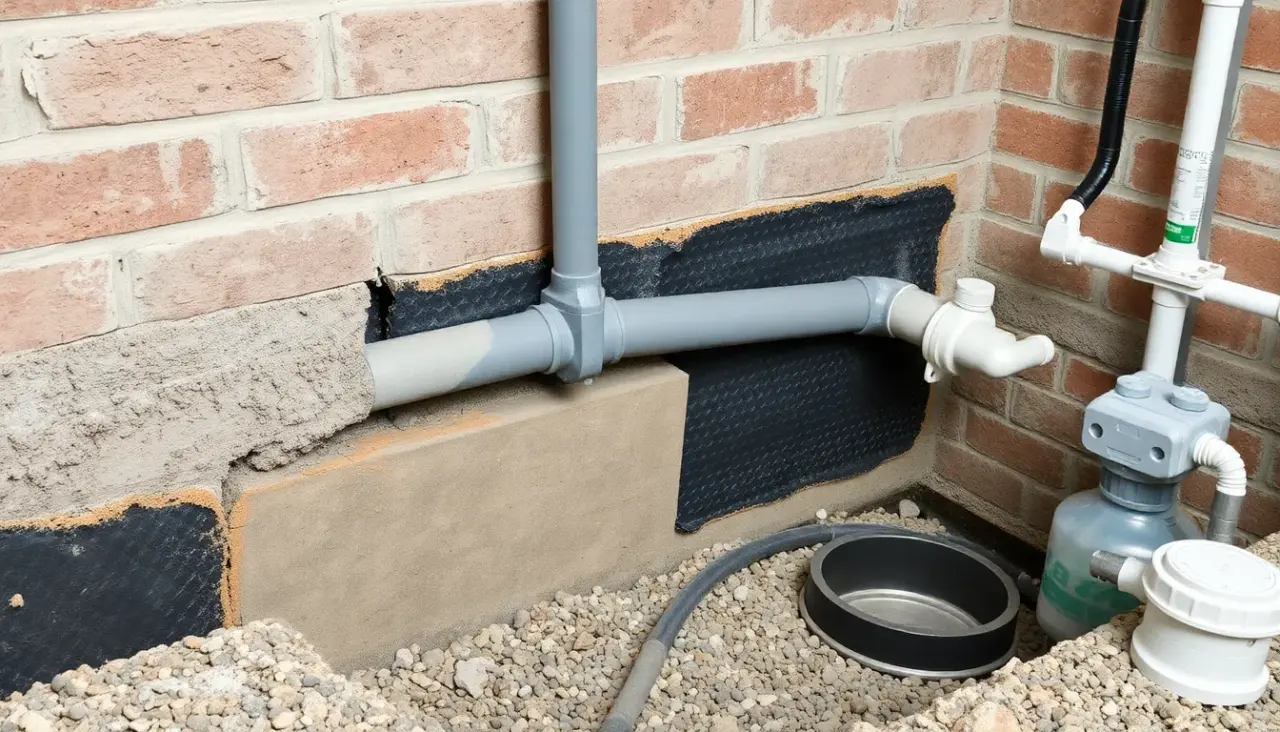
Gold Standard #1: 2-Inch XPS Rigid Foam + Rockwool Mineral Wool
Our favorite cost-effective, bulletproof assembly for Wasatch Front basements bonds 2-inch thick Owens Corning Foamular NGX 250 extruded polystyrene (XPS, rated R-10 with low-GWP blowing agent and a 0.8-perm Class II semi-permeable vapor rating) directly against clean, dry concrete foundation walls using foam-safe Loctite PL300 adhesive, taping every vertical board seam and top/bottom edge with 3M 8087 air-sealing tape. Next, we frame our 2x4 stud wall tightly in front of the pink XPS foam—zero wood ever touches cold concrete!—and fill the 3.5-inch stud cavities with unfaced R-15 Rockwool Comfortbatt stone wool (totaling an ultra-warm R-25 wall!) finished with unpainted drywall painted in breathable latex primer/paint so any trace moisture dries safely inward.
- 2" XPS keeps the interior foam face above indoor dew-point temperatures 365 days a year—stopping condensation cold
- Hydrophobic Rockwool volcanic stone wool cannot rot, slump, or support mold growth and blocks exterior street noise
- Costs roughly $3.60–$5.10 per wall square foot installed—far superior comfort for modest cost over basic batts
Gold Standard #2: 2.5–3 Inch Closed-Cell Polyurethane Spray Foam
When foundation walls feature irregular stepped footings, bowed vintage concrete forms (common in 1950s Sugar House, Avenues, and Millcreek homes), or tight room dimensions where losing 2 inches behind studs hurts bathroom clearances, 2.25 to 3.0 inches of high-density closed-cell polyurethane spray foam (R-6.8 to R-7.0 per inch = R-15.5 to R-21) reigns supreme. Sprayed after framing (holding 2x4 walls 1 inch off the concrete so foam wraps cleanly behind every stud!), closed-cell foam expands into a monolithic, rock-hard structural air and Class II vapor barrier bonded 100% to concrete and rim joists—eliminating air pockets, sealing radon/soil-gas cracks along wall joints, and locking PEX pipes safely inside the warm side of the thermal envelope.
- Spraying rim joists with 3" closed-cell foam stops icy Wasatch canyon winter drafts along main-floor kitchen baseboards
- Always fix active exterior downspout flooding or weeping foundation cracks via polyurethane injection BEFORE foaming!
- Never route water supply PEX pipes behind foam against freezing exterior upper concrete walls—keep plumbing inside warm studs
Utah Basement Wall Insulation Systems Comparison (Climate Zone 5B Code Compliance)
| Insulation Assembly | Total R-Value & Code Status | Condensation & Mold Risk | Salt Lake Installed Cost (1,200 SF) |
|---|---|---|---|
| R-19 Fiberglass + 6-Mil Plastic | R-19 Cavity (Techn. code legal) | HIGH RISK (traps condensation on 52°F concrete) | $1,900 – $2,900 (Not Recommended) |
| Vinyl-Faced R-19 Basement Blanket | R-19 Pinned to Concrete | Moderate (air gaps behind folds if unsealed) | $2,200 – $3,400 (Unfinished rooms only) |
| 2" XPS Foam (R-10) + R-15 Rockwool | R-25 Hybrid (Exceeds Utah IECC) | Virtually Zero (thermal break + stone wool) | $4,200 – $6,100 (Best Value Pro Spec) |
| 2.5"–3" Closed-Cell Spray Foam | R-17 to R-21 Monolithic + Rim Joists | Virtually Zero (airtight Class II barrier) | $5,400 – $7,800 (Best Air Seal & Irregular) |
Grant Helmer's Utah Field Pro-Tip (DOPL #10146123-5501)
Before insulating any Salt Lake County basement concrete wall (Utah DOPL #10146123-5501), tape two 18x18-inch squares of clear kitchen plastic wrap tightly to bare concrete for 48 hours. Droplets UNDER the plastic mean active exterior ground water needs grading/gutter fixes first; droplets ON TOP mean humid indoor air condensation solved instantly by XPS or closed-cell foam!
Frequently Asked Questions: Insulating Basement Concrete Walls Utah Code R15 R19
Do interior basement walls between bedrooms need insulation too?
Energy code only mandates R-15/R-19 thermal insulation on exterior concrete walls, but spending $900–$1,400 to stuff unfaced R-15 Rockwool Safe'n'Sound mineral wool inside interior bedroom, bathroom, mechanical room, and laundry partition walls is the single smartest soundproofing upgrade in any basement.
What is white powdery fuzz ('efflorescence') on my bare Utah concrete wall?
Efflorescence is crystallized calcium and mineral salts left behind as exterior irrigation or snowmelt moisture slowly migrates through porous concrete and evaporates into dry Utah indoor air. Wire-brush it clean, extend exterior downspouts 6+ feet away, adjust lawn sprinklers off the foundation, and install continuous foam.
Should you insulate the basement ceiling joists above a finished basement?
Thermal insulation isn't required between two heated indoor floors—however, installing unfaced Rockwool acoustic batts between floor joists (leaving breathing space around non-IC lights and never wrapping recessed water lines away from heat on overhangs) cuts upstairs TV and footstep noise noticeably.
Is open-cell spray foam okay on below-grade concrete basement walls?
No. Open-cell spray foam is vapor-permeable like a sponge (30+ perms), allowing warm humid air or ground moisture to pass straight through to cold concrete unless coated with specialized vapor-retarder primers. Always insist on 2-pound high-density CLOSED-cell foam below grade.
Related Utah Roofing, Bathroom & Remodeling Resources
Schedule Your Salt Lake County & Wasatch Front, UT Inspection or Design Quote
Direct owner consultation with Grant Helmer (Utah DOPL #10146123-5501) — zero high-pressure sales.