Cool Roof Shingles & Summer Upstairs Bedroom Temperatures in Utah

Yes—pairing high-SRI solar-reflective architectural shingles with balanced 1:150 soffit-to-ridge ventilation drops peak July Utah attic temperatures by 20°F to 28°F and lowers hot second-floor bedroom temperatures by 5°F to 8°F, cutting summer AC runtime by 10% to 15%. Because winter snow covers northern slopes and R-49+ attic insulation isolates winter heat indoors, Utah heating penalties are negligible. Contact Urban Design & Remodel at (801) 440-1952 (DOPL #10146123-5501).
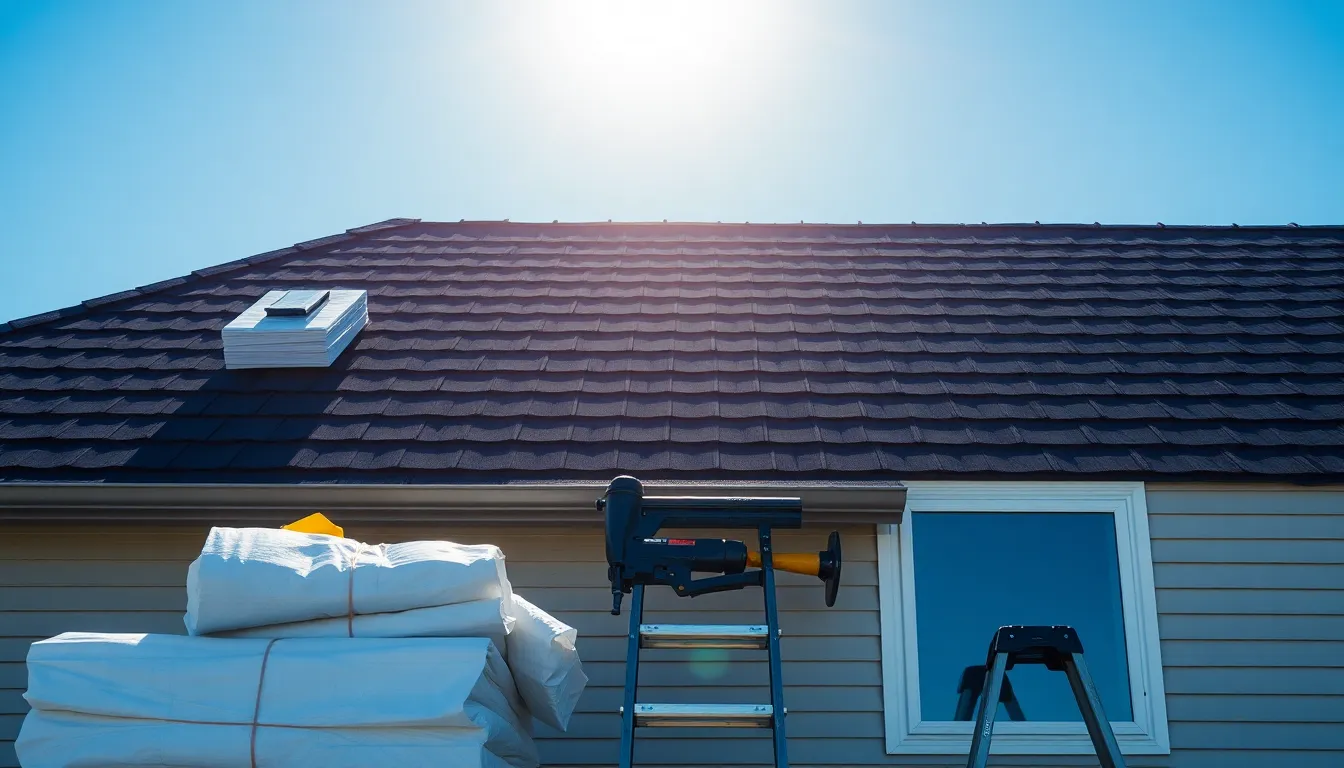
Ask any two-story homeowner in West Jordan, South Jordan, Daybreak, Riverton, Herriman, or Draper about their biggest summer comfort complaint, and the answer is universal: the main floor sits at a crisp 71°F while kids' upstairs bedrooms and over-garage bonus rooms bake at 80°F until midnight. At 4,500 to 5,200 feet along the Wasatch Front, thin dry mountain air lets roughly 20% more intense solar radiation strike your roof than at sea level. Standard dark asphalt shingles absorb up to 90% of that energy, cooking attic spaces to 155°F and turning upstairs bedroom ceilings into giant overhead radiant heaters all evening.
Near-Infrared (NIR) Solar-Reflective Granules—Even in Charcoal & Gray
Ten years ago, 'cool roofs' meant glaring stark-white coatings that looked out of place in residential Utah neighborhoods and violated HOA architectural palettes. Modern cool-roof shingle engineering—including Owens Corning Duration COOL, Malarkey Ecoasis solar-reflective lines, and CertainTeed Landmark Solaris—solved this using specialized mineral-coated ceramic granules engineered to reflect invisible Near-Infrared (NIR) solar radiation while absorbing visible color wavelengths. Because over half of the sun's heat energy arrives in the invisible NIR spectrum, a medium-charcoal, Weathered Wood, or Sierra Gray cool shingle achieves a Solar Reflectance Index (SRI) of 20 to 29—nearly triple the reflectance of conventional black asphalt shingles (SRI 4 to 8)—while maintaining rich designer curb appeal.
- Standard dark asphalt shingles absorb ~92% of solar energy, reaching 160°F–172°F on a 98°F July afternoon in Utah.
- NIR solar-reflective granules bounce back 20%–28% of solar heat, dropping shingle surface temps by 18°F–25°F.
- Available in HOA-friendly earth tones, pewter grays, weathered driftwood, and deep architectural charcoals.
Why Cool Shingles + Balanced 1:150 Ridge Airflow Multiply Comfort
Reflective granules stop heat at the outer surface, while convective attic ventilation flushes out the residual thermal load before it conducts downward through ceiling joists. Most overheated 1995–2015 Salt Lake Valley two-stories suffer from choked eave soffit vents buried under blown fiberglass insulation paired with three tiny 750-square-inch static box vents. During reroofing, we open a continuous 3-inch ridge air slot along your high roof peaks, install an externally baffled high-volume ridge vent, and slide rigid polystyrene rafter baffles into blocked eave bays. As outside breezes pass over the ridge baffle, low pressure pulls 92°F outdoor shade air through eave soffits and purges 145°F stagnant air continuously.
- Utah IRC R806.2 target: 1 sq ft Net Free Ventilating Area per 150 sq ft attic (or 1:300 with balanced 50/50 intake-to-ridge).
- Never mix powered attic fans, turbines, and ridge vents on the same attic—they short-circuit airflow and pull AC air from ceilings.
- Lowering attic air from 152°F down to 116°F cuts downward conductive heat flux into upstairs bedrooms by over 40%.
Addressing the Utah Winter 'Heating Penalty' Myth
A common concern in northern ASHRAE Climate Zone 5B (Salt Lake, Davis, and Utah Counties) is whether reflecting sunlight hurts passive solar heating during January and February. Building-science modeling from Oak Ridge National Laboratory confirms that in insulated, vented residential attics, cool-roof winter heating penalties are virtually zero for three reasons: winter sun angles sit low at 26°–35° on the horizon rather than overhead; snow blankets roof slopes during the coldest weeks anyway; and a properly air-sealed attic floor topped to R-49 or R-60 decouples winter indoor furnace heat from the cold vented attic above. Meanwhile, Salt Lake City now logs 30 to 45+ summer days above 95°F, where peak Rocky Mountain Power tiered kWh cooling rates hit hardest.
- Summer Utah electricity runs on steep tiered kWh pricing—shaving afternoon AC peaks delivers immediate utility savings.
- Cooler summer shingle temperatures slow asphalt oxidation and volatile oil loss, extending shingle flexibility by years.
- Cooler winter roof decks in sunny 38°F afternoons actually REDUCE unwanted snowmelt that causes eave ice dams!
Over-Garage Bonus Rooms: Combining Cool Shingles + R-60 Attic Top-Up
If one specific bedroom—almost always the bonus bedroom framed directly above a west-facing three-car garage—stays unbearably hot, three thermal vectors are hitting it at once: solar radiation from a low-ceiling roof slope above, 115°F trapped garage heat rising through poorly insulated floor joists below, and undersized HVAC supply runs. When Urban Design & Remodel tackles a hot-upstairs reroof in South Jordan or Herriman, we pair high-SRI solar-reflective shingles and dedicated bonus-ridge exhaust vents with air-sealing recessed can lights and blowing fresh virgin fiberglass up to R-60 (20+ inches) across the upper ceiling deck—transforming unlivable upstairs saunas into quiet, balanced bedrooms.
- Air-sealing ceiling top plates and ICAT recessed lights stops 130°F attic air infiltration when AC return ducts run.
- Topping settled 1990s R-22 attic insulation up to R-60 during reroofing costs $1.65–$2.40/sq ft and qualifies for utility/tax incentives.
- Result: 5°F to 8°F cooler second-floor evening bedroom temperatures and reduced AC compressor wear.
July Afternoon Thermal Performance: Standard vs. Cool Roof System (Utah 98°F Day)
| Roof & Attic Configuration | Peak Shingle Surface Temp | Peak Attic Air Temp (4 PM) | Upstairs Bedroom Impact |
|---|---|---|---|
| Old Dark Shingles + Choked Box Vents + R-25 | 164°F – 172°F | 148°F – 158°F | Hot 80°F+ ceilings radiating heat till 11 PM |
| Standard New Shingles + Balanced Ridge Vent | 158°F – 165°F | 126°F – 134°F | 3°F–4°F cooler; noticeable airflow relief |
| High-SRI Cool Shingles + Balanced Ridge Vent | 138°F – 146°F | 112°F – 120°F | 5°F–6°F cooler upstairs; 12% less AC runtime |
| Cool Shingles + Ridge Vent + R-60 Attic Top-Up | 138°F – 146°F | 110°F – 118°F | 6°F–8°F cooler; matches main-floor comfort |
Grant Helmer's Utah Field Pro-Tip (DOPL #10146123-5501)
Here is an unexpected Utah winter bonus most roofers miss (DOPL #10146123-5501): on sunny 34°F February days in Sandy and Holladay, dark heat-absorbing shingles melt bottom snow layers prematurely even when eaves are frozen at 22°F—triggering ice dams! Solar-reflective cool shingles keep the roof deck closer to ambient air temp, noticeably reducing sunny-day ice-dam formation.
Frequently Asked Questions: Cool Roof Shingles Reduce Upstairs Heat Utah
How much more do solar-reflective cool roof shingles cost in Utah?
Upgrading from a standard architectural shingle to an ENERGY STAR / CRRC-rated solar-reflective architectural shingle line typically adds just $25 to $45 per roofing square ($700 to $1,350 total on an average 28-square Salt Lake County home)—often paying back within 4 to 6 summers in Rocky Mountain Power AC savings.
Will my Utah HOA approve cool roof shingles if white roofs are banned?
Yes! Modern NIR-reflective granules come in deep Charcoal, Weathered Wood, Driftwood, Stonewood, and Estate Gray profiles that look identical on the street to traditional architectural shingles and pass strict Daybreak, SunCrest, and South Jordan HOA design boards easily.
Are solar attic fans better than continuous ridge vents for cooling upstairs rooms?
Usually no. High-CFM powered attic fans frequently depressurize the attic faster than eave soffits can supply air, sucking expensive air-conditioned indoor air up through ceiling light fixtures and drywall cracks! Passive, wind-baffled continuous ridge vents paired with open eave intake move massive air at $0 operating cost.
Do cool roof shingles qualify for federal energy tax credits or Utah rebates?
Under current federal 25C incentives, insulation and air-sealing upgrades (such as topping attic insulation to R-60 alongside reroofing) qualify for up to 30% tax credits (capped annually), while Rocky Mountain Power Wattsmart periodically offers attic insulation rebates—check current program rules for shingle vs. envelope eligibility.
Related Utah Roofing, Bathroom & Remodeling Resources
Schedule Your Salt Lake County & Wasatch Front, UT Inspection or Design Quote
Direct owner consultation with Grant Helmer (Utah DOPL #10146123-5501) — zero high-pressure sales.