
Double Vanity Conversion: Splitting Single-Sink Plumbing to Utah IPC Code

Converting a 60"–72" single-bowl bathroom vanity to a code-compliant double sink in Salt Lake County costs $1,650 to $3,200 for licensed plumbing, venting, electrical GFCI splitting, and drywall restoration (plus $2,400–$5,800 for the new dual vanity, quartz top, and faucets). Utah IPC Section 706.2.4 strictly bans standard double sanitary tees in vertical stacks when snaking clogs; we install double fixture fittings or individual re-vents. Call Urban Design & Remodel (DOPL #10146123-5501) at (801) 440-1952.
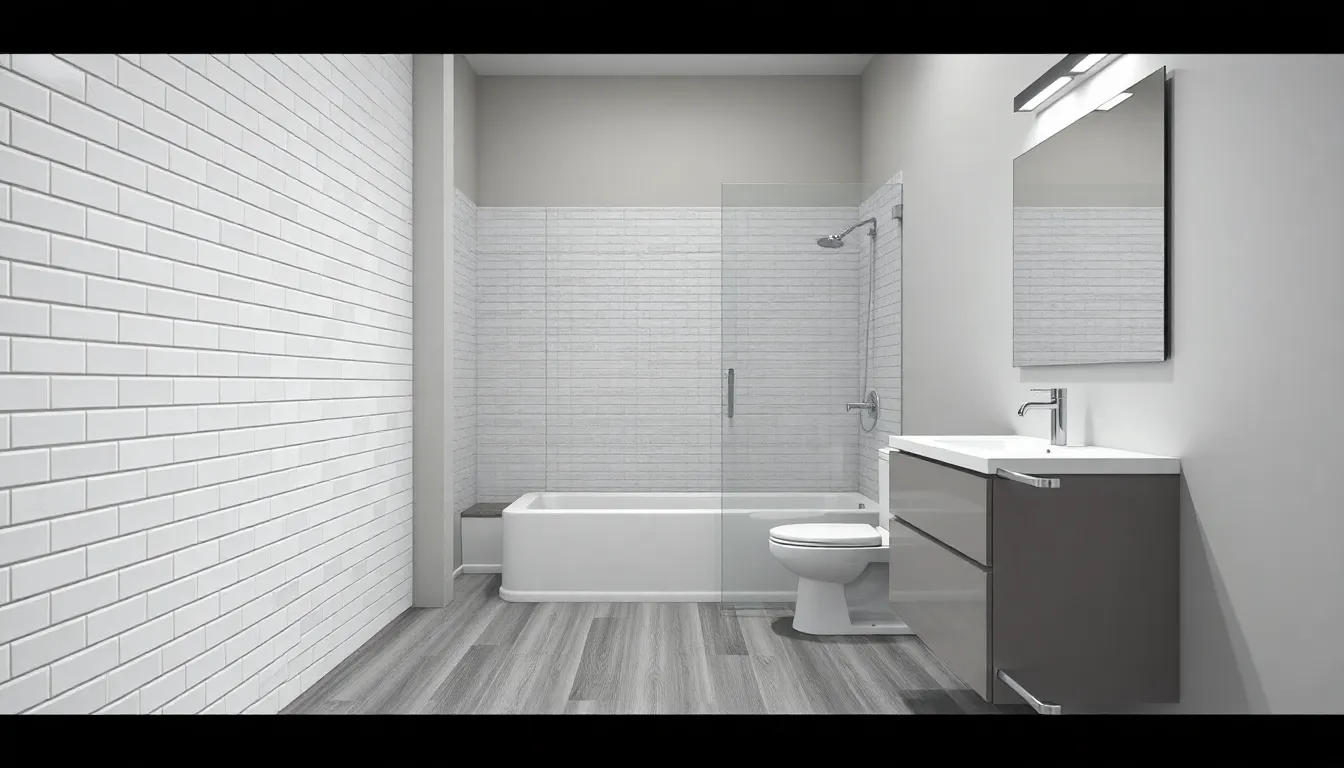
Thousands of 1970s through early-2000s homes across West Jordan, Murray, Taylorsville, and Holladay feature an awkward 'banjo' or 60-to-72-inch single-sink cultured marble vanity where couples bump elbows every weekday at 7:00 AM. While big-box stores sell pre-assembled 60-inch double-bowl vanities that make swapping look like a weekend DIY project, splitting a single drain, vent, and water line inside a framed wall—especially an exterior or load-bearing wall—triggers strict Utah International Plumbing Code (IPC) hydraulic rules and NEC electrical spacing codes. Cutting corners with saddle tees or shared unvented trap arms leads to gurgling drains, sewer gas odors, and failed municipal inspections.
Utah IPC Drain & Venting Rules: Why Double Sanitary Tees Fail Inspection
When two lavatory sinks share a central vertical 1.5-inch or 2-inch drain-vent stack, inexperienced handymen often glue in a cheap PVC double sanitary tee back-to-back. Under Utah IPC Section 706.2.4, standard double sanitary tees face tight restrictions and create a notorious maintenance nightmare: when you run a drain auger into the left sink to clear hair, the snake shoots straight across the tee and pops up out of the right sink instead of going down the stack! Instead, licensed plumbers install a long-sweep **double fixture fitting** (figure-5 fitting) on a 2-inch vertical drain stack with a 1.5-inch continuous vent above, or build an individual re-vent loop tying back into the dry vent stack at least 6 inches above the flood-level rim (typically 42 inches AFF).
- Double fixture fittings direct drain augers downward and prevent cross-sink splashback
- Re-vent horizontal tie-ins must sit >=6" above sink flood rims (42" AFF standard)
- Maintain 1/4"-per-foot downward pitch on 1.25"–1.5" trap arms within IPC max distances
Boring Load-Bearing Studs & Exterior Wall Freeze Protection
Routing 1.5-inch ABS/PVC drain arms and 1/2-inch PEX-A hot and cold supply lines 36 inches horizontally across wall studs requires careful structural compliance under Utah IRC Section R602.6. In a non-bearing interior 2x4 partition (3.5" actual depth), boring a 2-inch hole for 1.5" pipe leaves less than 5/8 inch of wood at the stud edge—requiring heavy 16-gauge steel protective nail plates so drywall and cabinet screws never pierce pressurized pipes. In load-bearing walls, holes cannot exceed 40% of stud depth (1.4 inches on a 2x4!), forcing us either to sister doubled studs per R602.6(2) or build a 2x6 plumbing furr-out wall. On exterior Wasatch walls, pipes stay strictly inside the warm side of closed-cell insulation.
- IRC R602.6 limits bored holes to 40% of load-bearing stud depth (60% if doubled studs)
- 16-gauge steel nail plates protect PEX and ABS lines where pipe edge sits <1.25" from face
- Dedicated 1/2" PEX-A branches to quarter-turn brass stops ensure zero pressure drop
Minimum Vanity Widths & NKBA Bowl Centerline Spacing
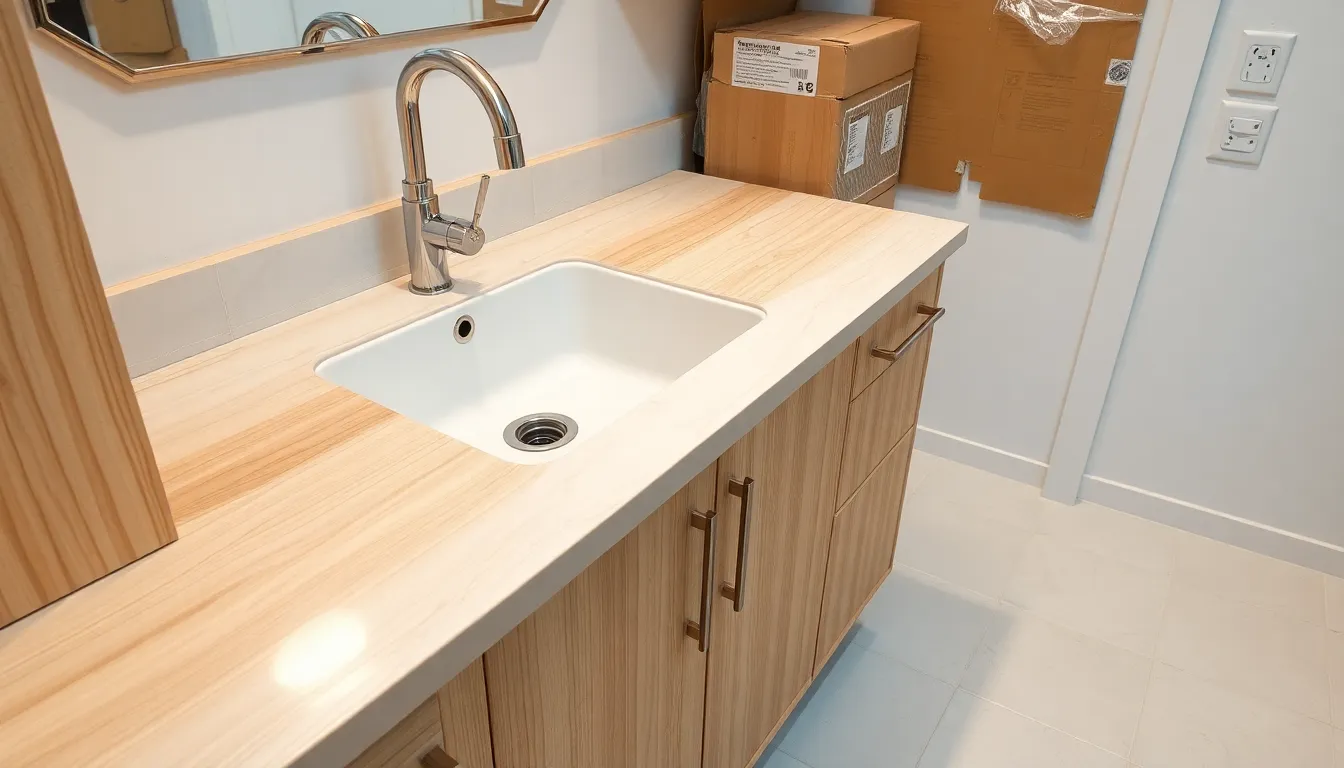
Before splitting plumbing inside a 48-inch alcove, step back and evaluate counter ergonomics. Squeezing two sinks into a 48-inch vanity fails National Kitchen & Bath Association (NKBA) usability standards, leaving practically zero flat counter space for toothbrushes, curling irons, or skincare bottles while jamming users shoulder-to-shoulder. For a true comfortable double-sink conversion, 60 inches is the practical minimum width—allowing two 17-to-18-inch undermount porcelain bowls spaced 30 to 36 inches center-to-center, with 15 inches minimum from each sink centerline to an adjacent side wall. If your alcove measures 48 to 54 inches, a spacious single trough sink or off-center single bowl with six drawers outperforms cramped twin basins every time.
- 60" minimum cabinet width recommended; 72" provides ideal 36" center-to-center spacing
- Maintain at least 15" (18" preferred) from sink centerline to any adjacent side wall
- Specify drawer-stack-center vanities so each partner gets dedicated top-to-bottom drawers
NEC 210.52(D) GFCI Outlet Placement & Mirror Sconce Rewiring
Converting one centered sink into two flanking sinks almost always requires relocating electrical boxes at the exact same time. Under National Electrical Code (NEC) Section 210.52(D), every bathroom basin requires a 20-amp GFCI-protected receptacle located within 36 inches of the outside edge of *each* sink basin. A single outlet placed squarely between two sinks on a 60-inch or 72-inch vanity satisfies both basins simultaneously—provided cords don't drape across wet bowls—though luxury remodels add dual outlets flanking both outside walls or concealed inside vanity pull-outs. Simultaneously, you must split the single centered vanity light junction box into two centered over-mirror boxes or three flanking vertical sconce boxes at 66 inches AFF.
- NEC 210.52(D) requires 20A GFCI receptacle coverage within 36" of every sink rim
- Split old single center light box into dual centered mirror boxes or 3 vertical sconces
- Hardwire anti-fog LED mirrors onto a switched leg while keeping GFCI outlets always hot
Single-to-Double Vanity Conversion Cost Breakdown in Salt Lake County
| Trade Scope | Technical Work Performed | Interior Non-Bearing Wall | Load-Bearing or Exterior Wall |
|---|---|---|---|
| Licensed Plumbing Rough-In | 2" stack double fixture fitting, re-vent loop, 4 brass stops | $950 – $1,550 | $1,450 – $2,250 (stud sistering/foam) |
| Electrical GFCI & Lighting Split | Dual mirror light boxes + 20A GFCI outlet relocation | $450 – $750 | $550 – $900 |
| Framing Blocking & Drywall Patch | Stud nail plates, mirror/vanity blocking, Level 4 finish | $350 – $600 | $550 – $950 |
| 60"–72" Dual Vanity, Quartz & Trim | Solid-wood cabinet, 3cm quartz, 2 bowls, 2 faucets, traps | $2,600 – $5,800+ | $2,600 – $5,800+ |
Grant Helmer's Utah Field Pro-Tip (DOPL #10146123-5501)
Never let a handyman connect two bathroom sinks under the cabinet into a single old 1.25-inch P-trap like a kitchen sink (DOPL #10146123-5501)! Under Utah IPC Section 1002.1, double bathroom lavatory bowls spaced more than 30 inches center-to-center MUST each have their own dedicated P-trap, and combining two basins onto an undersized 1.25-inch horizontal waste arm guarantees slow draining and toothpaste sludge clogs.
Frequently Asked Questions: Convert Single Sink Vanity To Double Sink Plumbing Cost
Can I use an Air Admittance Valve (Studor vent) instead of re-venting inside the wall?
While Utah IPC Section 918 permits mechanical Air Admittance Valves (AAVs) in specific island or remodel conditions provided they remain accessible behind a louvered grill inside the cabinet, tying permanently into the dry atmospheric vent stack at 42" AFF is completely maintenance-free and never wears out.
Is a 48-inch bathroom vanity wide enough for two sinks?
Physically manufacturers sell 48-inch double tops with tiny 13-inch bowls, but practically homeowners hate them. You lose all center counter space and drawer width. Wait until you have at least 60 inches of wall length before splitting into dual sinks.
Do I need a plumbing permit in Salt Lake County to split a single sink into two?
Yes. Modifying concealed drain-waste-vent (DWV) piping, boring structural studs, and adding new branch electrical boxes inside closed walls requires municipal building/plumbing inspection across West Jordan, Sandy, Salt Lake City, and surrounding cities.
Will turning on both sinks at once drop my water pressure?
Not when plumbed properly. Modern WaterSense bathroom faucets flow at 1.2 GPM each (2.4 GPM combined), which a 1/2-inch or 3/4-inch PEX-A supply trunk feeds effortlessly without noticeable pressure or temperature fluctuation.
Related Utah Roofing, Bathroom & Remodeling Resources
Schedule Your Salt Lake County & Wasatch Front, UT Inspection or Design Quote
Direct owner consultation with Grant Helmer (Utah DOPL #10146123-5501) — zero high-pressure sales.