
Granule Loss in Gutters: Normal Shedding vs. End of Utah Roof Life

Finding loose mineral granules in gutters during the first 6 to 12 months after installation is harmless factory over-application wash-off. However, if your roof is 14+ years old and gutters collect heavy ceramic grit alongside shiny fiberglass threads or bald black asphalt spots on south and west slopes, UV embrittlement has begun. Urban Design & Remodel (Utah DOPL #10146123-5501, (801) 440-1952) performs Wasatch Front shingle diagnostics and replacements typically ranging from $11,500 to $22,000.
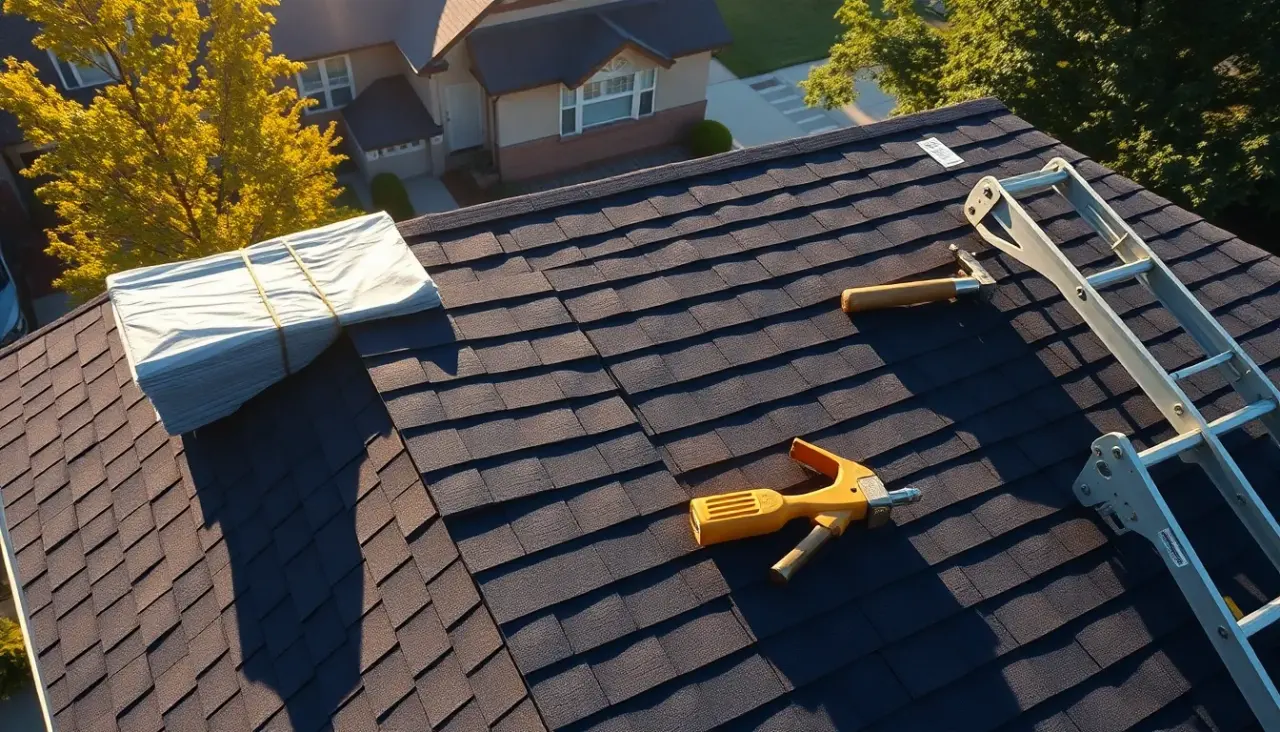
At 4,300 to 5,200 feet along the Wasatch Front, Salt Lake County roofs endure roughly 25% higher ultraviolet radiation intensity than sea-level homes, paired with 80-plus annual freeze-thaw cycles. Ceramic-coated crushed rock granules are the only shield protecting your shingle's asphalt binder from solar oxidation. When homeowners in West Jordan, Sandy, or Millcreek clean autumn gutters and scoop out handfuls of sandy grit, panic is common. Understanding the mechanical difference between loose manufacturing hitchhiker granules, localized hail bruising, and terminal asphalt de-granulation prevents both premature roof replacement and catastrophic interior drywall leaks during spring snowmelt.
Factory Over-Surfacing vs. Terminal UV De-Granulation
During architectural shingle manufacturing, crushed igneous rock granules are pressed into hot oxidized or SBS-modified asphalt at roughly 35 to 42 pounds per roofing square. Manufacturers intentionally apply 8% to 12% excess surfacing grit to guarantee zero microscopic asphalt exposure on the factory line. During your first two Utah snowmelts and spring cloudbursts, those unembedded rider granules wash into K-style gutters without reducing protective thickness. Terminal de-granulation looks completely different: aging asphalt loses volatile plasticizing oils after 15 to 22 summers of high-altitude sun, causing the bitumen matrix to shrink and release embedded granules. Once black asphalt or glistening white fiberglass mat fibers appear on sun-baked southern facets, water intrusion follows within 12 to 24 months.
- Year 1–2 roofs shed 1–3 cups of unbonded factory rider granules per downspout without losing UV protection
- Exposed black bitumen oxidizes 4x faster at 4,500+ ft Wasatch Front elevation once ceramic coverage drops below 70%
- Visible silver fiberglass mat strands indicate full top-coat erosion requiring IRC R905.2 compliant reroofing
Localized Granule Loss From Foot Traffic, Valleys, and Downspouts
Not every bare shingle patch signals full-system failure across the entire deck. On multi-level Salt Lake County ramblers and two-story colonials, upper story downspouts frequently discharge directly onto lower porch or garage slopes instead of routing directly into lower gutters. That concentrated water jet scours a 6-inch bald channel down the lower shingles within five years, even when 95% of the roof remains healthy. Similarly, mid-summer holiday light installers or evaporative swamp cooler technicians walking on 145°F July shingles shear granules loose under boot heels. Localized mechanical scuffing can be surgically repaired for $450 to $950 by weaving matching architectural tabs and installing a $180 aluminum downspout extension straight into the lower gutter trough.
- Upper-to-lower roof downspout discharge scours localized 6-inch bald paths in under 60 months
- Walking on asphalt shingles above 85°F ambient air temperature smears softened bitumen and strips ceramic grit
- Targeted shingle bundle weave repairs ($450–$950) plus downspout rerouting extend lower-slope life by 10+ years

Hail Spatter Bruising vs. Blister Popping Diagnostics
Wasatch Front spring convective storms frequently drop 0.75-inch to 1.5-inch hailstones across South Jordan, Draper, and Bountiful. Hail impact drives granules *downward* into the softened fiberglass mat rather than flicking them cleanly off, leaving a soft, spongy circular bruise surrounded by freshly dislodged grit in the gutter pan. Conversely, poorly ventilated attics exceeding 150°F bake trapped moisture vapor inside standard oxidized shingles, creating raised volcanic blisters that pop open with sharp, cratered edges and zero mat softness underneath. Insurance carriers cover storm-induced hail bruising under replacement cost policies, whereas thermal blistering from inadequate IRC R806.2 attic ventilation is classified as a non-covered manufacturing or ventilation defect.
- Hail impacts embed granules into a soft, bruised fiberglass mat indentation measuring 0.5 to 1.5 inches wide
- Thermal blisters exhibit hard, raised crater rims caused by >150°F attic temperatures and moisture outgassing
- Upgrading to UL 2218 Class 4 SBS rubberized shingles cuts impact granule loss by up to 65%
When Gutter Grit Demands Full Tear-Off Under Utah IRC R908.3
When de-granulation spans more than 25% of your south- and west-facing roof planes, spot patching fails because surrounding tabs crack when pried up for nail extraction. Under Utah IRC Section R908.3, a complete tear-off down to bare wood sheathing allows inspection of OSB or plywood decking, installation of 24-inch eave ice-barrier membranes per IRC R905.1.2, and balanced intake-to-exhaust ventilation. High-definition architectural shingles like Owens Corning Duration or Malarkey Vista incorporate polymer-modified asphalt that retains ceramic granules far longer in dry, high-UV mountain air. Investing $13,500 to $21,500 in a full tear-off before brittle tabs leak saves $4,000 to $9,000 in wet R-49 cellulose remediation and stained drywall ceiling repairs.
- Brittle tabs that snap during a 45-degree lift test cannot accept weave repairs without cascading cracks
- IRC R908.3 prohibits installing a third shingle layer and mandates removing water-soaked underlayment
- Polymer-modified Class 3 and Class 4 shingles deliver 40% higher granule adhesion in ASTM D3462 testing
Wasatch Front Shingle Granule Loss Diagnostic & Cost Matrix
| Gutter & Shingle Symptom | Roof Age Window | Root Engineering Cause | Recommended Action & Utah Cost |
|---|---|---|---|
| 1–3 cups loose grit, full shingle color intact | 0 to 18 months | Normal factory over-surfacing wash-off | Clean gutters semi-annually ($175–$275) |
| Narrow bald strip below upper downspout | 3 to 10 years | Concentrated upper-roof runoff scouring | Replace scoured tabs + extend downspout ($550–$950) |
| Soft dark circular bruises + denting on vents | Any roof age | Convective hail impact (>1.0 inch stone) | Documented storm inspection & claim reroof ($1,000–$2,500 deductible) |
| Heavy sludge in gutters + shiny fiberglass threads | 15 to 25+ years | High-altitude UV asphalt oxidation | Full IRC R908.3 tear-off & architectural reroof ($12,500–$22,000) |
Grant Helmer's Utah Field Pro-Tip (DOPL #10146123-5501)
When inspecting gutters in West Jordan or Sandy, drag a magnet through a dry cup of gutter sediment. Factory ceramic roofing granules are non-magnetic crushed stone, whereas dark magnetic particles usually come from rusting galvanized valley pans or swamp cooler stands. Always check south-facing shingle edges first—if the fiberglass mat sparkles in afternoon sun, schedule replacement before October snow.
Frequently Asked Questions: Shingle Granules In Gutters When To Replace Roof
How long does a brand-new asphalt roof shed granules into gutters?
A newly installed architectural shingle roof typically sheds excess factory rider granules for the first 6 to 12 months, peaking after the first two heavy rainstorms or spring snowmelt cycles. Foot traffic during installation also loosens a small amount of surface grit without compromising your 30-to-50-year shingle warranty.
Can I apply liquid roof sealant to stop old shingles from losing granules?
Spray-on soy or acrylic rejuvenators can temporarily slow granule shedding on 8-to-12-year-old shingles that still hold 80% of their surfacing, costing $1.10 to $1.65 per square foot. However, once black asphalt is exposed or fiberglass threads shine through, coatings cannot restore structural tear strength or waterproof brittle tabs.
Why do south and west roof slopes lose granules faster in Utah?
At Salt Lake County's 4,300-to-5,200-foot elevation, thinner atmosphere lets intense afternoon UV rays heat dark south- and west-facing shingles to 160°F in July. Combined with rapid nighttime mountain cooling, this thermal cycling oxidizes asphalt binders 30% faster than on shaded north-facing slopes.
Will gutter guards stop shingle granules from clogging my downspouts?
Micro-mesh gutter guards block pine needles and maple helicopters, but 0.8-to-1.5-millimeter ceramic shingle granules pass right through standard perforated covers and settle as heavy wet sand in low-slope gutter troughs. Even with guards, flushing gutter interiors every 24 months prevents standing water and fascia rot.
Related Utah Roofing, Bathroom & Remodeling Resources
Schedule Your Salt Lake County & Wasatch Front, UT Inspection or Design Quote
Direct owner consultation with Grant Helmer (Utah DOPL #10146123-5501) — zero high-pressure sales.