
Relocating Laundry Upstairs or Reclaiming Main-Floor Bath-Laundry Combos

Relocating a washer and dryer to a second-floor hallway closet or reconfiguring a dated 1980s main-floor bathroom-laundry room in Salt Lake County typically costs $8,500 to $19,500 standalone—or $4,500 to $9,500 as an add-on during an adjacent bathroom remodel. Urban Design & Remodel (Utah DOPL #10146123-5501, (801) 440-1952) engineers code-compliant 2-inch IPC standpipes, plumbed stainless floor drain pans, subfloor vibration reinforcement, and 240V or ventless heat-pump dryer rough-ins.
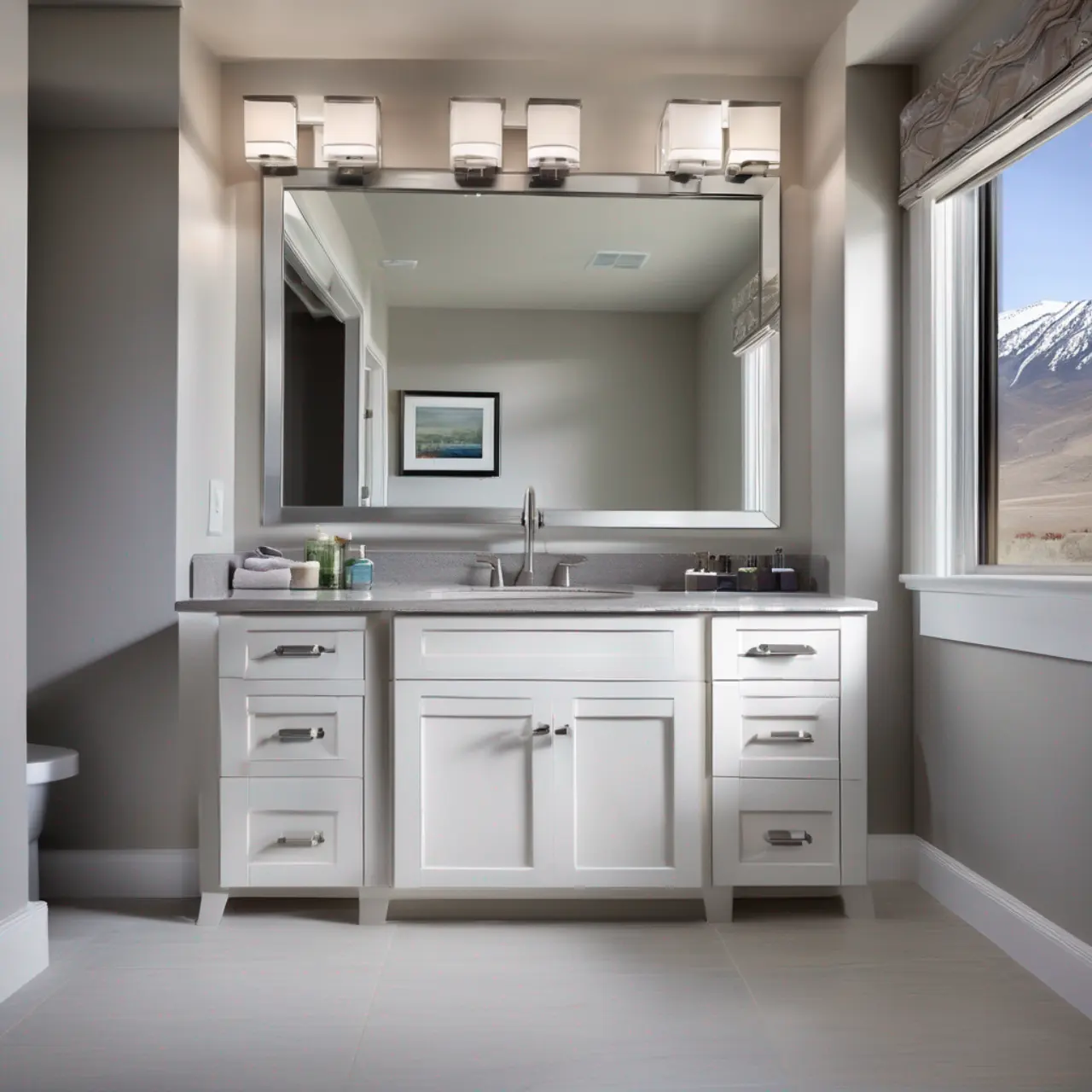
Two distinct laundry-meets-bathroom layout headaches dominate Salt Lake Valley homes: sprawling 1978–1995 two-stories in Sandy, Draper, and West Jordan that force parents to haul four flights of laundry baskets from upstairs bedrooms down to a cramped garage-entry half-bath/mudroom, and older split-levels where guests must walk past open detergent bottles to use the powder room. Reclaiming an oversized main-floor laundry/bath footprint lets you build a jewel-box guest bath plus custom mudroom lockers, while tucking a stacked laundry tower upstairs next to primary and kids' baths eliminates stair hauling forever—provided second-story flood containment, acoustic isolation, and dryer venting meet strict Utah IRC/IPC standards.
Utah IPC Standpipe Sizing, Venting, and Second-Floor Flood Pan Engineering
Tapping a modern high-efficiency front-load washing machine into an old 1.5-inch bathroom sink drain guarantees suds backup onto upstairs hardwood floors. Under Utah's adopted International Plumbing Code (IPC Section 802.4.3 and Table 709.1), an automatic clothes washer requires a dedicated 2-inch diameter P-trap connected to a vertical standpipe measuring strictly 18 to 42 inches tall, tied into a minimum 2-inch branch drain—or 3-inch main stack before meeting other bathroom fixtures. Furthermore, IRC P2706.2 mandates a watertight emergency drain pan (minimum 1.5 inches deep) beneath any upstairs washing machine, piped via a 1-inch PVC gravity drain directly to a basement floor drain or exterior daylight termination—coupled with braided stainless hoses and automatic leak-shutoff valves.
- Mandatory 2-inch washer standpipe (18–42 inches above trap weir) handles 15+ GPM high-speed pump outs
- Custom tig-welded stainless steel or heavy-duty Killarney drain pans outperform brittle big-box plastic trays
- Flo by Moen or Watts IntelliFlow automatic water-sensing shutoff valves cut supply instantly if a hose bursts
Subfloor Spin-Cycle Deflection and Acoustic Isolation Over Living Rooms
Front-loading stacked washer-dryer towers spin wet towel loads at 1,200 to 1,300 RPM, generating dynamic harmonic forces that turn standard 2x10 wood joists or engineered I-joists into giant bass drums above main-floor family rooms. When carving a 36-by-38-inch stacked laundry alcove out of an upstairs bathroom linen closet or hallway, we glue and screw an extra layer of 3/4-inch Advantech structural subfloor sheathing, install solid mid-span joist blocking below, and decouple surrounding 2x4 walls with Rockwool Safe-n-Sound mineral wool batts. Setting the washer feet on anti-walk Sorbothane elastomer pads over porcelain tile (never compressible cushioned vinyl) stops cabinet walking and cuts downstairs spin noise by over 70%.
- Double-layered 1.5-inch glued structural subfloor deck eliminates harmonic front-load spin-cycle bounce
- Porcelain tile with cove-base waterproofing under the washer locks out humidity and stabilizes leveling feet
- AA-size stainless water hammer arrestors inside the Oatey laundry box stop solenoid-valve pipe banging
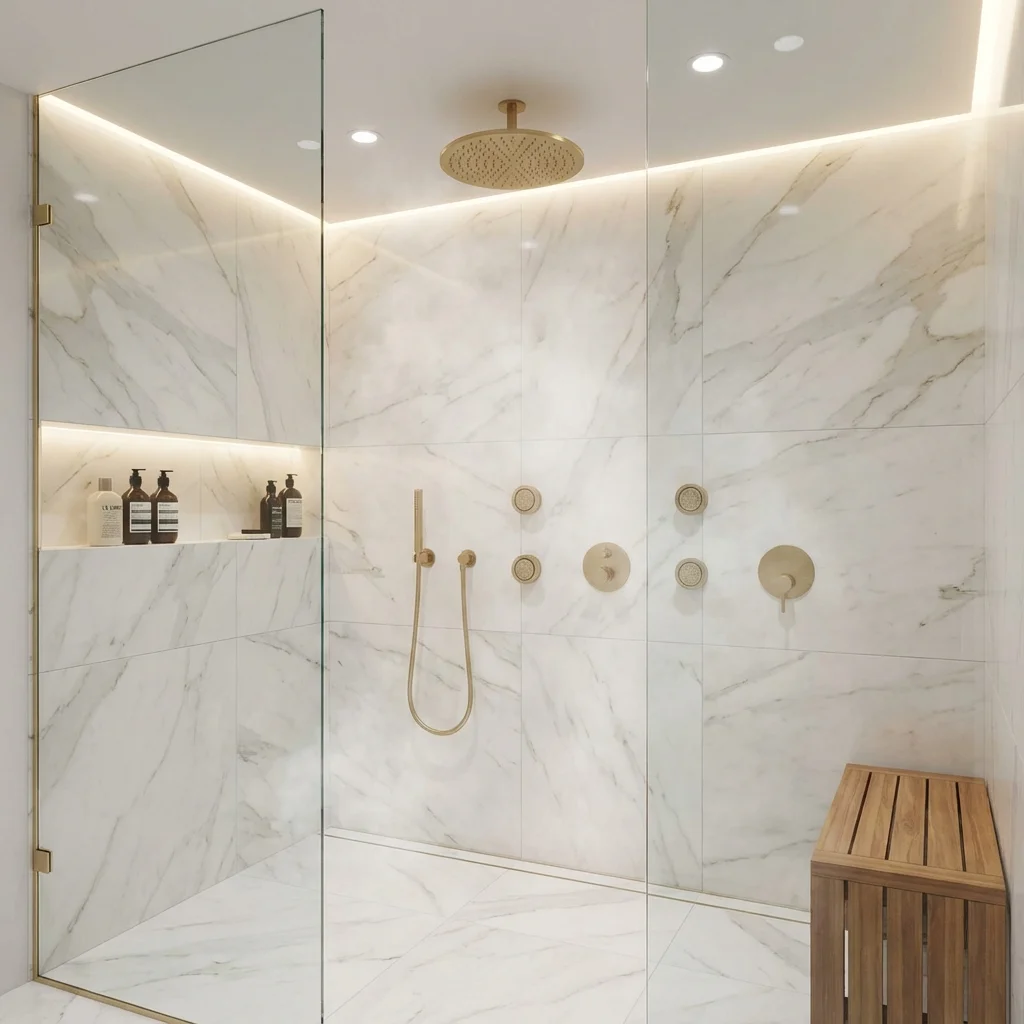
Dryer Vent Routing vs. Modern 240V Heat-Pump Ventless Laundry Towers
Traditional vented gas or electric dryers hit a major code roadblock in center-hall second-floor layouts: Utah IRC M1502.4.5 limits 4-inch rigid 28-gauge galvanized dryer exhaust ducts to 35 feet maximum—subtracting 5 feet of equivalent length for every 90-degree elbow and 2.5 feet for every 45-degree turn. When interior joists run perpendicular to exterior walls, routing a code-legal vent without soffit bulkheads can be impossible. Modern heat-pump ventless dryers and all-in-one combo units (such as GE Profile UltraFast, LG WashTower Heat-Pump, or Miele T1) solve this completely: they condense lint moisture directly down your 2-inch washer standpipe, draw half the wattage, and never suck conditioned heated winter indoor air out of your home.
- IRC M1502.4.5 deducts 5 ft per 90° elbow from the 35-ft max rigid metal dryer duct run (screws prohibited inside ducts)
- Recessed Dryerbox steel wall receptacles save 4.5 inches of closet depth so doors close flush over stacked units
- Heat-pump ventless dryers eliminate roof lint-fire hazards and need zero exterior wall penetrations
Splitting Dated Main-Floor Laundry-Bath Combos Into Dedicated Spaces
Once laundry moves upstairs—or stacks neatly behind pocket/bifold millwork doors—the cavernous 8-by-12-foot main-floor laundry/half-bath typical of 1980s Cottonwood Heights and South Jordan colonials unlocks dramatic value. Because a 3-inch toilet waste stack and hot/cold supplies already sit beneath that room, our designers frequently partition the footprint into two high-impact zones: a private, soundproofed powder room or 3/4 guest shower bath (ideal for aging parents visiting on the main level) plus a dedicated mudroom bench with built-in boot cubbies and dog-wash station using the retired washer standpipe and water supply lines.
- Existing main-floor washer 2-inch drain & hot/cold box convert seamlessly into a tiled pet-wash or walk-in shower
- Framing a single insulated 2x4 partition wall separates guest powder-room privacy from mudroom clutter
- Adding a main-floor 3/4 shower suite boosts multi-generational resale appeal across Salt Lake County
Upstairs Laundry Relocation & Bath-Combo Reconfiguration Cost Guide
| Project Configuration | MEP & Structural Scope | Dryer Architecture | Typical Utah Investment |
|---|---|---|---|
| Stackable Closet Carve-Out (Adjacent to Bath) | Tie into nearby bath stack + 2" standpipe + drain pan | Heat-Pump Ventless (120V/240V) | $4,800 – $8,500 (As Bath Add-On) |
| Dedicated Upstairs Laundry Room Build | New 3" stack tie-in, subfloor stiffening, tile, cabinets | Rigid 4" Roof/Wall Vent + 240V 30A | $11,500 – $19,500 |
| Main-Floor Bath/Laundry Split -> Powder + Mudroom | Partition wall, pocket door, custom cubbies, new vanity | Relocated Upstairs or Stacked Cabinet | $16,000 – $27,500 |
| Retired Laundry -> Main-Floor 3/4 Guest Shower Bath | Convert 2" washer drain to curbless shower + toilet/vanity | Laundry Moved to 2nd Floor / Basement | $24,500 – $38,000 |
Grant Helmer's Utah Field Pro-Tip (DOPL #10146123-5501)
Whenever we build a second-floor laundry closet next to an upstairs bathroom in Sandy or Draper (DOPL #10146123-5501), I insist on framing the doorway for a 32-inch or 36-inch opening—never a narrow 28-inch bedroom door. Full-size 27-inch LG WashTowers and GE UltraFast units measure 30–32 inches deep and cannot pivot through tight hallways into a 28-inch door!
Frequently Asked Questions: Move Laundry Upstairs Expand Bathroom Remodel
Can a washing machine drain directly into an existing 1.5-inch bathroom sink pipe?
No. Modern washing machines pump water out under pressure at 14 to 18 gallons per minute, which instantly overflows a 1.5-inch lavatory drain. Utah IPC strictly requires a dedicated 2-inch P-trap and standpipe tied into at least a 2-inch or 3-inch drain branch.
Are ventless heat-pump dryers slower than vented dryers in Utah's dry climate?
New-generation 240V and high-output 120V heat-pump dryers (like LG WashTower Heat-Pump and GE Profile UltraFast) dry average family loads in 45 to 65 minutes—virtually matching vented electric dryers while running at gentler fabric temperatures and needing zero exterior ducting.
Where does an upstairs washing machine emergency pan drain if a hose leaks?
We solvent-weld a 1-inch Schedule 40 PVC gravity drain line from the watertight stainless floor pan down through an interior plumbing chase to discharge visibly over a basement utility sink, mechanical room floor drain, or insulated garage step.
Does a laundry closet inside a bathroom need its own exhaust fan?
If the laundry tower sits inside an enclosed closet with solid doors, Utah building inspectors recommend either louvered door air transfer or jumping an auxiliary intake grille into your bathroom's 110-CFM continuous Panasonic exhaust fan to prevent latent humidity buildup.
Related Utah Roofing, Bathroom & Remodeling Resources
Schedule Your Salt Lake County & Wasatch Front, UT Inspection or Design Quote
Direct owner consultation with Grant Helmer (Utah DOPL #10146123-5501) — zero high-pressure sales.