
Why You Must Never Mix Ridge Vents with Gable Vents or Power Attic Fans

No—never combine different types of high attic exhaust vents (such as ridge vents, open gable louvers, static box vents, and powered attic fans) within the same open attic cavity. Airflow follows the path of least resistance, causing mixed vents to short-circuit laterally near the peak instead of drawing cool air up from the soffits—trapping moisture in lower eaves and sucking powdery Utah snow backward through passive vents. Urban Design & Remodel (Utah DOPL #10146123-5501, (801) 440-1952) corrects mixed-vent defects during reroofing.
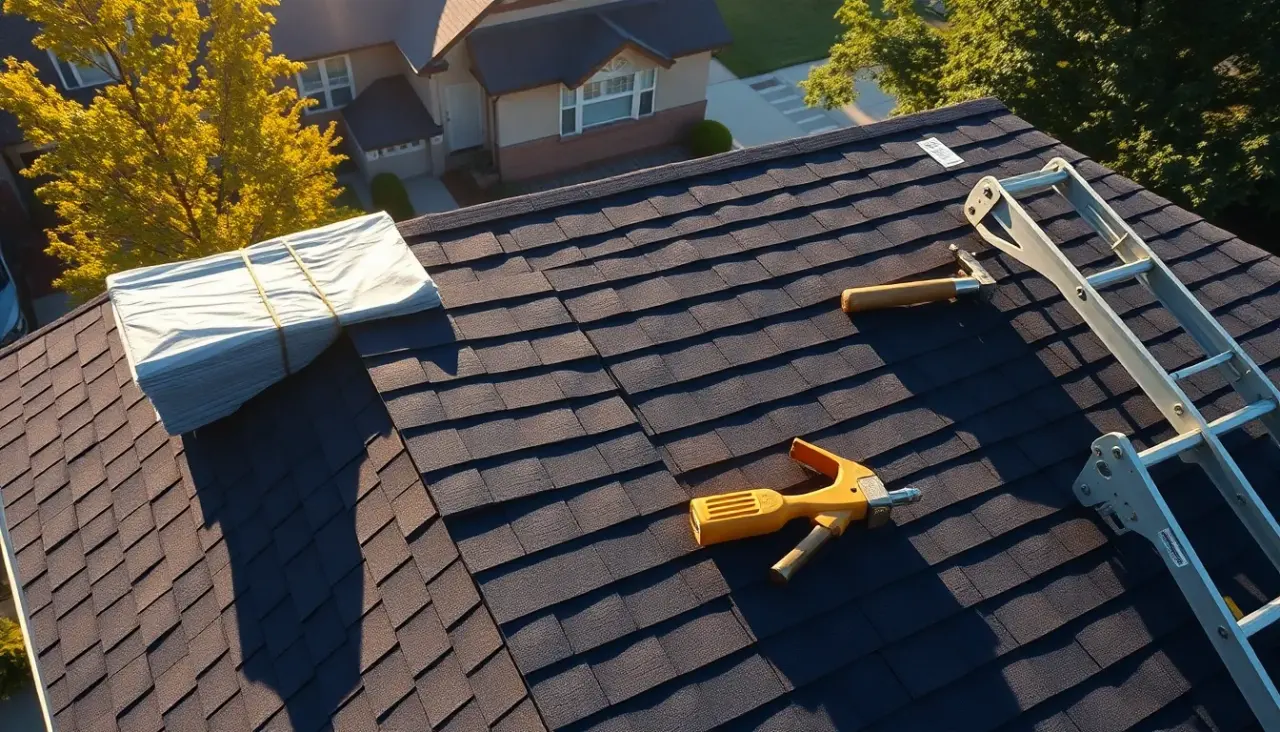
More roof vents must equal better attic cooling, right? Across Salt Lake County and the Wasatch Front, that intuitive myth ruins thousands of brand-new roofs every year. A homeowner hires a low-bid roofing crew to upgrade an older 1980s rambler to a modern continuous ridge vent—yet the crew leaves the original triangular gable-end louvers wide open, leaves four old turtle vents halfway down the back slope, OR leaves a thermostatically wired electric power fan spinning near the peak. Within one winter, the homeowner discovers snow drifts piled inside the attic and frosty wet OSB along the eaves. Here is the fluid-dynamics truth behind ventilation short-circuiting.
Fluid Dynamics 101: How Gable Vents Short-Circuit a Ridge Vent
Proper passive attic ventilation works via buoyant thermal convection and wind-induced Bernoulli suction: cool dry outdoor air enters low along the soffits, washes upward along the entire length of every single rafter bay from eave to peak, and exits out the ridge slot. Now leave two big 18x24-inch triangular louvers open at the east and west gable ends right beneath that new ridge vent. Moving air ALWAYS chooses the shortest, least-resistive path! Instead of pulling air 18 feet uphill from narrow soffit perforations, the ridge vent pulls air horizontally straight in through the adjacent gable louver 2 feet away and right out the peak—leaving the bottom 85% of your roof deck stagnant, baking hot in July and frosting up in January.
- Creates dead stagnant triangular zones along the entire lower two-thirds of the roof deck
- During 60-mph Utah canyon crosswinds, positive windward pressure blows snow in the east gable and out the ridge
- Voids shingle manufacturer extended warranties (OC, GAF, Malarkey all explicitly forbid mixed exhaust)
The Powered Attic Fan Trap: Sucking Snow & Conditioned AC Air
Powered electric or solar attic exhaust fans (commonly rated 1,000 to 1,600 CFM) create aggressive mechanical depressurization inside the attic when their thermostat clicks on at 105°F. If a passive ridge vent or static box vent sits 6 feet away from a spinning power fan, the fan overwhelms natural convection and turns the passive ridge vent into an INTAKE—sucking rain, dust, wasps, and blowing storm snow backward through the ridge! Worse yet, when soffit intake Net Free Area is undersized (requires ~1 sq ft of clear soffit NFA per 300 CFM of fan capacity), the fan depressurizes the attic to -3 to -5 Pascals, sucking expensive air-conditioned 72°F house air up through recessed lights and risking deadly carbon-monoxide backdrafting on atmospheric gas water heaters.
- A 1,500 CFM fan requires 720 sq in of clear soffit NFA just to avoid depressurizing your house ceiling
- Electric fan motors burn 300–450 watts all afternoon—often costing MORE power than they save your AC
- During reroofing, we remove obsolete power fans, deck over the 15-inch hole in OSB, and convert to passive ridge exhaust

How to Properly Baffle Off Decorative Gable Louvers From Inside
Many traditional colonials, Craftsmen, and brick ramblers in Holladay, Bountiful, and Ogden feature decorative triangular, octagonal, or half-round gable vents on the street facade that homeowners want to preserve visually for curb appeal—without letting them ruin a new ridge-vented roof. You don't have to rip out exterior siding or brick! When converting a roof to balanced soffit-and-ridge ventilation, our crew climbs inside the attic and seals 1/2-inch rigid foil-faced polyisocyanurate foam board or OSB backing tight across the back of every gable louver frame with acoustic/polyurethane sealant—preserving street esthetics 100% while forcing all intake air through the soffits.
- Takes less than 30 minutes from inside the attic with zero exterior stucco or siding disturbance
- Simultaneously blocks wind-driven snow, embers (WUI fire safety), andhornet/bat entry at gable ends
- Similarly, old static box/turtle vents halfway down the roof get decked over solidly with 7/16" OSB
The One Exception: Isolated Split-Level Vaults & Firewalled Attics
When IS it acceptable to see two different exhaust vent styles on the same house? Only when interior framing completely isolates two separate, non-communicating attic airspaces! For example, a classic Utah split-level home may have an upper bedroom wing with a long straight gable ridge (ideal for an external-baffle ridge vent) separated by a solid framed wall from a lower hip-roofed garage or vaulted family room that has only a 5-foot ridge peak (requiring steel slant-back static vents). Because zero air passes between those separate cavities, each zone operates on its own independent 50/50 soffit-to-exhaust circuit without short-circuiting.
- Inspect the attic interior first to confirm whether trusses share one open plenum or separate vaults
- Every independent attic cavity needs its own dedicated low soffit intake + ONE unified high exhaust type
- Audited and engineered by Urban Design & Remodel (Utah DOPL License #10146123-5501)
Mixed Attic Ventilation Combos: Airflow Physics & Utah Roof Consequences
| Mixed Vent Combination | What Airflow Actually Does | Utah Winter / Summer Defect | Correct Contractor Fix |
|---|---|---|---|
| Ridge Vent + Open Gable Vents | Loops air 3 ft from gable straight out ridge | Lower eaves rot w/ frost; blowing snow enters | Seal gable louvers airtight from inside attic |
| Ridge Vent + Power Attic Fan | Fan sucks outdoor air/rain IN through ridge | Snow/rain ingestion; steals AC house air | Remove power fan, OSB patch deck, use passive ridge |
| Ridge Vent + Mid-Roof Box Vents | Ridge pulls air in box vents above soffits | Lower half of roof deck stays unvented & hot | Deck over box-vent holes in OSB during tear-off |
| Power Fan + Blocked Soffits | Depressurizes attic (-5 Pa) against house | Backdrafts gas water heater flue; spikes bills | Open soffit intake + switch to balanced passive |
Grant Helmer's Utah Field Pro-Tip (DOPL #10146123-5501)
Whenever a roofing estimator bids adding a ridge vent to your older Utah home, ask one test question: 'What are you doing with my existing gable vents and old box vents?' If they say 'Leaving them for extra airflow,' cross them off your list immediately—they don't understand basic IRC R806 building physics.
Frequently Asked Questions: Mixing Ridge Vents And Gable Vents Mistake
Will closing off my gable vents make my Utah attic hotter in July?
No—PROVIDED you have adequate unobstructed soffit intake vents paired with a continuous baffled ridge vent! In fact, closing gable louvers lowers overall OSB deck temperature because cool air is finally forced to sweep upward across 100% of the sunlit roof sheathing rather than looping lazily at the gable ends.
Are solar attic fans safe to add next to existing static box vents?
Adding a solar fan right next to passive box vents causes the exact same short-circuit loop: the fan pulls hot outdoor roof air straight backward through the adjacent box vent 4 feet away instead of pulling from the soffits. Passive 1:150 soffit-and-ridge systems require zero motors that fail in 6 years.
What if my home ONLY has gable vents and zero soffit vents?
Cross-gable louvers alone move less than 20% of the air of a vertical stack-effect soffit-to-ridge system because they rely strictly on wind blowing directly into one gable. During reroofing, we seal the gables, install shingle-over eave deck-air intake vents at the bottom edge, and add a ridge vent at the peak.
Can a power attic fan really backdraft a gas water heater in Utah?
Yes. Standard atmospheric-draft 40/50-gallon gas water heaters rely on gentle natural buoyancy up a 3- or 4-inch B-vent flue. If a starving 1,500-CFM attic fan sucks air out of your utility chase through leaky top plates, flue gases (including carbon monoxide) can spill backward into the basement.
Related Utah Roofing, Bathroom & Remodeling Resources
Schedule Your Salt Lake County & Wasatch Front, UT Inspection or Design Quote
Direct owner consultation with Grant Helmer (Utah DOPL #10146123-5501) — zero high-pressure sales.