Permitted Basement Mother-in-Law Apartments (IADU): Salt Lake County Rules

Under Utah HB 82, cities across Salt Lake County must permit Internal Accessory Dwelling Units (IADUs) in owner-occupied single-family zones (on lots >=6,000 sq ft) for 30+ day rentals. Key code requirements include one dedicated off-street concrete parking stall, a separate side/rear entrance, IRC R310 bedroom egress windows, interconnected smoke/CO alarms, fire-rated separation, and utility shutoff access. Call Urban Design & Remodel (Utah DOPL #10146123-5501, (801) 440-1952) for turnkey permitted Utah ADU builds.
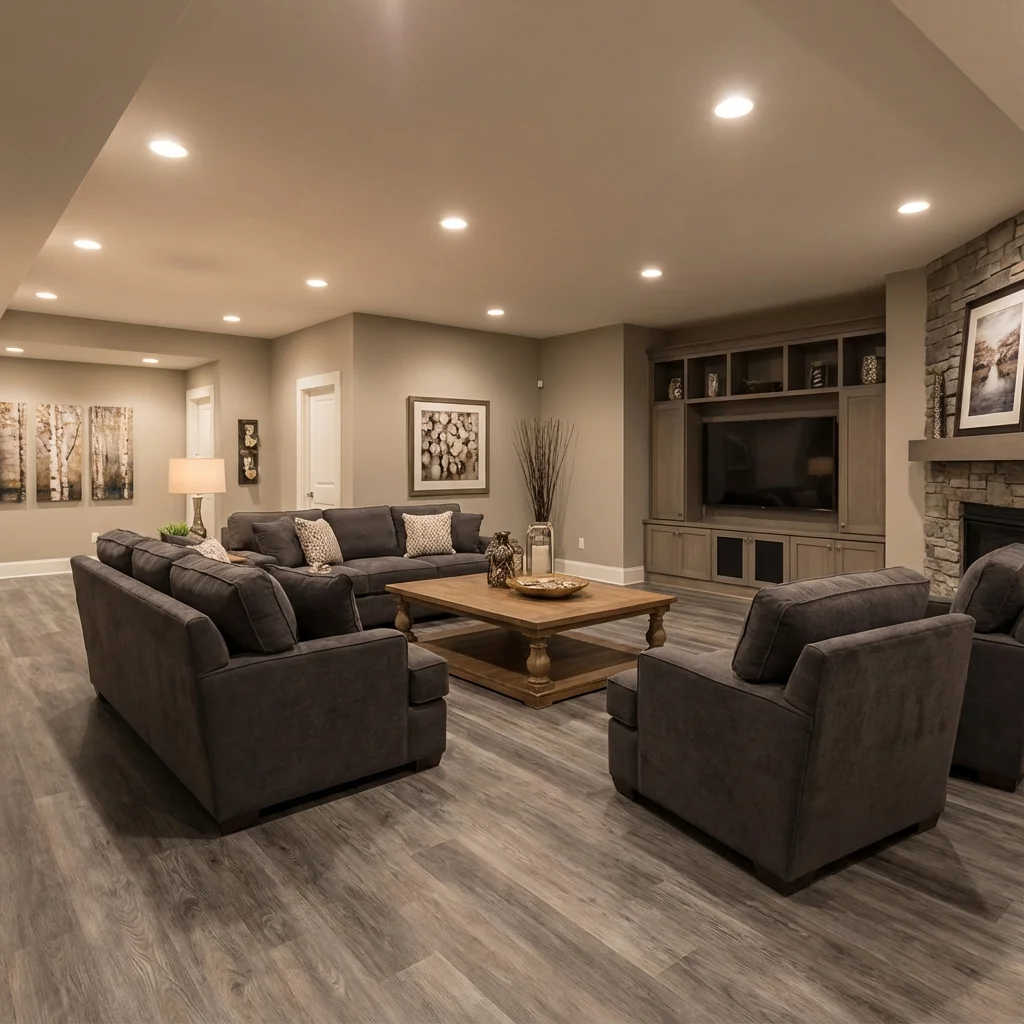
Since the Utah Legislature enacted landmark House Bill 82 requiring municipalities to legalize Internal Accessory Dwelling Units (IADUs) within primary single-family footprints, Salt Lake County homeowners from Draper and South Jordan to West Jordan, Sandy, Millcreek, and Salt Lake City have unlocked $1,450 to $2,300 per month in tax-advantaged long-term rental income right beneath their feet. Yet turning a standard family basement into a legally licensed rental apartment is vastly different from slapping a stove into an unpermitted kitchenette. Navigating owner-occupancy deeds, off-street parking pads, fire-resistance ratings, HVAC smoke separation, and municipal business licensing upfront ensures your basement apartment passes city inspection smoothly and protects your homeowner's insurance policy.
Utah HB 82 Baseline Rights vs. Local City Zoning Nuances
Utah Code § 10-9a-530 established statewide protection prohibiting cities from banning internal basement apartments across most single-family residential zones, while allowing municipalities specific local guardrails. Across West Jordan, Sandy, Draper, Riverton, and South Jordan, four universal zoning rules apply: (1) the property owner must live on-site in either the upstairs home or the basement IADU as their primary residence (verified via a recorded County Owner-Occupancy Deed Covenant), (2) short-term Airbnb/VRBO rentals under 30 consecutive days are strictly prohibited in IADUs, (3) lots smaller than 6,000 square feet (such as compact Daybreak townhome/patio lots) may be exempted by cities, and (4) the home's front facade must retain single-family curb appeal without adding a second obvious front door facing the street.
- Salt Lake City and Millcreek feature even broader ADU flexibility, including detached backyard cottages on qualifying lots
- Private HOA CC&Rs recorded prior to May 2021 can occasionally still restrict rentals—always verify HOA bylaws first
- Separate utility meters are prohibited or discouraged for IADUs; apartments share primary water, sewer, and power meters
Off-Street Parking Stalls and Separate Exterior Walkout Access
Before reviewing interior floor plans, municipal planners inspect your site survey for tenant parking and exterior entry compliance. Nearly every Salt Lake County jurisdiction mandates at least one dedicated 9-foot by 18-foot hard-surfaced (concrete or asphalt—not loose gravel or lawn) off-street parking space for the IADU in addition to replacing any garage stalls lost if you convert a garage. Crucially, most cities prohibit counting a 'tandem' spot parked directly behind your own garage bay if it blocks main-house egress, making a poured concrete RV/side-yard pad alongside the garage ($3,200–$6,500) the cleanest approval path. Tenant access must enter via a side yard, rear walkout stairwell, or fire-separated shared vestibule—never solely through the main family's living room.
- Side-yard parking pads typically require 4" fiber-mesh 4,000-PSI concrete plus a city curb-cut/approach permit if widened
- Adding a saw-cut concrete walkout stairwell ($15,500–$26,500) creates 100% private tenant access and boosts rents $250+/mo
- Exterior stairwells require illuminated landings, 34"–38" continuous graspable handrails, and bottom trench drainage
Fire Separation, Interconnected Alarms & HVAC Return Rules
Life-safety building code is where unpermitted 'DIY mother-in-law suites' fail city retro-inspections every time. Converting a single-family home into a primary dwelling + IADU triggers Utah IRC R302.3 two-family fire-separation protocols (with specific Utah state IADU amendments): ceilings, stair soffits, and demising walls separating the basement unit from upstairs living space typically require 1/2-inch or 5/8-inch Type-X fire-rated gypsum board, solid-core 20-minute self-closing gasketed interconnecting doors, and fire-caulked MEP penetrations (3M CP 25WB+ intumescent sealant). Furthermore, UL 217 photoelectric/ionization smoke and CO alarms must be interconnected across BOTH units so a basement kitchen fire wakes upstairs sleepers immediately, and building codes restrict sharing open return-air ductwork between separate dwelling units unless dedicated duct smoke detectors or separate mini-split/furnace systems are installed.
- Installing a dedicated Mitsubishi Hyper-Heat cold-climate ductless/ducted heat pump ($7,500–$13,500) solves shared-air code & tenant comfort
- Tenants must have unobstructed access to their electrical breaker subpanel and water shutoffs without entering locked rooms
- Stuffing Rockwool Safe'n'Sound into ceiling joists above Type-X drywall + resilient channel cuts footstep thuds dramatically
Full Kitchen MEP, Separate Laundry & Rental ROI Numbers
Unlike a family wet bar, a permitted IADU features a full code-compliant kitchen: 240V/40A–50A electric or induction range circuit, ducted or code-approved over-the-range exhaust hood, 20-amp GFCI small-appliance countertop circuits, full-size sink with disposal, dishwasher, and refrigerator. Including a stacked 27-inch LG WashTower laundry closet inside the basement apartment eliminates shared-stairway scheduling friction and pushes monthly Salt Lake County 2-bedroom IADU rents from $1,550 up to $1,950–$2,350/month. On a $95,000–$128,000 turnkey permitted IADU build (including walkout cut, full quartz kitchen, tiled bath, separate HVAC, and laundry), $2,000/month gross rent generates $24,000/year—delivering an unleveraged 18%–22% cash-on-cash yield while adding six figures in permanent property equity.
- Induction ranges eliminate gas combustion makeup-air/CO risks below grade and wipe clean effortlessly between tenants
- Commercial 20-mil SPC/WPC waterproof LVP throughout main IADU living/kitchen areas survives tenant turnover without carpet replacement
- Once final building inspection passes, apply for your city's annual Good Landlord / IADU Rental License ($50–$200/yr)
Salt Lake County Permitted Internal ADU (Basement Apartment) Checklist & Cost Guide
| IADU Code Requirement | Utah HB 82 / IRC Standard | Engineering Solution | 2026 Budget Estimate |
|---|---|---|---|
| Separate Private Entry | Side/rear door or walkout stair | Saw-cut foundation stairwell + drain | $15,500 – $26,500 (if none exists) |
| Fire & Acoustic Separation | 5/8" Type-X ceiling + fire caulking | Rockwool + RC-1 channel + Type-X + 20-min door | $5,800 – $9,800 |
| Independent HVAC / Smoke Control | No unmonitored shared return air | Cold-climate multi-zone heat pump or 2nd furnace | $7,500 – $14,000 |
| Full IADU Kitchen + Laundry + Parking | 240V range, GFCI, 1 extra 9'x18' stall | Quartz kitchen, WashTower, side concrete pad | $24,000 – $38,500 |
Grant Helmer's Utah Field Pro-Tip (DOPL #10146123-5501)
When permitting basement ADUs in West Jordan, Sandy, or Draper (Utah DOPL #10146123-5501), solving the 'no shared HVAC return air' rule with a cold-climate ductless or slim-ducted heat pump is cheaper and cleaner than ripping out your existing furnace trunks—plus your tenant gets their own thermostat instead of texting you at midnight!
Frequently Asked Questions: Internal Adu Basement Apartment Permit Salt Lake County
Can I legalize an existing unpermitted basement apartment in Salt Lake County?
Yes—cities across Salt Lake County offer amnesty or legalization permit pathways under HB 82. Inspectors will verify 5.7 sq ft R310 bedroom egress windows, interconnected smoke/CO alarms, GFCI electrical safety, fire separation at mechanical/stair doors, HVAC return compliance, and off-street parking.
Can I rent out both upstairs and the basement ADU if I move out later?
Under Utah HB 82, Internal ADUs require owner-occupancy in one of the two units (exceptions exist for temporary military deployment, religious/humanitarian service, or medical leave). If you move out permanently in a standard R-1 single-family zone, you must rent the entire house under one single-family lease.
Does a basement ADU need its own water heater and electrical meter?
Separate city utility meters are not required (and often prohibited for IADUs). However, installing a tankless Navien gas water heater—or adding a dedicated 50-gallon hybrid/electric water heater—ensures morning tenant showers never drain hot water from upstairs bathrooms.
What is the minimum ceiling height required for a legal basement apartment in Utah?
Utah IRC R305.1 requires a minimum 7-foot-0-inch finished ceiling height across habitable rooms, hallways, bathrooms, and kitchens, with localized beams, girders, or HVAC soffits allowed to drop down to 6 feet 8 inches (or 6'4" in specific existing-home retrofit variances).
Related Utah Roofing, Bathroom & Remodeling Resources
Schedule Your Salt Lake County & Wasatch Front, UT Inspection or Design Quote
Direct owner consultation with Grant Helmer (Utah DOPL #10146123-5501) — zero high-pressure sales.