
Range Hood Ventilation & Make-Up Air Code Over 400 CFM (Utah IRC M1503.6)

Yes. Under Utah-adopted International Residential Code (IRC) Section M1503.6, any domestic kitchen exhaust range hood capable of exhausting more than 400 cubic feet per minute (CFM) MUST be provided with a balanced mechanical or gravity make-up air system whenever at least one non-direct-vent combustion appliance exists in the home. Urban Design & Remodel (Utah DOPL #10146123-5501, (801) 440-1952) installs interlocked, tempered make-up air dampers ($1,450–$3,600) across Salt Lake County.
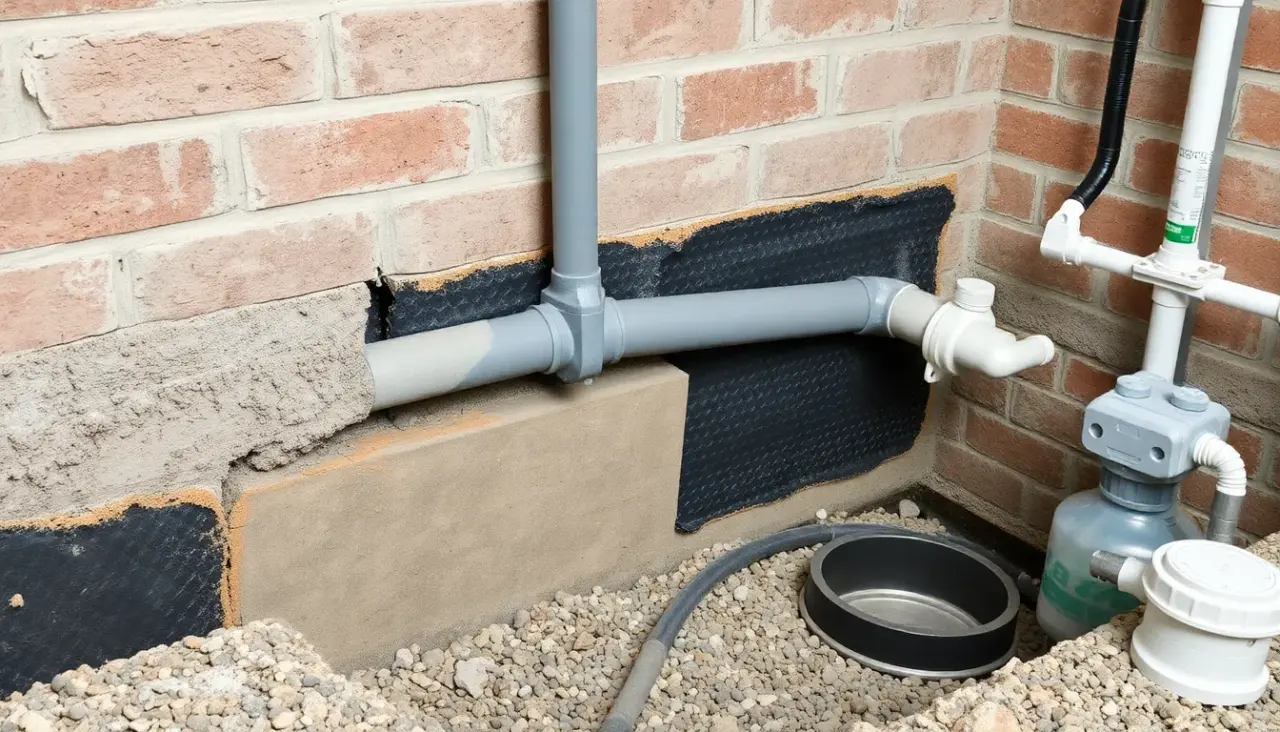
Upgrade from a standard 30-inch slide-in stove to a 36-inch or 48-inch 60,000+ BTU Wolf, Thermador, or Bluestar gas pro range in your Sandy, Draper, Murray, or Holladay kitchen, and appliance salespeople rightly pair it with a 600-to-1,200 CFM range hood blower to capture searing steak smoke and nitrogen dioxide combustion gases. What appliance showrooms rarely warn you about is the invisible physics happening downstairs in your basement mechanical room: exhausting 900 cubic feet of indoor air per minute out of a weather-tight Utah winter house turns your home into a vacuum chamber—sucking deadly colorless carbon monoxide backward down your gas water heater's chimney flue straight into your family's breathing air!
House Depressurization & Carbon Monoxide Backdrafting Physics
Think of a tightly caulked Salt Lake home with double-pane Low-E windows shut tight during a 15°F January inversion like a rigid plastic juice box: you cannot suck 600 to 1,200 cubic feet of air out every sixty seconds unless 600 to 1,200 cubic feet of replacement air enters from somewhere. Without a dedicated make-up air intake, a powerful blower depressurizes the house beyond -5 Pascals (-0.02 inches water column)—enough suction to overcome the gentle thermal buoyancy of natural-draft (atmospheric B-vent) 40-to-50-gallon gas water heaters, 80%-AFUE gas furnaces, and wood-burning fireplaces! Not only does negative pressure pull toxic combustion exhaust backward into the basement, it actually starves your expensive range hood blower itself—cutting a 900 CFM hood's real exhaust capture in half while making the fan roar loudly.
- Negative house pressure >5 Pascals reverses upward chimney draft on atmospheric gas water heaters
- Starved range hoods without make-up air lose 35%–50% of actual smoke capture while doubling motor noise
- High-BTU gas ranges (100 CFM per 10,000 BTUs rule of thumb) genuinely need 600–1,000 CFM + balanced MUA
Utah IRC Section M1503.6 Code Rules & Salt Lake Inspector Checks
Salt Lake County municipal mechanical inspectors enforce IRC Section M1503.6 strictly at rough-in and final kitchen inspections. Whenever your range hood's maximum nameplate rating exceeds 400 CFM, make-up air must be supplied at a rate approximately equal to the exhaust air rate, controlled by automatic dampers electrically or pressure-interlocked so the outdoor intake opens ONLY when the range hood turns on and seals air-tight via motorized spring-return gaskets when the hood turns off. Note that while manufacturers like Broan and Zephyr sell 'CFM-restricted' software/collar kits capping blowers at 390 CFM to bypass MUA code on 30-inch electric/induction ranges, municipal inspectors routinely reject 390-CFM caps over large 48-inch high-BTU commercial-style gas ranges whose manufacturer installation manuals explicitly mandate ≥600–900 CFM exhaust for fire clearance safety.
- IRC M1503.6 triggers strictly above 400 CFM nameplate blower capacity
- Dampers must interlock automatically via current-sensing CT switches on the hood circuit—never manual flaps
- Homes with 100% sealed direct-vent PVC furnaces + tankless/electric water heaters have fewer backdraft sources, yet still depressurize doors/fireplaces above 600 CFM
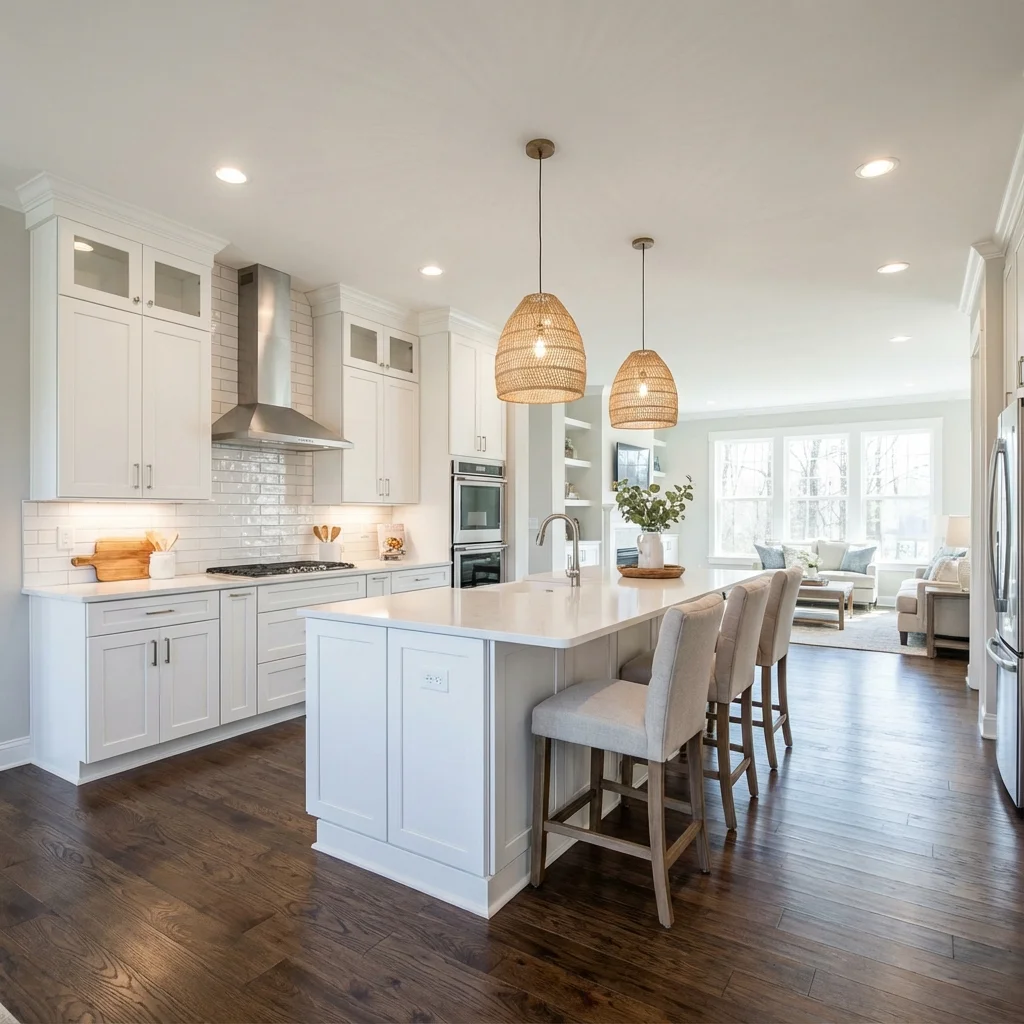
Why Utah Winters Demand Tempered (Heated) Make-Up Air Dampers
In mild climates, contractors dump unconditioned outdoor air straight through a passive wall damper into a toe-kick or ceiling grille. Try dumping 800 CFM of 12°F Little Cottonwood Canyon blizzard air raw onto a cook's bare ankles in a Draper or Cottonwood Heights kitchen, and you will turn your range hood off and never use it again—or freeze nearby PEX water pipes! For Salt Lake winters, we engineer two cold-climate solutions: for moderate 450–600 CFM hoods, our HVAC mechanics duct an insulated 8-inch Broan/Fantech motorized damper (with an R-8 insulated exterior intake hood + MERV filter) directly into the furnace's return-air plenum interlocked to trigger the furnace circulation fan so incoming cold air mixes thoroughly across the entire home's warm air volume. Above 650–1,200 CFM, we install a dedicated inline modulating electric duct heater (Fantech MUAS 3kW–6kW on a 240V breaker) warming incoming 15°F air to a comfortable 65°F automatically.
- Never dump raw unheated 15°F Utah winter air straight into a kitchen toe-kick—it freezes the cook!
- 450–600 CFM systems: interlock motorized insulated damper into the HVAC return plenum ($1,450–$2,200)
- 650–1,200 CFM pro systems: add a 240V modulating inline electric duct heater ($2,600–$3,900 installed)
Rigid Smooth Galvanized Ducting vs. Illegal Flex Foil Traps
Even the finest Vent-A-Hood or Wolf blower performs terribly if connected with corrugated aluminum flex pipe or choked down into a 4-inch dryer vent cap! Under IRC M1503.3, domestic range hood ducts must be constructed of smooth-wall rigid galvanized steel (26–28 gauge minimum) or stainless steel, pitched slightly appropriately with grease-tight taped seams (UL 181 foil/mastic—never cloth duct tape), discharging 100% outdoors through a low-static backdraft roof jack or sidewall hood—NEVER terminating inside an attic, soffit, or crawlspace. Every 90-degree sharp elbow steals roughly 10 to 15 equivalent feet of static airflow pressure; sizing smooth 8-inch round duct for 600 CFM (and 10-inch round duct for 900–1,200 CFM) keeps air velocity brisk while cutting kitchen blower noise by up to 40%.
- Corrugated foil/plastic flex duct traps flammable cooking grease in ridges and violates Utah IRC M1503
- Never reduce an 8" or 10" hood collar down to an old 6" pipe—static backpressure burns out motors and roars
- Over-the-range recirculating charcoal microwaves capture 0% of heat, steam, or gas NO2 combustion fumes
Utah Range Hood CFM Sizing, Duct Diameter & Make-Up Air Requirements
| Cooktop / Range Type | Recommended Hood CFM | Rigid Smooth Duct Size | Utah IRC M1503.6 Make-Up Air Spec |
|---|---|---|---|
| 30"–36" Induction or Standard Gas | 300 – 395 CFM | 6" – 7" Round Galvanized | Exempt (<400 CFM); zero MUA damper required |
| 36" Pro-Style Gas Range (45k–60k BTU) | 500 – 600 CFM | 8" Round Smooth Steel | 8" Interlocked Motorized Damper to HVAC Return |
| 48" Dual-Fuel / Pro Gas + Griddle | 900 – 1,100 CFM | 10" Round Smooth Steel | 10" Filtered MUA + 240V Inline Electric Heater |
| 60" Commercial Range + Indoor Grill | 1,200 – 1,500 CFM | 10"–12" + Remote Roof Blower | Dedicated Heated Make-Up Air Fan Unit (Fantech/CaptiveAire) |
Grant Helmer's Utah Field Pro-Tip (DOPL #10146123-5501)
Want whisper-quiet conversation around your kitchen island while searing salmon at 900 CFM (Grant Helmer, DOPL #10146123-5501)? Instead of putting the blower motor right above your head inside the wood hood canopy, have us mount an inline attic blower or rooftop centrifugal fan 12 feet away with an insulated silencer—cutting kitchen sone noise in half!
Frequently Asked Questions: Range Hood Make Up Air Code 400 Cfm Utah
If I switch from a gas range to a 36-inch induction range, do I still need >400 CFM and make-up air?
Usually no! Because magnetic induction generates zero combustion heat plume or toxic nitrogen dioxide fumes—heating only the pan bottom—a high-capture 350 to 390 CFM baffle hood on 6-or-7-inch rigid ducting clears steam and pan smoke cleanly without triggering M1503.6 make-up air.
How does a make-up air damper know automatically when someone turns on the range hood?
Our electrician clamps a tiny magnetic current-sensing transducer (CT ring) around the 120V power wire feeding your range hood blower motor. The instant blower draw exceeds ~0.4 amps, a 24V relay opens the motorized outdoor intake damper automatically.
Can cracking a kitchen window satisfy Utah's over-400-CFM make-up air code?
No. Building inspectors cannot pass an honor-system promise to crack a window in January—IRC M1503.6 strictly requires permanent automatic mechanical or interlocked damper hardware that operates without manual homeowner intervention.
Does incoming make-up air bring Salt Lake winter inversion smoke and pollen into my house?
Not on our installations—we install an accessible inline MERV-8 to MERV-13 filter box immediately downstream of the insulated intake hood so winter PM2.5 inversion particulates, canyon smoke, and spring cottonwood fluff are trapped cleanly before entering your ducts.
Related Utah Roofing, Bathroom & Remodeling Resources
Schedule Your Salt Lake County & Wasatch Front, UT Inspection or Design Quote
Direct owner consultation with Grant Helmer (Utah DOPL #10146123-5501) — zero high-pressure sales.