
Soundproofing Shared Bathroom Walls: Rockwool, Cast-Iron Stacks & Putty Pads

When bathroom studs are exposed during a remodel, upgrading a standard hollow 2x4 wall (STC 33) to STC 48–54 adds just $650 to $1,850 and blocks toilet flushes, shower spray, and conversation. Urban Design & Remodel (Utah DOPL #10146123-5501, (801) 440-1952) combines 3-inch Rockwool Safe'n'Sound mineral wool batts, Charlotte Quiet House cast-iron vertical drain stacks, acoustic outlet putty pads, and solid-core doors.
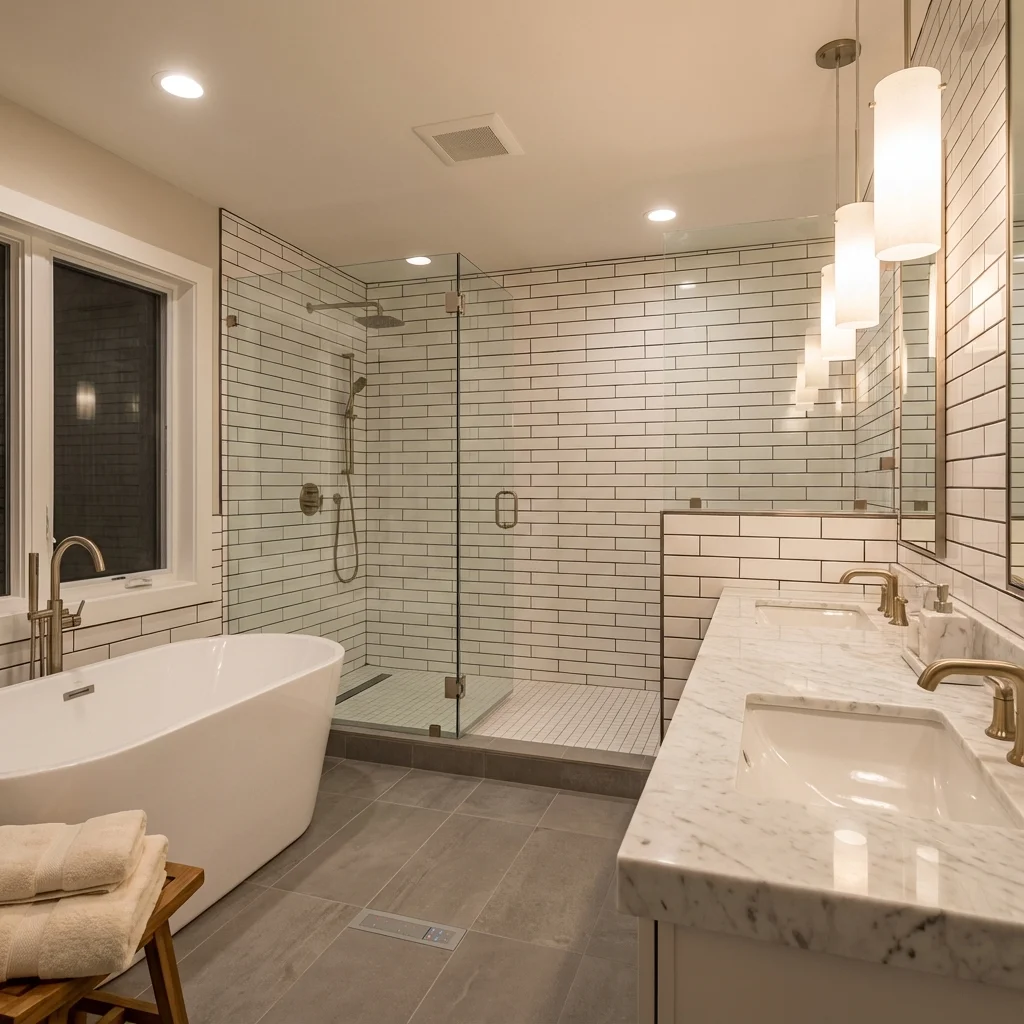
Standard residential tract framing across Salt Lake County builds interior bathroom walls out of bare 2x4 studs covered in hollow 1/2-inch drywall—yielding a miserable Sound Transmission Class (STC) rating around 33, where normal speech, exhaust fans, and rushing PVC drain pipes transmit straight into adjacent primary bedrooms, nurseries, or main-floor dining rooms. Worse yet, lightweight black ABS or white PVC vertical drain stacks running from second-floor bathrooms down through main-floor walls amplify falling water like a snare drum. The golden window to permanently silence a bathroom occurs on Days 3 through 6 of your gut remodel while every stud bay and plumbing chase stands wide open.
Rockwool Safe'n'Sound vs. Pink Fiberglass: Why Density Controls Mid-Low Frequencies
Homeowners often ask if stuffing leftover pink R-13 thermal fiberglass batts into bathroom walls will soundproof a shared bedroom partition. Standard thermal fiberglass weighs barely 0.5 to 0.8 pounds per cubic foot—improving STC by just 2 to 3 points because low-frequency water rumble and human voice vibrations pass right through fluffy glass fibers. By contrast, Rockwool Safe'n'Sound stone mineral wool is spun from molten basalt rock at ~2.5 pounds per cubic foot density. Friction-fit tightly around PEX lines and electrical boxes inside 3.5-inch stud cavities, stone wool absorbs airborne resonance across the critical 250 Hz to 2,000 Hz vocal and water-spray spectrum, boosting wall assemblies by 8 to 11 STC points while remaining 100% hydrophobic and mold-proof.
- Rockwool Safe'n'Sound boosts a single-layer 5/8" drywall 2x4 wall to STC 45–47 without losing floor space
- Inorganic basalt fibers repel moisture, will not slump inside cavities, and withstand 2,150°F fire temperatures
- Material and labor to insulate all four interior walls of a standard Utah bath adds only $380–$650 during a gut
Silencing Waterfall Roar: Upgrading Plastic ABS/PVC Stacks to Cast Iron
Insulating wall studs alone will never cure the loud rushing-waterfall roar of an upstairs toilet flush dropping down a 3-inch plastic ABS or Schedule 40 PVC pipe behind your kitchen or living room drywall. Thin-walled plastic pipe vibrates violently as waste impacts 90-degree sweeps. Whenever a remodel opens a vertical second-story plumbing stack, we replace the vertical drop section with hubless no-hub cast-iron soil pipe (such as Charlotte Pipe Quiet House system) joined with heavy-duty neoprene/stainless shielded couplings and isolated from wood framing with rubber-lined riser clamps. Dense cast iron dampens pipe-wall vibration by over 75% (testing 9 to 12 decibels quieter than PVC), turning upstairs flushes into an barely audible whisper.
- No-hub cast-iron vertical stacks paired with PVC horizontal branches deliver maximum silence at reasonable cost
- HoldRite acoustic isolation pipe clamps prevent PEX supply and DWV drain vibrations from telegraphing into studs
- Wrapping unavoidable PVC sweeps in 1-lb/sq-ft mass-loaded vinyl (MLV) pipe lagging cuts flush noise by ~8 dB
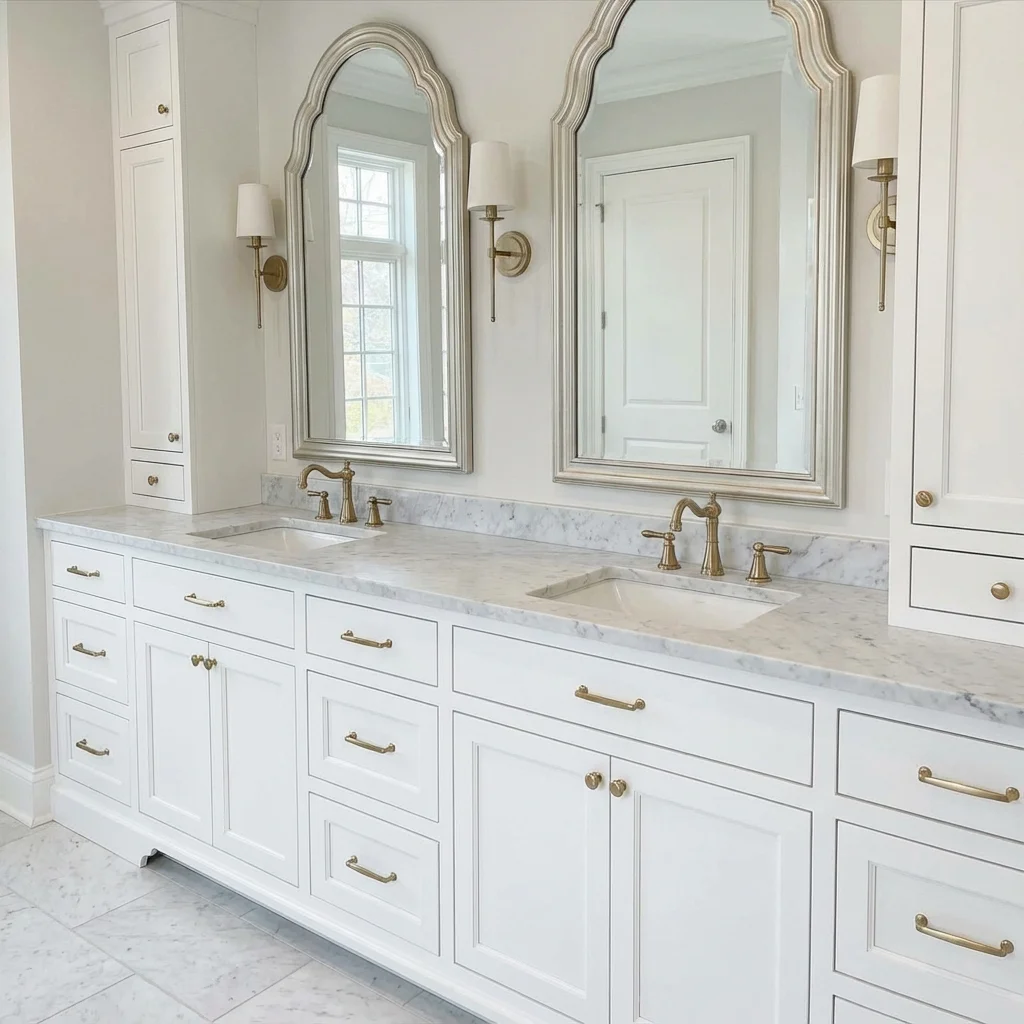
Sealing Acoustic Flanking Leaks: Outlet Putty Pads, Perimeter Sealant & Solid Doors
Sound behaves just like water: a 1-square-inch gap around an electrical outlet box compromises 50% of an entire insulated wall's STC performance. Builders routinely nail vanity GFCI boxes in the exact same stud bay back-to-back with bedroom nightstand outlets, creating a direct acoustic megaphone through the wall. During rough electrical, we stagger junction boxes into separate stud bays and wrap box backs with 1/8-inch intumescent acoustic putty pads (3M or QuietPutty), plus bead Green Glue acoustic sealant along bottom/top framing plates before hanging 5/8-inch Type X drywall. Finally, swapping a hollow-core 1-3/8-inch cardboard-filled bathroom door (STC 17) for a solid-core MDF/wood slab with perimeter weatherstripping closes the biggest noise leak in the hallway.
- Offsetting back-to-back electrical boxes by at least one 16-inch stud bay stops direct airborne flanking
- Double 5/8-inch drywall laminated with Green Glue Noiseproofing Compound reaches luxury hotel STC 54–56
- Note on HVAC return air: keep a 1/2-inch door undercut or install a baffled transfer grille if no return exists inside
Eliminating Exhaust Fan Drone and Valve Cavitation Noise
Ironically, many homeowners try to mask bathroom bathroom noises by turning on an obnoxious 4.0-sone builder-grade exhaust fan that rattles ceiling drywall like a propeller plane. Instead of relying on mechanical racket that echoes into bedrooms at midnight, we pair high-STC wall assemblies with ultra-quiet 0.3-sone Panasonic WhisperCeiling DC fans mounted on rubber vibration grommets and vented through smooth insulated ducts. On the plumbing side, sizing hot and cold shower branches in 3/4-inch Uponor PEX-A with sweeping bend supports (eliminating sharp brass 90-degree elbows that cause high-velocity water hiss at 65 PSI) ensures your morning shower sounds tranquil on the inside and silent on the outside.
- 0.3-sone DC brushless exhaust fans move 110 CFM silently while removing steam 2x better than 4-sone rattlers
- Sweeping PEX-A bend supports eliminate turbulent cavitation hiss behind shower walls shared with headboards
- Soft-close Kohler/Toto seats and Quiet-Flush dual-cyclone toilets cut bowl refill decibels in half
Bathroom Wall Assembly Sound Transmission Class (STC) & Utah Cost Guide
| Bathroom Wall / Pipe Assembly | Lab/Field STC Rating | Audible Noise Through Wall | Added Cost During Gut Remodel |
|---|---|---|---|
| Builder Standard (Hollow 2x4 + 1/2" Drywall + ABS) | STC 32 – 34 | Normal speech, flushes & water spray clearly heard | $0 Baseline (Existing) |
| Tier 1: Rockwool Safe'n'Sound + 5/8" Drywall + Putty | STC 45 – 47 | Normal speech inaudible; loud shouts muffled | $650 – $1,100 |
| Tier 2: Tier 1 + Solid-Core Door + Cast-Iron Stack | STC 49 – 52 | Near-total silence for flushes, showers & voices | $1,450 – $2,350 |
| Tier 3: Double 5/8" Drywall + Green Glue + Clips | STC 55 – 58 | Studio/luxury hotel isolation (blocks heavy bass) | $2,600 – $3,900 |
Grant Helmer's Utah Field Pro-Tip (DOPL #10146123-5501)
On main-floor powder rooms right off Salt Lake dining rooms or kitchens (DOPL #10146123-5501), never install a pocket door if acoustic privacy is your goal! Pocket doors ride inside hollow slotted wall frames with 3/8-inch perimeter gaps that leak every sound. Always choose a 1-3/4-inch solid-core hinged door with concealed rabbeted jamb seals for powder rooms.
Frequently Asked Questions: Soundproof Bathroom Wall During Remodel
Can you soundproof a shared bathroom wall without tearing off the drywall?
Blown-in dense-pack cellulose requires drilling holes in every stud bay, misses plumbing blocks, cannot fix noisy plastic drain stacks or hollow doors, and requires full repainting anyway. Soundproofing during an open-stud bathroom remodel costs 70% less and performs dramatically better.
Will moisture inside a bathroom ruin Rockwool Safe'n'Sound insulation?
No. Rockwool stone wool is completely water-repellent (hydrophobic) and vapor-permeable, meaning condensation cannot absorb into the fibers, sag over time, or support mold or mildew growth inside bathroom cavities.
What should I do if our master bed headboard sits directly against the shower valve wall?
During rough framing, we strap all PEX supply lines onto rubber-isolated acoustic brackets rather than directly against the bedroom-side drywall studs, install Rockwool batts, and hang laminated double 5/8-inch drywall with Green Glue on the headboard side.
Does cast-iron drain pipe rust out from Utah's hard water?
Modern ASTM A888 hubless cast-iron vertical drain stacks carry protective asphaltic interior/exterior coatings and easily last 60 to 80+ years in vertical residential waste service, especially since hard-water scale primarily affects pressurized hot supply lines rather than gravity drains.
Related Utah Roofing, Bathroom & Remodeling Resources
Schedule Your Salt Lake County & Wasatch Front, UT Inspection or Design Quote
Direct owner consultation with Grant Helmer (Utah DOPL #10146123-5501) — zero high-pressure sales.