
Starter Strip Shingles: Why Cut 3-Tab Starters Fail in Utah High-Wind Zones

Flipping cut 3-tab shingles upside down places the factory sealant strip 5 inches too high—away from the vulnerable drip edge—allowing 70 to 100 mph Wasatch canyon gusts to peel the entire first course off your roof and voiding 130 mph manufacturer wind warranties. Urban Design & Remodel (Utah DOPL #10146123-5501, (801) 440-1952) installs continuous factory sealant-edge starter strips along 100% of eaves and gable rakes on every Salt Lake County reroof.
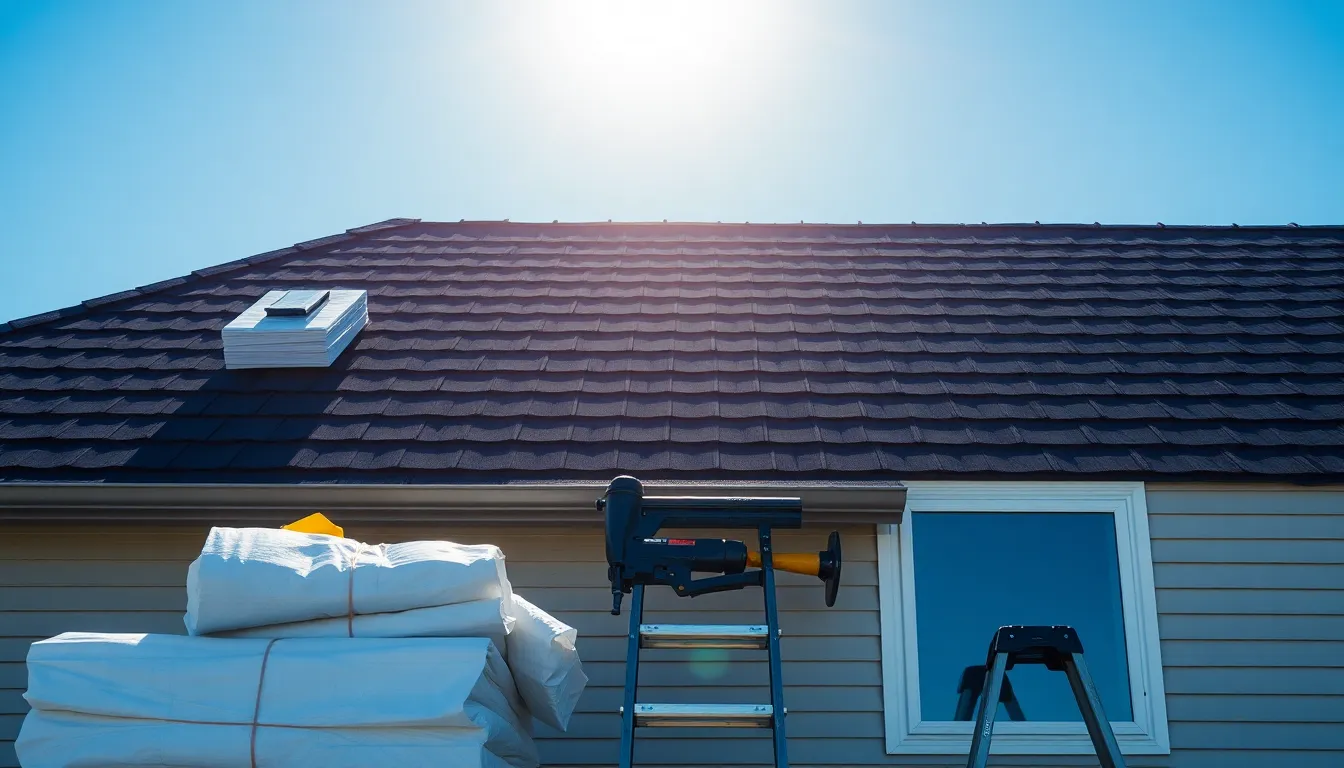
When homeowners compare three Salt Lake County roofing bids that all list 'Owens Corning Duration' or 'Malarkey Vista' shingles on top, the $1,400 price gap between a cut-rate sub-crew and a certified contractor hides right along the perimeter edge where you can't see it from the lawn. Every winter, violent east-bench canyon winds roaring out of Parleys, Little Cottonwood, Weber, and Farmington canyons slam residential roof eaves and gable rakes with intense aerodynamic uplift vortexes. If your roofer saved $280 on materials by flipping leftover 3-tab shingles upside down as improvised 'starters'—or skipped rake starters altogether—your brand-new 130 mph shingles have zero adhesive bond along the exact leading edge where blow-offs begin.
Aerodynamic Perimeter Uplift Physics & Misplaced Sealant Strips
Wind striking a vertical house wall accelerates sharply upward over the eave gutter and diagonal gable rake, generating negative suction pressures two to three times higher along the outer 12 inches of your roof than across the interior field! Factory-engineered starter strip rolls or shingles (such as Owens Corning Starter Strip Plus, GAF Pro-Start, and Malarkey SmartStart) feature a continuous, aggressive thermally activated polymer-modified asphalt tar bead positioned within 1/2 inch to 1 inch of the bottom eave drip edge. By contrast, when a budget roofer slices tabs off a cheap 3-tab shingle or flips an architectural shingle upside down, its tar strip sits stranded 5.5 inches upslope—leaving the entire overhanging front lip of your first shingle course flapping unglued in the wind!
- Eave & rake leading edges face 2x–3x higher aerodynamic wind suction than center roof planes
- Factory starter tar bead sits right at the drip-edge lip, locking first-course tabs flat
- Upside-down 3-tab shingles leave a 5-inch unsealed wind pocket that collects blowing snow & dust
Why Gable Rakes Need Starter Strips Just Like Eave Gutters
Walk down any street in Herriman, South Jordan, Daybreak, or Bountiful after an 85 mph canyon windstorm and notice where shingles ripped off first: nine times out of ten, a clean diagonal zipper of shingles tore straight off an exposed west- or east-facing gable rake! Many roofers install starter strip along the bottom gutter eave (to back up first-course keyways) yet stop there—butting cut field shingle ends straight over metal rake drip edge with zero continuous edge sealant underneath. Both high-wind manufacturer bulletins and enhanced 130 mph wind warranty specifications mandate running factory starter strips continuously up every diagonal gable rake edge as well as horizontal eaves, overhanging metal drip edge by 1/4 to 1/2 inch to seal the entire roof perimeter.
- Perimeter lock: Continuous starter strip installed on BOTH horizontal eaves and diagonal gable rakes
- 1/4" to 3/8" crisp uniform overhang guides rainwater into gutters without curling downward
- Prevents sideways crosswind gusts from lifting cut shingle ends along steep two-story gables
How Improvised 3-Tab Starters Instantly Void 130 MPH Wind Warranties
Every brochure for modern dimensional shingles advertises '130 MPH Wind Resistance Limited Warranty'—often in bold print on the bundle wrapper. Read the manufacturer's two-paragraph installation fine print underneath: standard 4-nail installation with generic/cut starters typically drops wind coverage down to just 60 to 110 mph, and using cut 3-tab shingles as perimeter starters disqualifies the roof from upgraded wind and 50-year system warranties completely! When a manufacturer field rep inspects a blown-off roof claim in Salt Lake County, the very first thing they lift is the eave and rake edge. Seeing cut 3-tabs instead of factory-matched starter strip hands the manufacturer an instant installation-defect denial.
- 130 mph wind warranty requires TWO non-negotiables: Factory perimeter starters + high-wind nailing
- Counts as 1 of the mandatory system components for Owens Corning Platinum / Malarkey Emerald tiers
- Heavy peel-and-stick starter rolls (e.g., WeatherBlocker) add dual self-adhered eave waterproofing
True Utah Perimeter Starter Cost: $275 That Saves $4,000 Storm Repairs
How much money does a corner-cutting roofer actually 'save' by chopping up cheap 3-tab bundles instead of installing real factory starter strips? On an average 2,500 sq ft Salt Lake County home with 190 linear feet of eaves and 110 linear feet of gable rakes (300 perimeter linear feet total), three bundles of Owens Corning Starter Strip Plus or Malarkey SmartStart cost roughly $165 to $240 in material—less than $100 more than the cheap 3-tab bundles they butchered, while actually installing faster with factory center-snap perforations and straight chalk-line accuracy! Saving $95 on a $15,000 Utah roof replacement while forfeiting 130 mph canyon-wind protection is the worst false economy in residential construction.
- Full eave + rake factory starter material cost on 300 LF Utah roof: ~$165–$260 total
- Fastened 1.5"–3" up from eave edge with 4–5 galvanized nails per strip into solid sheathing
- Included standard—never an optional upcharge—on 100% of Urban Design & Remodel roofs
Factory Starter Strip vs. Cut 3-Tab Improvised Starter (Wasatch Wind Audit)
| Perimeter Performance Factor | Factory Sealant Starter Strip | Flipped / Cut 3-Tab Shingle | No Rake Starter (Field Only) |
|---|---|---|---|
| Tar Sealant Strip Location | 1/2"–1" from outer drip edge | 5.5" upslope (front lip unglued!) | Zero vertical rake edge seal |
| Manufacturer Wind Warranty | Full 130 MPH High-Wind Coverage | Voided or reduced to 60–80 MPH | Rake blow-offs excluded |
| Overhang Drip Resistance | Stiff continuous fiberglass edge | Thin cut mat sags into gutters | Sidewind lifts exposed gable cuts |
| Net Cost Impact (25-Sq Roof) | Included (~$95 net difference) | False '$95 savings' shortcut | $1,800+ typical wind-repair bill |
Grant Helmer's Utah Field Pro-Tip (DOPL #10146123-5501)
You can check any Utah roof's starter strip in ten seconds from the top of a ladder at the gutter (Utah DOPL #10146123-5501): gently lift the very bottom lip of a shingle on a cool morning. If you see a factory continuous black tar ribbon bonding the bottom edge tight to a solid granulated starter underneath—and continuing up the gable rake—your roofer built it right.
Frequently Asked Questions: Starter Strip Shingles Wind Warranty
Why do asphalt roofs need a starter course beneath the first row of shingles at all?
Without an underlying starter layer at the eave, water hitting seams or butt joints between first-course shingles drips directly onto underlayment, and the overhanging bottom edge of the first course has nothing rigid or adhesive underneath to bond against.
How far should starter strips and first-course shingles overhang the metal drip edge?
Shingle manufacturers and Utah best practices specify a uniform 1/4-inch to 1/2-inch overhang past the outer face of metal eave and rake drip edges—far enough for water to shed cleanly into gutters, yet short enough that heavy Wasatch snow cannot bend unsupported shingle tips downward.
Are peel-and-stick starter rolls worth upgrading to on East Bench high-wind lots?
On extreme canyon-mouth wind corridors like Bountiful, Farmington, Draper SunCrest, and Olympus Cove, upgrading to heavy self-adhered SBS starter rolls with double sealant beads locks both the deck and overlying first course before summer solar heat even activates standard tar strips.
Do starter strip nails need special placement to hold in high winds?
Yes. Starter strips must be nailed 1.5 to 3 inches above the eave edge (or 1 to 2 inches in from the rake edge) using at least four to five 12-gauge galvanized roofing nails per strip, staggered offset from the first-course shingle joints so water never hits an exposed nail head.
Related Utah Roofing, Bathroom & Remodeling Resources
Schedule Your Salt Lake County & Wasatch Front, UT Inspection or Design Quote
Direct owner consultation with Grant Helmer (Utah DOPL #10146123-5501) — zero high-pressure sales.