
Ridge Vent vs Box Vents in Utah: Stopping Winter Attic Frost & OSB Rot

External-baffle snow-rated ridge vents paired with continuous soffit intake vents outperform static box ('turtle') vents on most pitched Utah roofs because they flush 100% of rafter bays evenly at the highest thermal peak. However, complex hip roofs with short ridge lines don't have enough linear footage for ridge vents alone—making high-profile metal slant-back box vents the smarter engineering choice there. Urban Design & Remodel (Utah DOPL #10146123-5501, (801) 440-1952) calculates exact IRC R806 Net Free Area on every reroof.
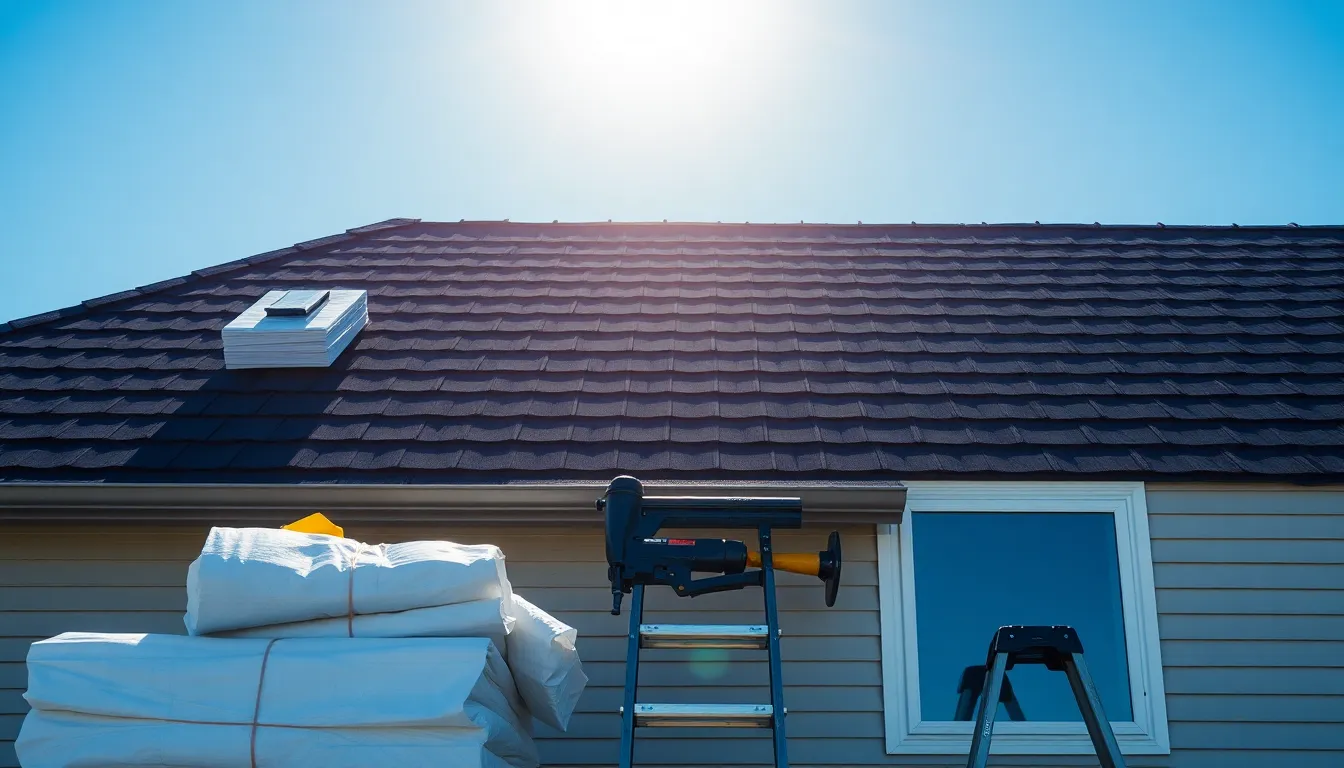
Pop open an attic hatch in West Jordan, Lehi, or Layton on a 12°F January morning, shine a flashlight at the north-facing OSB roof sheathing, and you may be shocked to see sparkling white hoarfrost coating every nail tip—or dark black staining spreading across the wood. When noon sunshine warms the roof above freezing, that frost melts and rains down into your insulation, mimicking a roof leak even when your shingles are 100% watertight! In Utah's cold winters and 100°F summers, attic ventilation is not an afterthought—and picking between continuous ridge vents and static box vents comes down to roof geometry and Net Free Area math.
Why Utah Attics Grow Frost on North OSB Decking Every January
A family of four generates 2 to 4 gallons of airborne water vapor daily from hot showers, boiling pasta, breathing, and running whole-home furnace humidifiers set too high (above 35% RH in sub-freezing weather). Warm, moist air rises by stack effect through tiny ceiling wire holes and bath-fan leaks into the cold attic. Because south-facing OSB warms up in winter sunshine while steep north-facing OSB stays below the dew point (often 18°F), water vapor condenses and freezes solid onto north-side nails and wood fibers. Without balanced soffit-to-ridge ventilation continuously sweeping dry outdoor Utah air across the sheathing, cycles of frost and melt rot OSB panels from the inside out.
- Check bathroom exhaust fans FIRST: any flex duct dumped loose into attic insulation guarantees black OSB mold
- Dial furnace whole-house humidifiers down to 28%–32% indoor RH whenever Utah nights drop below 20°F
- Balanced ventilation purges both winter moisture vapor AND 145°F July heat that bakes shingles
IRC R806.2 Net Free Area (NFA) Math: Calculating Exact Intake & Exhaust
Utah Residential Code Section R806.2 requires minimum Enclosed Attic Net Free Ventilating Area of 1/150th of the vented horizontal attic floor space—reducible to 1/300th when a balanced system locates 40% to 50% of the required ventilating area in high exhaust vents no more than 3 feet below the ridge and the remaining 50% to 60% in low eave/soffit intake vents. Let's run a real 1,800 sq ft Salt Lake rambler attic at the safer 1:150 ratio: 1,800 / 150 = 12 sq ft = 1,728 sq in total NFA—meaning 864 sq in at the soffits and 864 sq in at the ridge. Guessing 'four cheap plastic box vents' delivers barely 200 sq in—less than a quarter of code!
- Typical Snow-Baffled Shingle-Over Ridge Vent = 18 sq in NFA per linear foot (~48 ft needed for 864 sq in)
- Standard 750-Series Aluminum/Steel Box Vent = 50 sq in NFA per vent (~17 vents needed if used at 1:150!)
- Exhaust vents do ZERO work without equal or slightly greater unobstructed soffit intake NFA
External-Baffle Ridge Vents vs Cheap Roll Mesh in Blowing Utah Snow
Some old-school Utah roofers distrust ridge vents because they once saw powdery canyon snow blow through cheap 'Brillo-pad' fiber-roll mesh nailed under ridge caps. Fibrous roll vents lack aerodynamic wind deflectors—when a 60-mph gust hits them broadside, snow shoots straight inside onto drywall! Modern rigid molded copolymer ridge vents (such as Owens Corning VentSure, GAF SnowCountry Advanced, or Lomanco Omni-Series) feature engineered external wind baffles and internal weather-filter matrices. When wind strikes the external baffle from ANY direction, airflow deflects upward over the cap, creating a Bernoulli low-pressure vacuum that actively sucks stale attic air out while blocking blowing snow.
- Cut a crisp 1.75" to 2" slot along the peak sheathing (leaving 6" uncut at gable ends for framing stability)
- Washes 100% of gable-roof rafter bays uniformly without dead hot pockets between vents
- Virtually invisible under matching high-profile architectural hip and ridge cap shingles
When Static Box / Slant-Back Vents Beat Ridge Vents (Hip Roofs!)
Here is where cookie-cutter ridge-vent sales pitches fail basic geometry: picture a pyramid-shaped 2,400 sq ft two-story hip roof in South Jordan or Herriman that rises to a tiny 10-foot horizontal peak. Ten feet of ridge vent supplies only 180 sq in of exhaust NFA—starving 80% of the attic! Never cut ridge vents down sloped diagonal hip rafters (they leak catastrophically in snow). On short-ridge hip roofs, we engineer high-capacity 26-gauge galvanized steel slant-back or snow-hooded static vents (50–65 sq in NFA each, or solar/passive high-capacity roof louvers) positioned uniformly 18–24 inches below the peak on the rear elevation.
- Never use thin UV-brittle plastic box vents in Utah—1.5-inch hail shatters them wide open in 7 years
- In deep snow zones (Park City / East Bench), tall snow-stack vents rise above 24-inch snowpack
- Never mix ridge vents and box vents on the same contiguous attic cavity—pick ONE high exhaust path
Ridge Vent vs Metal Box Vents vs Turbine Vents in Utah Climate
| Exhaust Vent System | Net Free Area (NFA) | Best Utah Roof Geometry | Snow & Hail Durability |
|---|---|---|---|
| External-Baffle Rigid Ridge Vent | 18 sq in / linear ft | Gable roofs w/ long straight ridges | Excellent (Bernoulli snow deflector) |
| Mesh/Fiber Roll Ridge Vent | 12–14 sq in / linear ft | Not recommended in Utah | Poor (Compresses & leaks blowing snow) |
| Galvanized Steel Slant-Back Box Vent | 50–60 sq in / unit | Hip roofs w/ short peak lines | Very Good (Won't crack in hail like plastic) |
| 12" Wind Turbine ('Whirlybird') | ~95 sq in / unit | Legacy retrofits (Avoid on East Bench) | Fair (Bearings squeak; blows off in 85+ mph gusts) |
Grant Helmer's Utah Field Pro-Tip (DOPL #10146123-5501)
When inspecting a frosty Utah attic, crawl over to the eaves with the lights turned OFF at noon. If you don't see bright daylight shining up through every rafter chute from your soffit vents, blown-in insulation or solid wood frieze blocks have choked your intake air—and adding ten more roof vents won't fix a thing until soffit intake is opened!
Frequently Asked Questions: Ridge Vent Vs Box Vents Utah Attic
Will Utah winter snow bury a ridge vent and block attic airflow?
Even when 14 inches of snow blankets the main field slopes, wind scours peak ridgelines thinner, and slight buoyant warmth leaving the ridge slot keeps a narrow breathing channel open—allowing slow, steady winter moisture escape until full sun clears the peak.
Why are plastic box vents such a bad idea on Salt Lake County roofs?
Polypropylene plastic box vents bake brittle under 4,500-foot Utah UV within 6 to 8 summers. The first spring hailstorm punches fist-sized holes straight through brittle plastic tops, letting rain pour undetected into attic insulation. Always insist on stamped galvanized steel or aluminum vents.
How do you fix black frost stains on north-side attic OSB sheathing?
First, fix the moisture source (vent disconnected bath fans outdoors, air-seal ceiling penetrations, open soffit baffles, and balance ridge/box exhaust). Once wood moisture content drops below 15%, structurally sound stained OSB can be treated with an EPA-registered fungicidal antimicrobial/borate encapsulant; soft delaminated sheets get replaced during reroofing.
What if my 1950s Sugar House brick bungalow has zero soffit overhangs for intake?
On zero-overhang or solid-brick eaves where traditional under-soffit vents cannot fit, we install shingle-over deck-air intake vents (such as Lomanco Deck-Air or GAF Cobra IntakePro) cut directly into the lower roof deck two courses above the gutter line to create true eave-to-ridge airflow.
Related Utah Roofing, Bathroom & Remodeling Resources
Schedule Your Salt Lake County & Wasatch Front, UT Inspection or Design Quote
Direct owner consultation with Grant Helmer (Utah DOPL #10146123-5501) — zero high-pressure sales.