
Thermostatic vs. Pressure-Balance Shower Valves & Multi-Head Sprays

Standard 1/2-inch pressure-balance shower valves couple volume and temperature on one handle and deliver only 4.5–5.5 GPM—enough for one showerhead or an alternating 2-way diverter, never simultaneous multi-head flow. Running a ceiling rain head, handheld wand, and body sprays simultaneously requires a 3/4-inch thermostatic mixing valve (10–16 GPM capacity) with independent volume controls ($1,450–$2,900 installed). Call Urban Design & Remodel (Utah DOPL #10146123-5501) at (801) 440-1952.
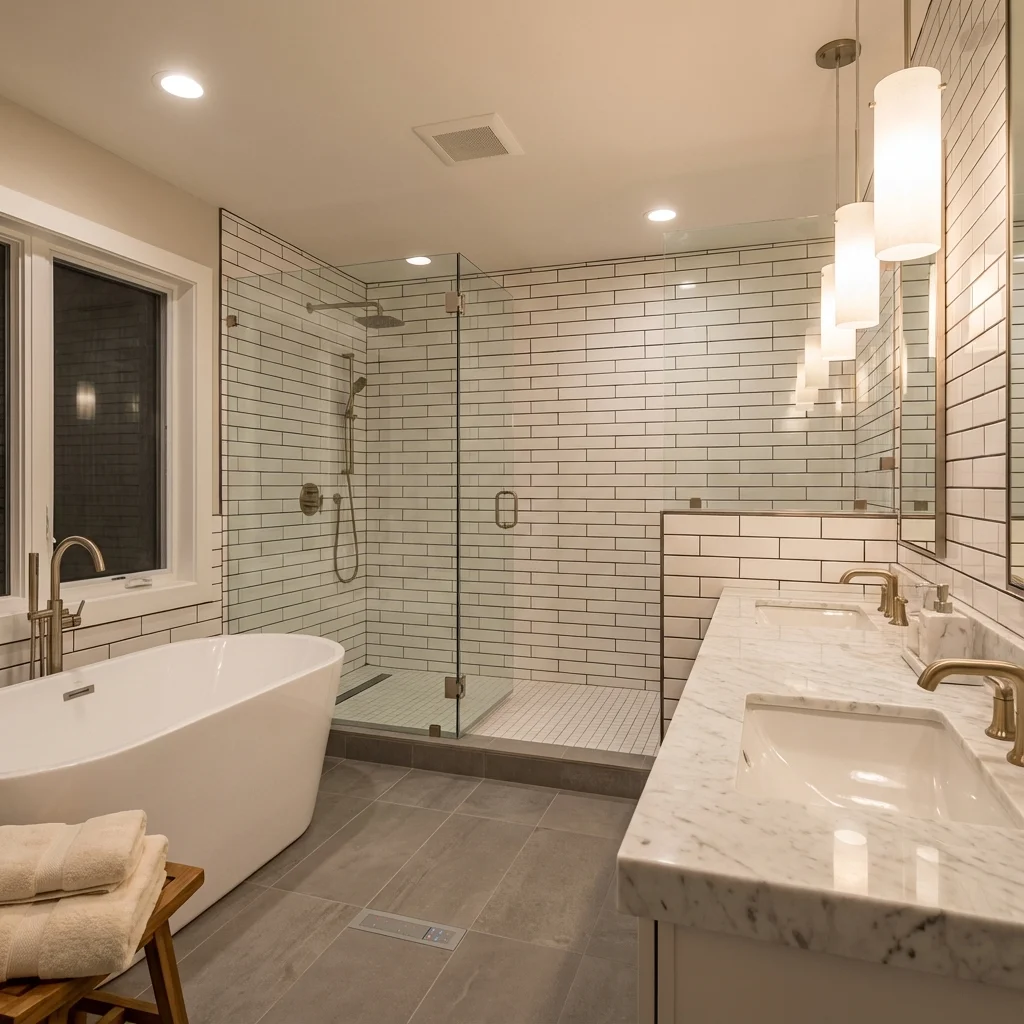
Nothing triggers remodel buyer's remorse faster than spending $18,000 on a custom tiled walk-in shower with a 12-inch ceiling rain head, wall showerhead, and handheld slide bar—only to step inside and discover turning two heads on together drops water pressure to a pathetic dribble! Across Salt Lake County, homeowners often choose decorative trim plates online without understanding the brass rough-in valve hidden inside the 2x4 stud cavity. Combined with Utah's icy 42°F winter street water and 16+ GPG mineral hardness that scales cheap plastic cartridges, selecting between an ASSE 1016 pressure-balance valve and a high-flow 3/4-inch wax-element thermostatic valve defines your daily shower experience.
How 1/2-Inch Pressure-Balance Valves Work (and Their GPM Limits)
A standard ASSE 1016 Type P pressure-balance rough-in valve—such as the Moen M-PACT Posi-Temp, Delta MultiChoice Universal, or Kohler Rite-Temp—uses a sliding spool or diaphragm piston inside a 1/2-inch forged brass body to react purely to water *pressure* ratios, not actual water temperature. When someone flushes a toilet down the hall and cold line pressure drops suddenly, the internal spool throttles hot flow proportionally to prevent scalding within +/- 3°F. However, single-handle pressure-balance valves lock water volume at 100% full blast whenever turned on and max out around 4.5 to 5.5 gallons per minute (GPM) at 45–60 psi. Paired with an alternating 2-way or 3-way diverter, they excel in single-bather showers and kids' hall tubs, costing $550 to $950 roughed in with trim.
- Single-handle operation links turn-on directly to full volume before reaching warm mix
- 1/2" brass ports cap total flow around 5.0 GPM—ideal for 1 active head at a time
- Reacts to line pressure drops only; cannot sense tank water heater cooling down mid-shower
Thermostatic Mixing Valves: Exact Degree Memory & Independent Volume
An ASSE 1016 Type T/P thermostatic shower valve—like the Kohler Anthem, Brizo Sensori, Grohe Grohtherm, or Delta TempAssure—separates water temperature from water volume onto dedicated controls. Inside the cartridge, a thermal wax-paraffin or memory-alloy element actively expands and contracts in milliseconds to hold your exact dialed outlet temperature (for example, 104°F) within 1°F, even if your hot water heater begins cooling off! Because temperature stays permanently parked at your favorite setting, you simply flick individual volume controls or push-button manifolds to turn on your wall head gently at 50% pressure or full blast without hunting for the sweet spot every morning. In Salt Lake's hard-water districts, specify cartridges coated in anti-scale polymer rather than bare brass pistons that seize from calcium.
- Leave temperature permanently set at 104°F; toggle water flow on/off with separate buttons
- Active thermal wax element compensates when tank supply temperature dips during long showers
- Anti-scald safety stop at 100°F–104°F prevents children from twisting into 120°F+ scald zones
1/2-Inch vs. 3/4-Inch Supply Trunks & Simultaneous Body-Spray Math
When planning a luxury Draper or Holladay spa shower running multiple outlets simultaneously, simple hydraulic addition dictates pipe diameter. Add up the rated GPM of every fixture you intend to run at the exact same moment: a standard Utah showerhead (1.8–2.5 GPM) + ceiling rain head (2.0–2.5 GPM) + handheld wand (1.8 GPM) + three recessed body sprays at 1.5 GPM each (4.5 GPM) equals **10.8 GPM total demand**. A 1/2-inch PEX-B supply line physically cannot deliver 10.8 GPM without extreme velocity noise and pressure collapse! We run dedicated 3/4-inch PEX-A or Type L copper hot and cold trunks directly from the water heater manifold into a 3/4-inch high-flow thermostatic valve rated for 12 to 16 GPM, feeding balanced pressure-looped body-spray rings.
- Total simultaneous flow >6.0 GPM requires 3/4" hot & cold supply lines from the mechanical room
- Plumb 3+ body sprays in a closed hydraulic balancing loop so top and bottom sprays match pressure
- Verify 2-inch shower drain capacity; >10 GPM mega-showers require 3-inch drains or dual 2" outlets
Digital Thermostatic Valves & Integral Service Stops Behind Tile
Top-tier digital thermostatic systems—including Kohler Anthem+ Digital and Moen U Smart Shower—mount an electronic mixing brain inside a nearby vanity base or closet wall while placing a slim low-voltage touchscreen inside the shower. You can pre-warm the shower to 105°F from your smartphone in bed while purging the cold startup pipe water automatically before pausing! Regardless of whether you choose mechanical or digital thermostatic rough-ins, insist on a brass valve body equipped with **integral screwdriver service stops** and flushing plugs. Ten years down the road when Utah's mineral-heavy water inevitably wears out a thermostatic cartridge, integral stops let a plumber shut off water right behind the trim escutcheon in five minutes instead of shutting down the whole house.
- Smart digital valves purge icy winter pipe water and pause automatically at target temperature
- Integral screwdriver check-stops allow 10-minute cartridge swaps without shutting main water
- Rough-in depth precision (typically 2.5"–3.25" to finished tile) is critical so trim sits flush
Shower Valve Engineering & Installed Cost Comparison (Salt Lake County)
| Valve Architecture | Max Simultaneous Flow | Supply Pipe & Drain Spec | Rough-In + Trim Installed Cost |
|---|---|---|---|
| 1/2" Pressure-Balance (Single Head) | 4.5 – 5.5 GPM (1 head active) | 1/2" PEX-A / standard 2" drain | $550 – $950 |
| 1/2" Pressure-Balance + 2-Way Diverter | 5.0 GPM (shared or alternating) | 1/2" PEX-A / standard 2" drain | $850 – $1,400 |
| 1/2" Thermostatic (2 Simultaneous Heads) | 6.5 – 8.0 GPM (rain + handheld) | 1/2" or 3/4" PEX-A / 2" drain | $1,350 – $2,200 |
| 3/4" Thermostatic Spa + Body Sprays | 12.0 – 16.0 GPM (3–5 outlets) | 3/4" dedicated trunks / 2"–3" drain | $2,400 – $4,200+ |
Grant Helmer's Utah Field Pro-Tip (DOPL #10146123-5501)
Never trust PEX-B crimp brass elbows when plumbing a high-flow shower system in Salt Lake County (DOPL #10146123-5501)! Standard insert crimp fittings shrink the inside bore of 1/2-inch PEX down to barely 0.35 inches, choking showerhead pressure at every 90-degree turn. We expand full-port Uponor PEX-A F1960 fittings or sweat Type L copper stubs at every shower valve and showerhead drop-ear elbow for maximum flow.
Frequently Asked Questions: Thermostatic Vs Pressure Balance Shower Valve
Can I share two showerheads off a regular 1/2-inch diverter at the same time?
Some 'shared-position' 3-way diverters allow two 1.75 GPM WaterSense heads (3.5 GPM combined) to run simultaneously off a 1/2-inch valve at 60 psi street pressure. However, adding a third outlet or high-flow 2.5 GPM rain head causes noticeable pressure droop without upgrading to 3/4-inch thermostatic plumbing.
Will a 50-gallon water heater keep up with a 3/4-inch thermostatic body-spray shower?
No! Running 10 GPM of mixed 105°F shower water pulls roughly 7.5 GPM from your hot tank—emptying a 50-gallon gas water heater's usable hot reserve in less than five minutes during a Utah winter. Upgrade to a 75-gallon power-vent tank or twin cascading 199k BTU condensing tankless units.
Why do cheap imported internet shower systems fail municipal plumbing inspections in Utah?
No-name online rain-and-body-spray kits sold on marketplace websites routinely lack mandatory cUPC / ASSE 1016 anti-scald testing certifications, use non-standard metric NPT threads that leak inside sealed tile walls, and offer zero replacement cartridges once hard water ruins them—forcing full tile demolition.
How do you prevent Utah hard water from ruining an expensive thermostatic cartridge?
Leading manufacturers like Grohe, Kohler, and Brizo mold internal thermostatic shuttles out of scale-shedding engineered polymers rather than raw brass. Exercising the temperature dial full-cold to full-hot once a month and running softened house water keeps cartridges silky smooth for 12–15 years.
Related Utah Roofing, Bathroom & Remodeling Resources
Schedule Your Salt Lake County & Wasatch Front, UT Inspection or Design Quote
Direct owner consultation with Grant Helmer (Utah DOPL #10146123-5501) — zero high-pressure sales.